The Ideas Letter
Once upon a time the Annales school was everywhere. Its founders, Marc Bloch and his close colleague Lucien Febvre, launched the trailblazing journal Annales d’histoire économique et sociale, which served to overturn 19th-century positivist and narrative history. A historiographical movement that shifted the historian’s focus from traditional political narratives to long-term social-economic and cultural structures, the Annales school pioneered what it immodestly named total history. With its brilliant followers and occasionally less brilliant epigones, the Annalistes sought to turn history towards the lives of ordinary people.
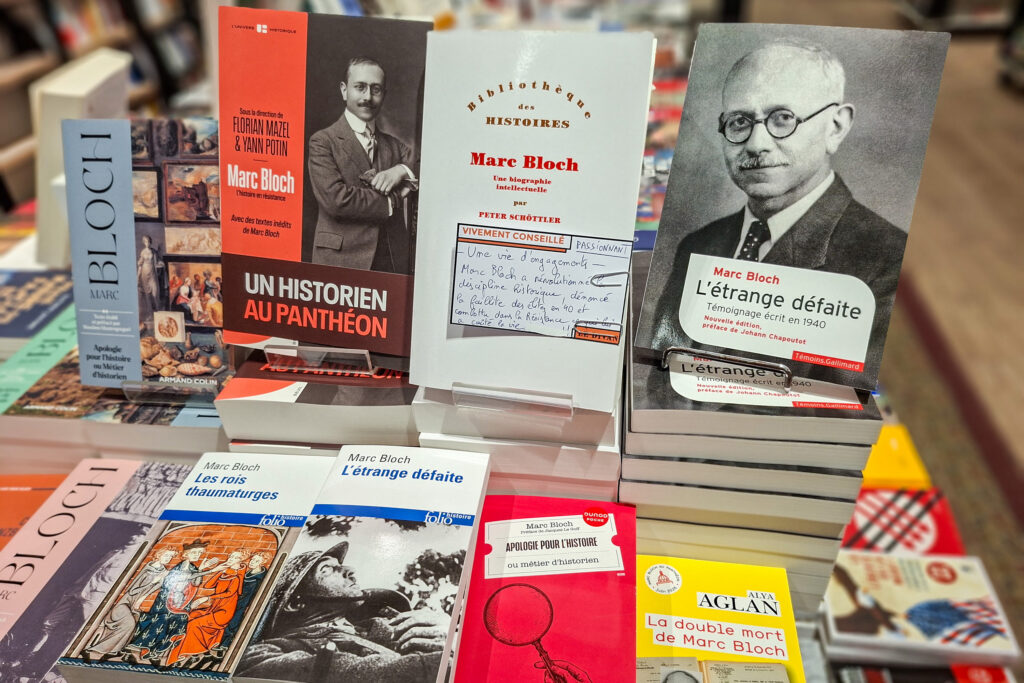
Nicholas Mulder’s first piece for The Ideas Letter examines a new intellectual biography of Bloch, whom the French recently installed in their Pantheon, 82 years after the historian was murdered by the Nazis. Cornell-based, Mulder has worked on European and international history of the nineteenth and twentieth centuries and is the author of an award-winning book The Economic Weapon: The Rise of Sanctions as a Tool of Modern War. He is also about to release his second book, a door-stopping global history of expropriation; as the fortunate recipient of an early galley, I can attest it will be nothing short of field-shaping.
William Davies returns to The Ideas Letter to make the case that today’s “literacy crisis” shouldn’t be reduced to smartphone overuse or LLM slop. Its deeper cause is a decades-long transformation in which reading and writing have been redefined as measurable skills for completing tasks rather than practices of meaning-making. (No small role has been played by the philanthropic-industrial complex, which in its wisdom has demanded that all interventions show impact and be, at some level, quantifiable. Some of the finest academics of our time, whether Amartya Sen or Craig Calhoun,

Featured Essays



What is The Ideas Letter
Welcome to The Ideas Letter, a publication that prizes the unconventional. We are not in the business of persuading. We won’t try to convince you of anything—other than that the world is complex and reality ever-shifting. We are not here to advocate. What you will find, and we hope embrace, are contributions from across ideological aisles, from a broad range of disciplines and a true cross-section of thinking. If catholicity is your métier, and you are uneasy with banging the drum but would rather hear its many sounds, this is the place for you.
We really like critique. Not the mean-spirited or spiteful kind, but rather commentary that raises tough questions, unpacks assumptions, sometimes calls people on the carpet, and always provides opportunity for discussion. That is what we are really after—facilitating, augmenting, furthering, and bolstering debate around issues of consequence.
You’ll find here articles, essays, and criticism that will challenge you to think. Let us know your thoughts, and make sure to tell a friend. Or even someone with whom you disagree!