A Pure Act in a Dirty World
An Interview with Matthew Shipp
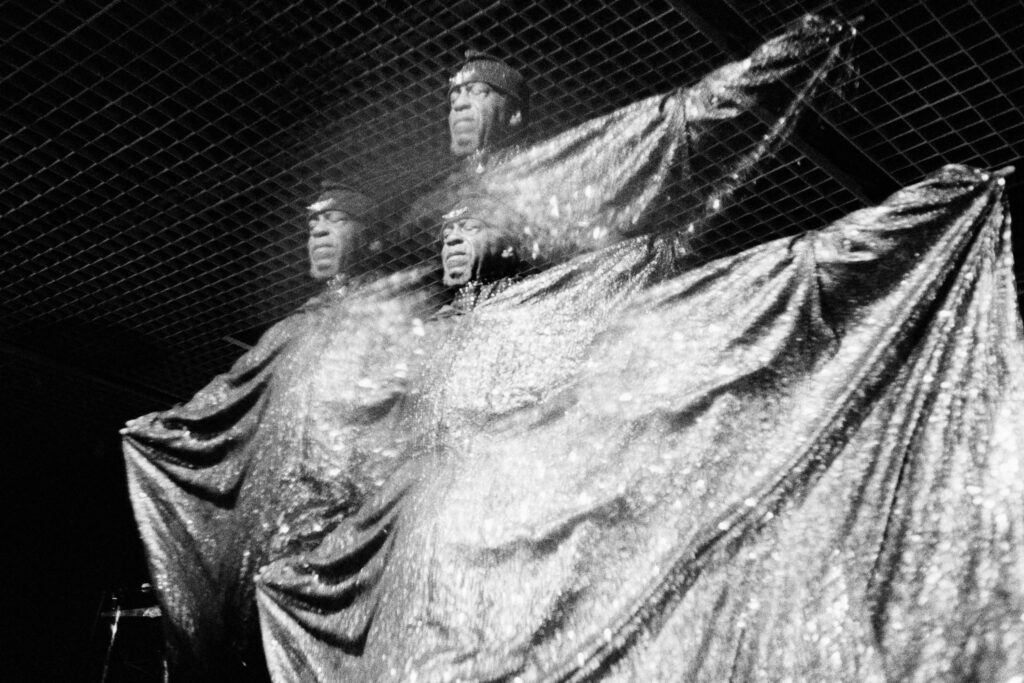
The great and ferociously original jazz pianist Matthew Shipp riffs with Leonard Benardo on what it means for a musician to find a truly personal sound—something deeper than virtuosity, rooted in instinct, risk, and a kind of “unlearning” of received rules. Shipp describes improvisation as an ability to draw on the subconscious, almost like speaking a language whose grammar lives in the nervous system. He observes that real authenticity comes from ruthless self-knowledge rather than from imitating heroes or chasing technical perfection. Influences, for him, are “food” to be digested and transformed.
Leonard Benardo: I would like to kick off by asking you how important a personal sound is to one’s external success and personal fulfillment. Miles had a sound that even the most untutored ear would recognize from a mile away. Same with Monk. Same with Trane. And indeed, I would say the same about you. Is it fair to say that a virtuosic player can easily fail the personal sound test and a far lesser skilled player might not? Why would this be so? Could it even be that virtuosity and personal sound might be inversely related?
Matthew Shipp: A personal sound is the holy grail in jazz. Why some find it and others don’t is a mystery. It is like trying to explain what the brain is or what consciousness is. No verbal formula gets to the bottom of it. I would assume everyone potentially has a personal sound, but getting to it is another story. I would also assume that it’s actually a letting go—a getting back to the root and letting the musical universe grow from the root. At that point, melody, harmony, and rhythm proceed out of a root vibration, and a musical spacetime is generated in an integrated way since it’s coming out of a root concept. So if the root of the concept is embedded deep in your subconscious mind, then you are dealing with the ability to apply pure imagination to the hardware of the physical musical instrument before you.
What makes this difficult is the mindset that is needed. If you are of this inclination, people might tell you what you are doing is wrong. So where does the energy and faith come into the equation to say, you know, “your supposed wrongness is correct and the whole world is wrong?” That’s the mystery because there is a chance you are deluded. But so many things we take for granted are generated by a certain type of faith—by an individual or by a group of people. So is it possible that intense faith can generate a new approach to playing an instrument or generate spacetime on an instrument? If you are playing something you think is a pure expression of your soul and a teacher tells you it’s wrong, when do you decide that you know something the teacher doesn’t know—despite the teacher being way more experienced? I don’t know, I’m asking a question because every person who has changed history with a personal sound came to their eureka moment in a different way, with a different set of experiences—and maybe with a different set of assumptions.
There is or can be an innocence involved. Most innovators are studied; many had great instincts and developed their own study habits, but built a coherent system based on their instincts and then their perseverance—there might have even been something “wrong” about their initial instinct, but they still developed that into a coherent structure of some sort. But it’s not about knowledge—even though intense work is involved. It is an unlearning in a way. I guess you can say it’s like enlightenment in Zen. It is not about building up knowledge, even though you go through a lot to be able to let go and get to zero. On one level, it’s about de-conditioning yourself from enculturation so you can trust that the instinctive and creative ejaculations of your mind form their own coherent structure in an artistic medium and then saying you’ll do it that way, the world be damned.
The abstract mathematics of how you generate structure in your medium exists in your central nervous system. As a pianist, if I have something new to say then I am making the assumption that the abstract formulations of my central nervous system should become general grammar. So I make an album, maybe it’s not accepted but after a period of time the abstracts from my central nervous system do come to be accepted as general grammar, but only after a whole network of people adjust their central nervous systems to accept the new twist.
Again, it’s a mystery why some musicians break through and others do not. There is no formula. Knowledge is not the key, though study of some type is important. There are many people who know everything about their instrument and cannot get to this breakthrough. Lord knows why the Holy Spirit speaks to some and not others.
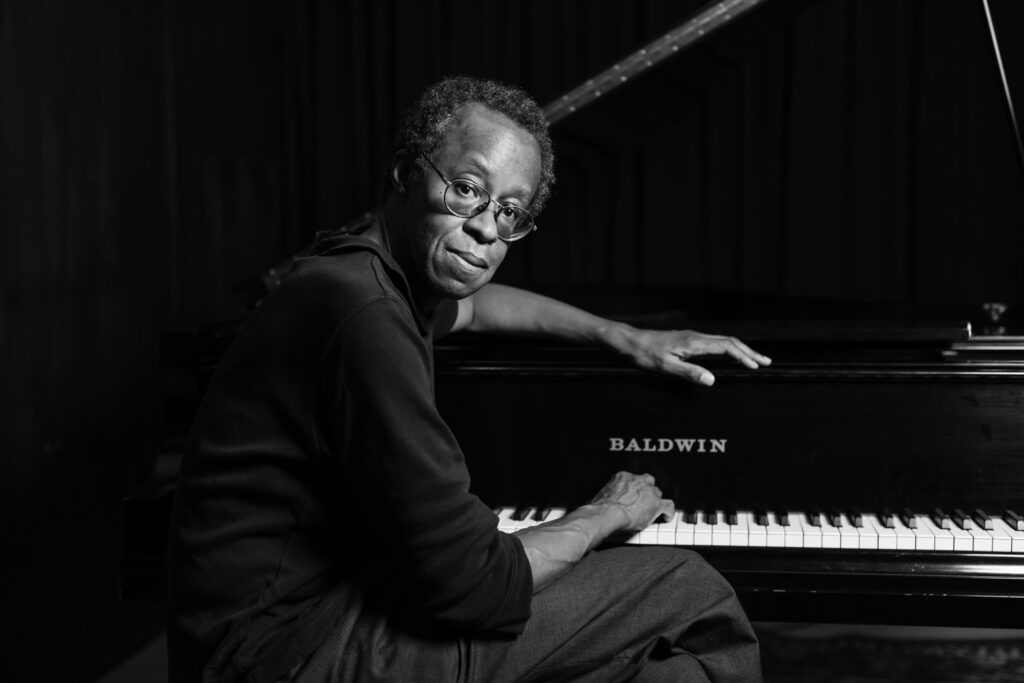
LB: Super interesting, Matt. I would like to push you a bit on the notion of “unlearning.” How exactly does one unlearn something? Does it necessitate stopping listening to what one has customarily listened to? Does it require a time of personal reflection without confronting any “anxieties of influence”? Is there a teacher out there who specializes in helping players “unlearn”?
I recently watched an affecting production of Beckett’s Krapp’s Last Tape with John Hurt starring. It made me wonder how you listen to yourself from years ago. Many musicians claim never to listen again to their records once they’re recorded. Scorsese says he won’t ever rewatch a film of his because he smarts from all the “imperfections.” Do you listen, say, to “early Shipp?” And if you do, what is that experience like?
MS: When I use the term “unlearn” I guess what I’m getting at is when someone decides they want to be a jazz player the question they’re asking is really, “How do you improvise?” That is a vexing question since it’s like a black hole to sit in front of an instrument and think you can generate something of interest given the intense history of jazz and music in general. So when one wants to start they usually don’t even have a sense of how to start: You have these musical notes before you—can you just press them down? What are the rules? How do you do this? If a student asks me, “How do you improvise?”, I guess my answer would be that there is no answer in discursive language to that question. Every player who goes down this path yields an answer by their body of work.
So I would suggest the student learn everything they can about music, explore everything, get language from everywhere, from the whole vast musical terrain—and keep asking the question, “Who am I?” At some point, even if you’re relying on so-called accepted practices, you will have to take into consideration that weird idea in the back of your mind that might seem to go against the grain of how people do this, but it is what your brain has generated for your approach. A lot of people don’t have the courage—or the insanity—to trust that area of the brain that suggests an approach that might be out of the ordinary.
As a student, if you are looking for authenticity in jazz, authenticity seems to be something that exists in your record collection. But real authenticity to me is self-knowledge—who I am. Bill Evans is a great example to me, he went in so deep—I get the sense he realized he could not be a Bud Powell or a Wynton Kelly or a Red Garland. Far from that being a mark against him it became a strength. He was forced to really evaluate who he was, and what he had to say and contribute. The style that came together was forged in honesty and self-knowledge.
I guess when I say “unlearn” what I mean is that in wanting to learn the art of improvisation one learns rules and music in general, but there comes a time when that weird idea in the back of your head about how you will generate your own unique space and time in the music has to be followed. Once you go down that path, who knows where it will lead. It’s a road where you’re constantly throwing down the bricks as you go, generating the very path you’re walking along. One must really trust their instincts at this point.
I do not think you need to stop listening to what you listen to at this point—influence can be conceptual and not about content. Influence can be purely inspirational. I do think the phrase “personal reflection without confronting anxiety of influence” really gets to the heart of the matter, however an individual may do that. I cannot think of a way a teacher can get someone to “unlearn.” To me a teacher can offer material, and the best teachers get the student to go inward and find themselves, and ultimately that cannot come from a teacher—it has to come from a deep desire in the student. As far as listening to myself and early recordings—it can be a mind trip. The early version in some ways is a whole different person than who you are now. You can sometimes hear it from the standpoint of who you are now and that could be distressing because you think you know more now—or you think you might have a more integrated approach now. But I find that I can flip a switch in my brain, and sometimes I hear it from the standpoint of that recording and I see that recording as a realized version of who I was then—and I can almost enjoy it as if that artist was a different person than myself. Yes, I learn from listening to myself because there are a lot of subconscious processes going on and I play things where sometimes I don’t even know what I did. After the fact, those things might sink back deep into the subconscious. Listening to yourself can be a discovery—good or bad.
I am not sure if I am impressed with my evolution. I am happy with it. Happy I have a path that I can go deeper and deeper into. I would never make a student listen to themselves if that is not part of their methodology—at a certain point, the methodology would have to flow from them.
LB: It’s curious, Matt, that in our conversation you have made several references to the subconscious and the unconscious. Is psychology a relevant dimension for you as a musician? Have you known musicians who strengthened their craft through, well, strengthening their mind and undergoing analysis? Is it useful for you personally to draw connections to the playing of music and the role of the unconscious?
What happened in your estimation to the pianist Mal Waldron after his nervous breakdown? Certainly there was a rupture in his style. Was this because he needed to relearn his chops or because he had a psychological breakthrough of whatever kind that changed his approach to playing?
You also make the point that Bill Evans may have realized that he would never become virtuosic in the way of, say, a Bud Powell. Moving back to actual consciousness then, do you often encounter committed musicians conceding that, “It’s not gonna happen for me and so let me work with what God gave me and not overstretch”? How does one come to realize they will never be able to achieve whatever commanding heights they would like as a musician and thus need to compromise their aspirations? Is this commonplace? How has this dynamic affected you?
MS: Subconscious processes are everything to me in my quest to understand improvisation—or what people call “playing jazz.” Some people think of improvisation as making stuff up on the fly—it is not exactly that—and there is tremendous craft that goes into making you the vehicle that the language can flow through. But it is a praxis of the DNA of language, shaping and seeing what surfaces in a quantum sea of possibilities.
Some people talk about what happens within a jazz ensemble as a conversation, and there is an aspect to improvisation that is like speaking a language, in that when you gather with people to talk you don’t know what you are going to say. What is said unfolds in the context of the moment depending on the needs of the moment, and it builds upon what preceded it. Of course, everyone in the room talking speaks the same language, and they are all fluent enough that they can interact with what the others are saying.
Improvisation as we musicians do it has a similar gestural quality. And I take it further. I see mysticism as depth psychology and am involved in trying to decode mystical symbols to activate my subconscious in various ways to try to tap into a mystical-mathematical field of poetry-vibration that fuels and generates the music. This puts me in a tradition of exploring mysticism in jazz post–John Coltrane/Alice Coltrane/Sun Ra. We are trying to delve into the depths of our subconscious minds to get at the generation of language.
So it’s not so much about analysis or psychology. Of course, there are people who think I need therapy, but that’s a different story. For me, it’s about the genesis of language—and I see everything as a language, whether it’s a musical improvisation or the DNA that makes me up or the entity we call the cosmos. Our rational conscious mind cannot get to the deep, deep stuff—but under the surface we intuit everything.
As far as Mal Waldron, it would only be conjecture to try to get at what happened after he had to relearn how to play. I wasn’t there. But you raise interesting points—did the relearning trigger something?—given that I assume on a deep, deep level he had some imprint of what he knew before. Or did the whole process trigger some type of eureka moment that took him somewhere else? I don’t know. But the brain is a fascinating, complex thing. I assume we will never get to the bottom of it and I assume that the complexities of the brain manifest differently in different people. I am not a scientist, I am a conceptualist that plays lyrical weird piano, so I can only go off of my instinct and intuition as an artist.
I believe all great art is the product of someone figuring out what it is exactly that they have to offer and then developing that particular universe to its ultimate form. So working with what God gives you is the ticket for everyone—and whatever God gives you as an artist with vision, you can build a temple upon it. Trying to be like anyone before you is not the way to go. Trying to isolate what you do understand about the universe and then building off of that premise is what it is all about.
LB: I am listening as I write to Sun Ra’s live solo piano work from 1977. There are so many influences on his playing; it’s incredible, and it inspires a question. Can you ever not hear a musician’s influences? To be sure, some wear their influences on their sleeve, almost as a pledge to keep the music vital. Jaki Byard would do this; so would Lester Bowie, and Roland Hanna. Mingus certainly. The same doesn’t hold true in other genres, does it, these insistent references to the past?
Musicians usually avoid sounding like their heroes—anxieties around sounding like Bird, Trane, Rollins, say. But do musicians also struggle to hide their obvious musical influences (boogie-woogie, Western classical, marching band, whichever) in an effort to become singular? What was the “journey” like for you in becoming singular? Did you feel you had to diminish the obvious influences in your playing, or, conversely, to make them explicit?
MS: Every person, every artist, is so different that it’s hard for me to delve into how each individual deals with the anxiety of influence. For me, language is language. No one owns it. It flows through your central nervous system. What makes it unique is when it flows out of you: Does it keep the imprint of your central nervous system, or does it try to conform to some external assumptions of how it should be? I look at musical influences as food. You eat to nourish yourself and stay alive, but your body is not fish and cabbage. You digest some type of central intelligence inside yourself and it sustains the organism.
So I take in a lot of language and by some process out of my control it is alchemized into what is known as “Matthew Shipp piano language.” Now, a phrase I play might take the shape of one of my influences and teachers. In fact, it’s fun when absorbing an artist with some originality to hear their teachers inside of their language and how that mutates into whatever they do. There are only so many notes, so many chords, but some overall gestalt of how you project sound, your touch, the basic vibration you’re coming out of can project an original approach.
On one level, all language is universal. But each of us has a different fingerprint or perspective, so if you have the faith to go and believe in yourself, maybe you tap into it. Didn’t Ralph Waldo Emerson say something to the effect that everything is a quotation of everything? Not exact words, but that’s the idea, if my memory serves me right. So the chair in your living room is a quotation of the forest the wood came from, etc., etc.
A lot of this depends on the needs of the artist. Some have a deep psychological need to be seen as part of a certain tradition, so therefore they would wear certain aspects of their influences on their sleeves as a sense of pride or belonging.Some artists have a deep psychological need to be seen as an outlaw or one that deals in the illusion of rising above history. There is an ongoing tension between history and being yourself. Ultimately, good advice for someone like myself is to just sit down at the instrument and play it. You cannot escape the flow of history, but you have a role to play inside that. So, discover your role—whatever that is, whether it’s a new touch and approach like Monk had, or an encyclopedic approach, (if that is a correct way to put it) like Jaki Byard had, one that is done with a sense of humor, alive and vital in its own way.
LB: I did want to ask you about the origin story of your writing on what you call in an essay of the same name “Black Mystery School Pianists.” Can you kindly share an explanation of why you were compelled to develop this category and these distinctions, one I understand to be about a set of piano players who resist academic convention, who focus less on style and more on iconoclasm. Were you eager to rethink some of the history—revise it, as it were. And what pushback have you received on this categorization? Has any of the critique been reasonable to you?
MS: I think the origin of me thinking in terms of a school of iconoclasts that branch out of Monk was installed in me by a mentor of mine the two years I was at University of Delaware. He was not a music teacher—he was a Black male janitor—very well read, a very advanced person who was a composer also, and I think he ended up being a computer programmer. He took an interest in me and I went to his workplace every day and he would just start talking and I took in everything he said—to this day I remember every image he implanted in me. It was a situation not unlike Grasshopper’s teacher in the TV show Kung Fu. He never structured the idea of a mystery school, but he did impress upon me that Monk “did it the right way.” He put Monk as the example of searching yourself and reaching enlightenment or some type of grand apotheosis on the instrument. He hinted at the relationship between Monk and some of the other pianists in the essay.
I remember talking about the legendary Hasaan with him—I knew about Hasaan when I was a teen. We spent a lot of time talking about Andrew Hill, both in relation to Monk but also in opening up a kind of iconoclastic way of dealing with classical composition ideas within a Black jazz idiom. He made it clear to me that there were things he heard in me that were in line with that tradition. My style was not together yet but I guess he heard the possibilities. He put the seed in me, but the idea of this as a category came later on my own.
The essay originally got a lot of traction. It was later after it came out that I realized I was working out what to me was one of the main lines of demarcation in jazz piano, which is Monk versus Oscar Peterson. It seems to me that Peterson, who in my opinion claimed the mantle from Art Tatum, softened the image of Tatum, who was an iconoclast and had his own world. So Monk comes out of a post-Tatum sensibility just as much as Oscar, but Monk’s approach is not trying to make people who like classical music respect him. I am not saying that that’s what Peterson is trying to do—just saying it can come off that way—whereas Monk creates a whole universe that makes up its own rules. This is not a criticism of Oscar; just what someone could perceive.
So I guess it comes down to creating your own world within jazz: Do you do things in a way to have classical people praise you, or do you go for the cosmos and create sound objects and let the chips fall where they fall? And does how Oscar situates himself in relation to Tatum give a false impression about what maybe Art Tatum was about? Oscar Peterson does not have more technique than Monk: Monk can get sounds out of the piano that Peterson could not even though some who liked Peterson might have thought Monk could not play—my aunt certainly thought that. This was a real line of demarcation for me as an artist: which path do you go down. I detect a real mistrust from statements I remember each of them saying about each other—if my memory serves me right.
LB: Now I am listening as I write to the unsung (really unsung) duo of pianist Dwike Mitchell and French horn player and bassist Willie Ruff. They are playing all Strayhorn compositions and the classical influences are bleeding out (how could they not with a French hornist!). Which makes me ask whether one line of demarcation for you are those musicians who pay no attention to Western classical influences and those who are vulnerable, for different reasons, to its authority (someone like Peterson)? Have you taken that conceit and perhaps rearranged it to meet your own historical reading? One could look at your group of iconoclasts and they all might fit that non-classical-influenced category, no? Is there something to this? The racism shot through in so-called primitivism, whether in art or in music, is great, especially its notion of jazz musicians playing somehow instinctively, without influence, from the “soul.” But do you not share some of the same presumptions?
MS: For me all music is information and data. The art that I love and that touches me I have experienced as integrated synthesis—and most artists I enjoy are very open-minded: They borrow from everything and digest that into their system in such a way that it comes out as uniquely them. The problem comes in when someone appropriates something based on the cultural assumptions of it more than the fact that it’s source material for the creation of something else. I guess any musical gesture cannot be separated from the cultural assumptions it comes out of, its baggage, but on another level, it is all information and can serve some aesthetic end—if the composer/artist is gifted with a methodology to integrate language that exists to serve the aesthetic vision that artist has, rather than the information being used in any social mobility type of way.
So the challenge for me is to take in all the vast information out there and to really home in on who I am, whatever that is. Self-reflection and honesty with oneself is required for this. At that point I try to simplify the vast amount of data into the essential me. Then I let it out knowing that it’s out of my hands but that I have given an honest presentation. At that point it’s not about any terms that are loaded with social implications—like “classical” or “jazz.” It’s an attempt to perform a pure act in a dirty world.
Leonard Benardo is senior vice president for the Open Society Foundations.