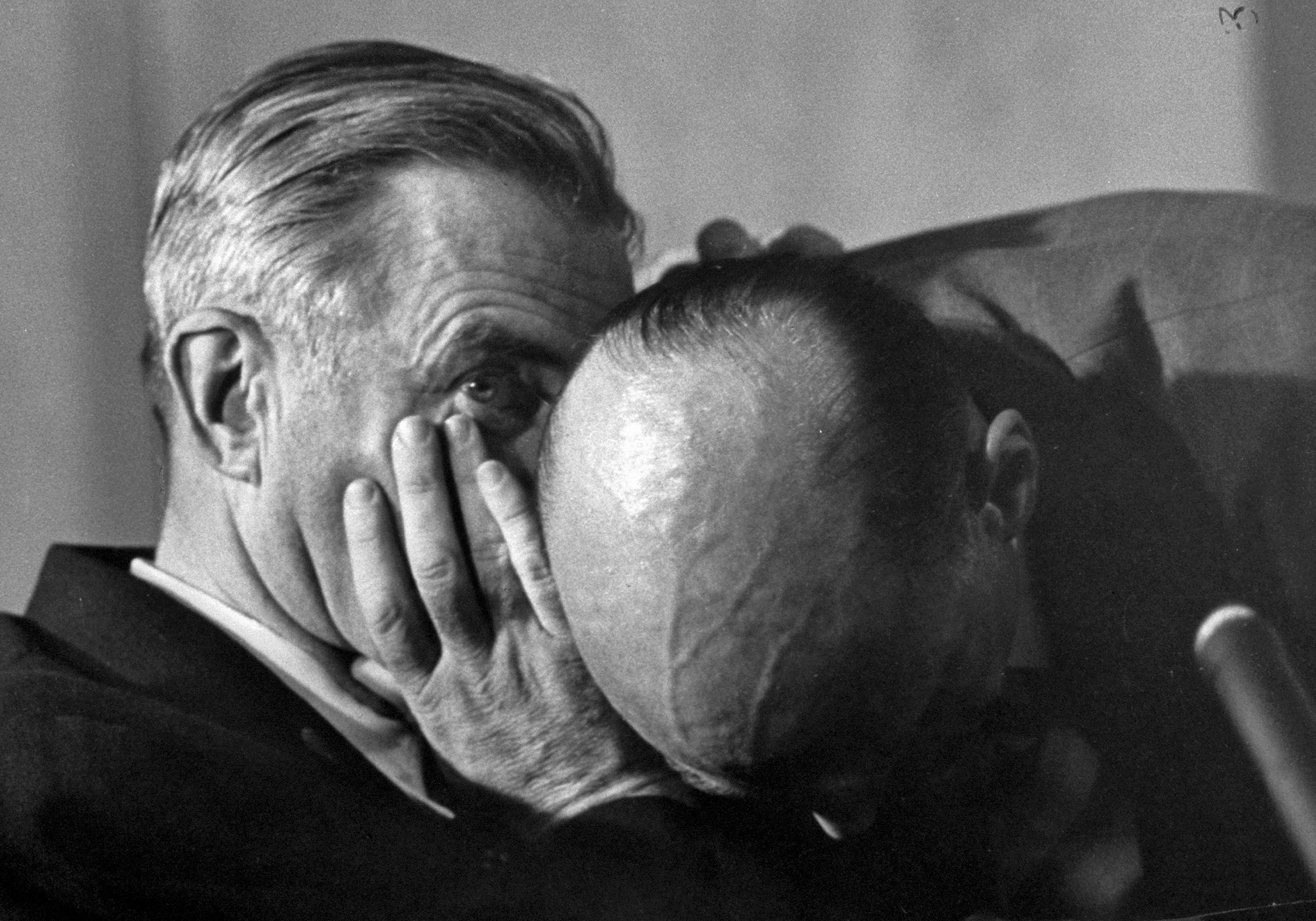
Issue 56 of The Ideas Letter explores the various intellectual and psychological byways of autocracy. We kick off with an esteemed engagé scholar who has redefined modern sociology: Richard Sennett. From The Hidden Injuries of Class (1972) to The Corrosion of Character (1998), Sennett has explored how class hierarchies persistently undermine an individual’s sense of agency. Sharing with us an adapted section of his forthcoming book, Sennett meditates on moral character and survival under political persecution. Written with his unique blend of personal memoir, sociological observation, and philosophical reflection, the essay uses his family’s experience under McCarthyism as a lens for understanding resilience, ethics, and today’s drift toward authoritarianism.
The strange career of David Rieff hasn’t yet had its proper chronicler—until now. For over forty years as a storied journalist and essayist, Rieff has raised urgent and uncomfortable questions about the practice of humanitarianism and human rights. But he’s careened into a late-style of anti-Woke scold. The sharp writer David Klion, now finishing a book on the legacy of neoconservatism, is here to explain Rieff’s wayward turn.
Michael McFaul, Stanford political scientist and former US Ambassador to Russia, hasn’t had so much of a strange career as a strangely conventional one. Lily Lynch takes the measure of McFaul’s new book Autocrats vs. Democrats, which casts the binary of democracy and autocracy as a gladiatorial fight to the death. Lynch is skeptical about the project, going so far as to suggest that the liberal-democratic project has lost both its aesthetic vitality and its conceptual coherence.
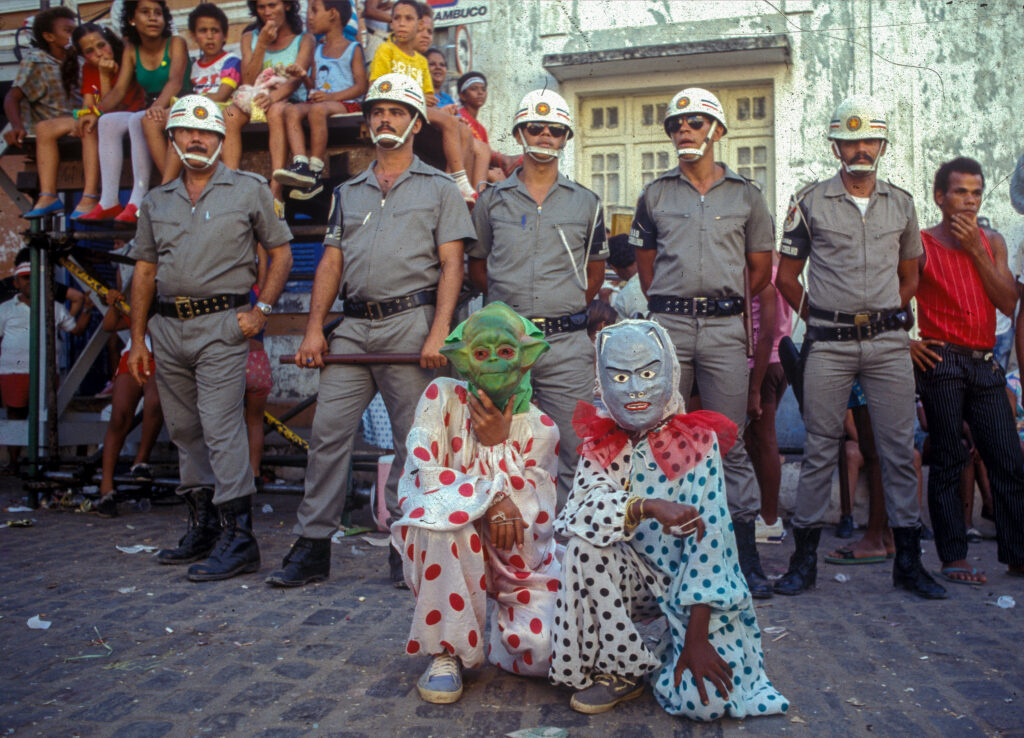
My great colleague Pedro Abramovay, a Paulistano living in Rio, takes a more nuanced approach to different regime types. Abramovay provides an expansive meditation on Brazilian cinema and politics, using the recent films The Secret Agent (Kleber Mendonça Filho) and I’m Still Here (Walter Salles Jr.) to narrate Brazil’s ongoing struggle between authoritarianism and creative resistance. He offers both film criticism and political analysis, arguing that Brazil’s most emblematic cultural resource—Carnival—serves as a wellspring of survival and subversion within structures of violence.
For our curated section, Nikhil Pal Singh delivers an incendiary analysis of the reconfiguration of US power, and the tragic dramas afflicting an ICE-infested US. The piece comes from Equator, a new publication of bracingly high-quality writing, which readers of The Ideas Letter will want to subscribe to without delay.
Finally, Luciano Santander Hoces takes us into the inverted politics of contemporary Chile and puzzles how José Antonio Kast, a right-wing zealot, could be elected in a country that had only recently embraced the radical social democracy of Gabriel Boric.
Our musical selection comes from one of the great unsung (or at least insufficiently-sung) bands of postwar Britain: The Kinks. Lead singer and songwriter Ray Davies (pronounced Davis) penned brilliant music-hall melodies to lyrics depicting labor anxiety, alienation, and the singer’s cherished hometown of Muswell Hill, London. The gently union-critical “Get Back in the Line” is a lament encompassing all these elements.
—Leonard Benardo, senior vice president at the Open Society Foundations
A Good Life in Bad Times
Richard Sennett
The Ideas Letter
Essay
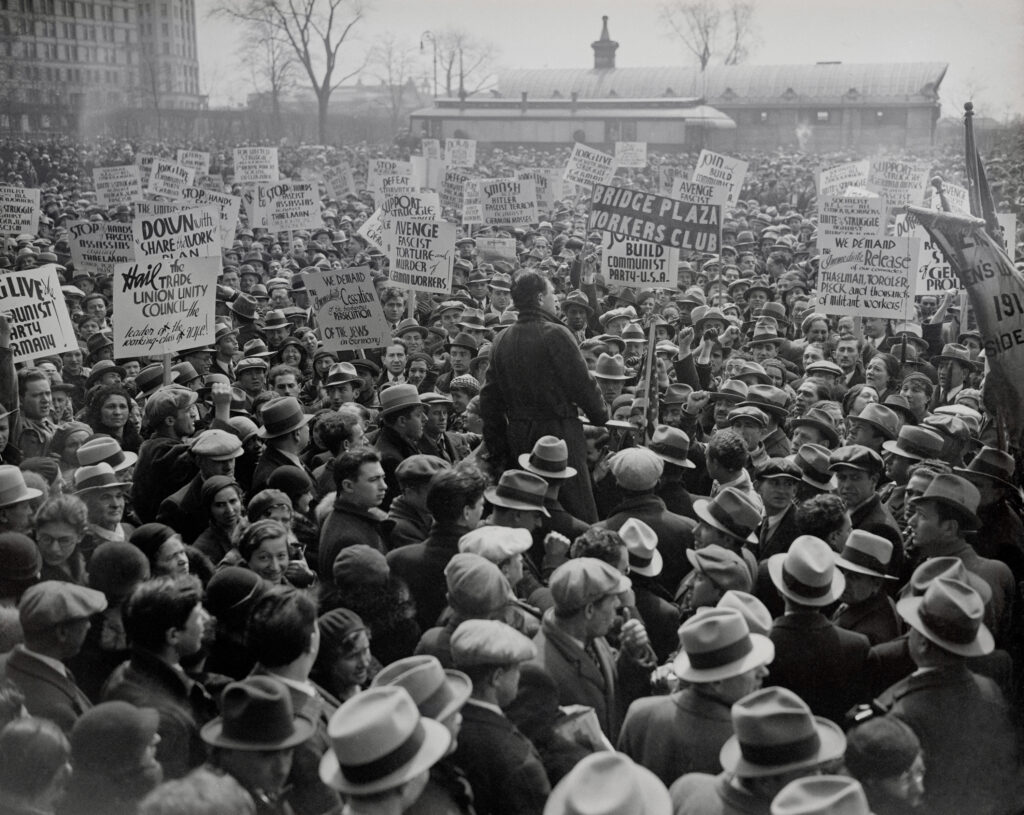
Sennett probes how individuals can live decently under persecution, weaving the story of his own family’s experience under McCarthyism into a broader meditation on resistance, power, and survival. Comparing the different responses of his mother, father, and uncle, he argues that resistance is less about ideology than about cultivating character under pressure.
“We were a privileged family, but there are elements in our history which apply more broadly, embodying three ways of resisting persecution: through aggressive counterattack, indifferent withdrawal, or social engagement rather than political jousting. Though all three forms of resistance depend on raw sensory awareness, such as the ability to sense danger, resistance itself is a more fundamental test of character. That word ‘character’ rings a Victorian bell, as in the Victorian schoolmaster’s promise to parents to ‘build up the character’ of their spoiled children. More deeply, character is not the same as personality. A hypochondriac can prove courageous rather than self-pitying when rising to a challenge. Similarly, economic conditions don’t predict strengths of character; the rich are certainly no better endowed with courage than the poor. In our family’s case, insensitivity, withdrawal, and secretiveness marked the personalities of the three individuals. But these psychological negatives became strengths of character when a political situation tested them.”
Woke Obsessions
David Klion
The Ideas Letter
Essay
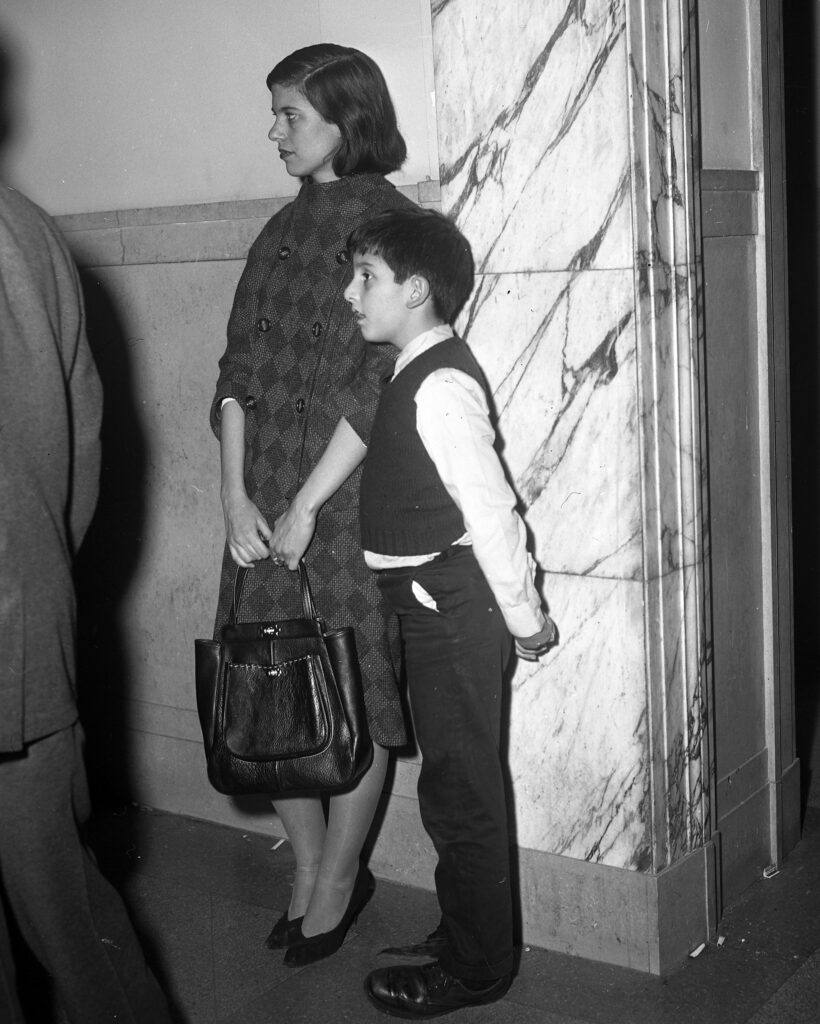
Klion traces the intellectual and moral trajectory of David Rieff, from a childhood spent in the forbidding shadow of his mother, Susan Sontag, to a successful journalistic career of his own, forged in war zones and humanitarian catastrophes. Recently Rieff has become a fierce critic of “wokeness.” Once a piercing witness to atrocity and a skeptical insider of liberal interventionism, he is now a pessimistic commentator in culture-war polemics, and he seems aligned with the very anti-liberal forces he once opposed. His evolution is symptomatic of a generation of liberals.
“But Rieff never identified with liberalism himself; by his own account, he has always been a pessimist and an anti-utopian by nature, and the tumultuous events of the past three decades would only deepen his alienation from and ultimate disgust with liberalism. Today he sees liberalism, or more precisely the traditional left- and right-of-center parties of the developed West, as offering ‘no answers to any of the fundamental questions of our time’—he lists climate change, global mass migration, artificial intelligence, the collapse of the middle class, and the crisis of education—and argues that ‘if a political system has no answers, frankly, it deserves to disappear.’ It’s a bleak diagnosis, but one that appears to be ever more widely shared.”
Cold War Fixations
Lily Lynch
The Ideas Letter
Essay
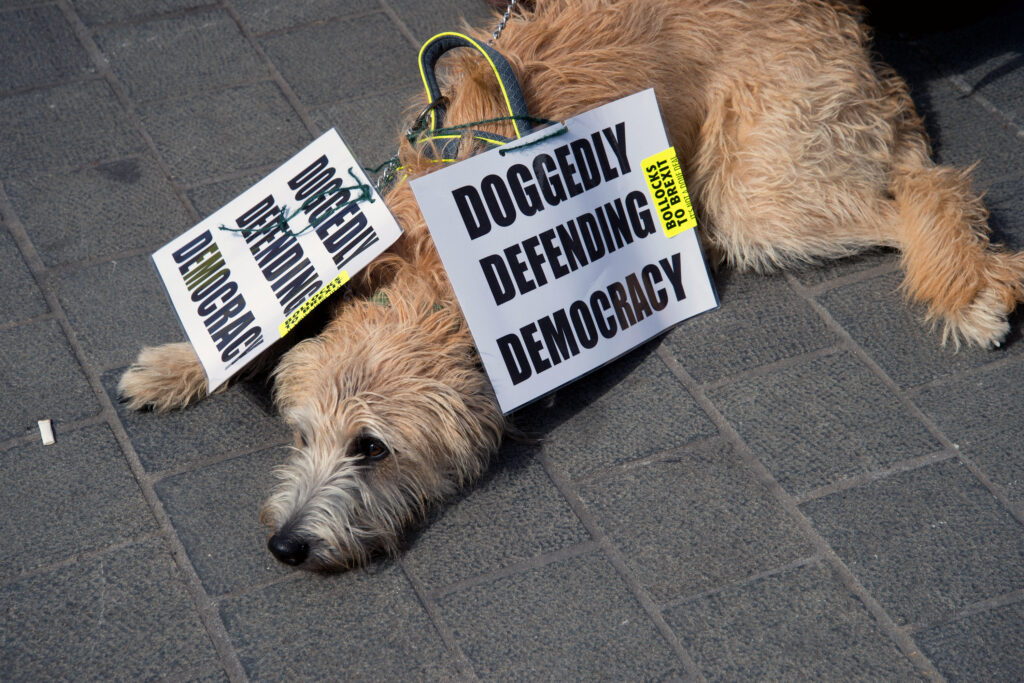
Lynch offers a sweeping critique of the enduring Cold War worldview that frames global politics as a Manichean struggle between “autocrats” and “democrats.” Using as her foil U.S. diplomat Michael McFaul, she argues that this simplistic binary is intellectually thin, historically misleading, and politically dangerous. It obscures the depths of great-power competition, liberalism’s own failures, and the global appeal of non-Western models while permitting undemocratic practices to blossom at home in the name of defending democracy.
“At various points, McFaul appears to use the terms ‘democratic,’ ‘liberal,’ and ‘pro-Western’ interchangeably, making it unclear what he is actually talking about. Sometimes, it appears that there is a deliberate ambiguity about this: ‘Democracy promotion’ sounds far less inflammatory than ‘liberalism promotion.’ … The marriage of liberalism and democracy is not inevitable; indeed, they have often been in tension. Throughout history, liberalism has been an ideology associated with the elite. As Czech political scientist Pavel Barša put it, the liberalism of the twentieth century was a ‘one-sided defense of freedoms and rights against the state [that] helped de-regulate capitalism, which led to huge social inequalities and, ultimately, undermined democracy.’ At worst, a singular focus on ‘democracy’ risks fetishizing process—the act of voting—over results. Indeed, some would argue that the right to vote, even in a ‘free and fair election,’ matters little to those who lack basic security and can’t afford to eat.”
The Secret Agent
Carnival Strikes Back
Pedro Abramovay
The Ideas Letter
Essay
Abramovay riffs off Kleber Mendonça Filho’s recent film The Secret Agent to argue that Carnival is not merely a cultural spectacle but a political grammar through which Brazil has long confronted authoritarianism, corruption, and inequality. By placing the movie’s monsters, inversions, excesses, and inventiveness in dialogue with the everyday violence of the dictatorship and its afterlives, the essay describes how authoritarian power migrates from the state into policing, social relations, and private interests. The Secret Agent, Abramovay argues, ultimately portrays Carnival not as escapism but as method: a way of surviving domination, subverting hierarchy, and imagining democratic survival amid the unfinished wreckage of Brazil’s past.
“The film shows how authoritarian projects distort not only the relationship between the state and its citizens, but the fabric of society as a whole. This is why the echoes of the 25-year dictatorship still resonate so strongly today, whether in policing practices or political behavior. … But in the film it is the resistance of the jeitinho that shows there are ways to escape oppression and violence. These paths rely on subverting hierarchies through a carnivalesque logic, tied to the best of Brazilian culture.”
Homeland Empire
Nikhil Pal Singh
Equator
Essay
Singh argues that Trump’s second-term governance is best understood not as a set of discrete “excesses,” but as a new configuration of state power that fuses foreign and domestic coercion into a single, roaming apparatus—what he calls a “Homeland Empire.” Drawing on the legal residue of the War on Terror, the punitive infrastructures of the carceral state, and an older settler-imperial imagination, the administration uses deportation, raids, and extraterritorial seizures to reclassify large populations as subjects rather than citizens, normalizing emergency rule and discretionary violence across borders.
“But a theory of violence is not a theory of power. Trump’s Homeland Empire is incapable of generating consensual order or lasting hegemony: it can only sustain itself through short-term clearing operations – smash and grab. Maybe this is what happens when the actual, functioning empire enters its terminal, attritional phase: construction, growth and visions of progress are replaced by pyrotechnic convulsions. Rather than banishing the spectres of deindustrialisation, stagnant wages and rising midlife morbidity, it creates new spectacles of deportation and extrajudicial killings, and prospective annexations of oil wealth and ice fields—in order to conjure a world in which dominance affirms its own necessity.”
From Estallido to Far-Right Restoration
How Chile’s Democratic Moment Turned Authoritarian
Luciano Santander Hoces
International Research Group on Authoritarianism and Counter-Strategies
Essay
Chile’s rapid shift from the 2019 Estallido Social to José Antonio Kast’s 2025 election is best understood as a right-wing hegemonic recovery that intensifies the country’s Pinochet-era authoritarian-neoliberal legacy, according to Santander. He traces how the post-Estallido constitutional process, repeated plebiscitary defeat, disinformation, demobilization of progressive forces, and the securitized reframing of protest as “Octubrismo” converted unresolved social grievances into a politics of order, immigration control, and punitive restoration. Kast’s project, on this account, is a “radicalized restoration”: it operates within democratic institutions while narrowing what democracy can plausibly deliver, so that structural alternatives to neoliberalism become politically unthinkable.
“The Chilean crisis can be conceptualized using the Gramscian concept of the ‘interregnum’—a period where the old is dying and the new cannot be born—amid the generalized social mobilization of two sides in dispute. When progressive social movements enter a demobilization phase before institutional reforms consolidate, reactions can quickly transform a crisis of legitimacy into an opportunity for authoritarian-neoliberal expansion. This characterizes a new far-right that, while seeking a restoration, has radicalized its positions toward a horizon distinct from that of the social movements.”