Democracies Disfigured
The ancient Athenians used the word demokratia to describe a political order where power rested with the people. Roughly two thousand years later, the noun was transformed into a verb: to “democratize,” one of the neologisms of the French Revolution. Democracy was no longer a static description of governance but a process. Societies could achieve greater democracy, or less—most famously articulated in Samuel P. Huntington’s idea of democracy as a trajectory unfolding in waves, enabled by structural changes in the economy, the development of strong political parties, and the intervention of civil society actors.
In fact, we often speak about democracy as if it followed a human life cycle. New states are cast as children—full of promise, deserving patience. “Young” democracies pass through turbulent adolescence, their crises explained as growing pains. And somewhere further along lies the hoped-for destination: the calm stability of democratic “maturity.” Political commentary often reflects this assumption. When institutions falter or elections go wrong in the so-called “young” democracies, the explanation arrives in the same form: be patient, the country is only a few decades old, its democracy is still a work in progress.
Yet the empirical record now sits uneasily with that narrative. In many parts of the world, elections have not produced stable democratic consolidation but something more ambiguous: systems that retain the procedures of democracy while steadily narrowing the space for meaningful contestation. In Africa, where democracies are presumed to be in their tempestuous adolescence, a new trend is emerging. Incumbents are no longer waiting for the ballot count to rig the outcome. They are rigging the starting lineup.
In 2025, the continent held ten presidential elections. But ruling elites in Cameroon, Côte d’Ivoire, Tanzania, and Guinea-Bissau pushed through their victories before Election Day by excluding their strongest challengers. They were adopting an appearance of democracy while rendering its substance inconsequential.
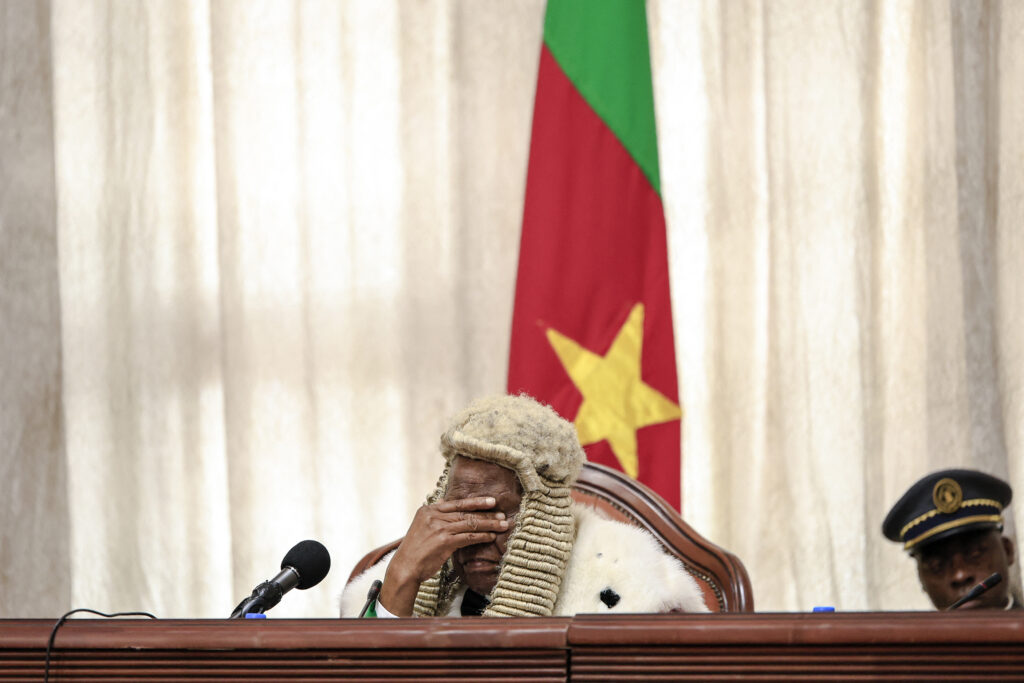
In Cameroon, the main opposition leader Maurice Kamto was barred from contesting the October election. The country’s electoral body cited irregularities with his party’s candidacy list, a decision upheld by the Constitutional Council despite his appeals. The ruling handed incumbent Paul Biya an eighth presidential term, which would mean the 92-year-old—already the world’s oldest leader—remains in power for another seven-year term, making him 99 years old at the next election.
In Côte d’Ivoire, the Constitutional Council barred former Credit Suisse executive Tidjane Thiam from contesting the presidential election. Thiam, 62, is the leader of the largest opposition party, and was removed from the voters’ roll due to his dual French-Ivorian nationality just days after he was named the Democratic Party’s candidate. Former president Laurent Gbagbo was also blocked from contesting because of a criminal conviction. The result was a handy fourth presidential term for incumbent Alassane Ouattara.
Guinea-Bissau’s opposition leader Domingos Simões Pereira was barred from running in the 2025 presidential election after returning from a nine-month exile. That would have handed an easy victory to incumbent Umaro Sissoco Embaló, but the opposition scrambled together a last-minute candidate in Fernando Dias, who mounted a stronger-than-expected campaign. One day before the results were to be announced, military leaders took charge, suspended the vote count, closed borders, and imposed a curfew. Speculation persists that the coup was a sham, orchestrated at Embaló’s behest to block election results from being announced. A West African observation team said that, according to the count they were monitoring, Embaló was losing the election.
Things ended even more chaotically in Tanzania. The opposition leader Tundu Lissu has been in jail on trumped up treason charges since April 2025, preventing his candidacy. Another potential challenger, Luhaga Mpina, was blocked from presenting his nomination papers, which a court then reversed, only for him to be barred a second time. That left incumbent Samia Suluhu Hassan running in a field of only minor candidates. But what came next was unprecedented in the country. Even though her victory was all but guaranteed, protests around the country on Election Day were brutally repressed by state security forces. More than 1,000 people are estimated to have been killed. Observers said the election did not meet the standards for a fair and credible vote; Suluhu was sworn into power after the electoral commission announced she had won with an improbable 98% of the vote.
Blocking your strongest challengers from contesting the vote is not a new electoral tactic by incumbents. Credible challengers to Paul Kagame in Rwanda have consistently been jailed or disqualified from contesting since 2000, which means he has won by more than 90% for a quarter-century. And in the run up to the 2006 elections in Madagascar, a law required candidates to personally file their applications to the electoral body. Opposition leader Pierrot Rajaonarivelo was in exile, and a week before the deadline, the government closed the international airport for “security concerns,” preventing him from entering the country. The courts rejected his candidacy as he was unable to file it personally in time.
In numerous African elections, the struggle has been over votes—their casting and counting, featuring major controversy over the voter turnout, vote counting, ballot stuffing, result forms or the final tallying. This resulted in protests, court cases, and even violence—but at least popular and credible opposition figures were on the ballot.
However, what is new is a shift in the mechanics of control: opposition figures are jailed, disqualified on technicalities, or barred from registering in the first place. The result is an election that looks procedurally sound but is substantively hollow.
Part of this might be generational. Aging presidents—such as Cameroon’s Biya (age 92) or Côte d’Ivoire’s Ouattara (age 84) —no longer have the energy for crisscrossing their countries in actual on-the-ground campaigning. Indeed, in 2025, the Biya campaign was launched barely a month before Election Day and was mostly virtual, deploying material that critics say was either generated by artificial intelligence or pre-recorded. Life-sized cut-outs of himself and his wife were sent out to campaign in their stead. But this isn’t mere fatigue. The extreme lethargy of the Biya campaign signals an abandonment of the electoral process as a means of political competition. The “election” is no more than a ritual confirmation of power.
The generational explanation can only go so far. The more consequential shift is both structural and demographic—a disruptive challenge from a restless, digitally savvy, and connected youth that is loosely organized but politically significant. Their demands are moral and ambitious, calling for systemic overhaul rather than incremental change.
In Kenya, the unpopular 2024 Finance Bill—which aimed to levy crushing taxes on everyday goods—triggered massive protests that June. The movement was leaderless and nonpartisan, deliberately rejecting opposition politicians who attempted to harness it. This refusal was itself a political statement: Political parties were seen as compromised extensions of the same elite corruption. The protests cut across class, ethnicity, and religion, with an unprecedented 43 out of 47 counties experiencing a protest or riot against the Finance Bill, all decentrally organized. The storming of the country’s Parliament on June 25 was the fierce zenith of public outcry.
But even after President William Ruto withdrew the Bill, dissolved his cabinet, and co-opted the country’s main opposition party into government, the calls for Ruto Must Go have not abated almost two years on. In fact, after concessions were made, protestors’ demands expanded rather than narrowed, with more sweeping objectives related to Kenya’s greater political settlement. The discontent continued into 2025, when, on the one-year anniversary of the Finance Bill protests, demonstrations again erupted in 27 out of 47 counties. The demands were not about discrete policy issues but the moral authority of the of the current crop of politicians to govern. In this context, any technocratic fix isn’t seen as good-faith governance, but as crisis management of a system that is trying to preserve itself. Human rights groups have documented a rise in abductions, forced disappearances, and repression following the protests, signaling that the incumbent regime is still trying to contain the discontent, even as the original grievances were partially addressed. The young protestors saw through the “democratic” process, and realized there wasn’t much substance.
This creates a strategic dilemma for incumbents. Because these youth movements are diffuse, they do not easily translate into political vehicles, which makes them dangerous and unpredictable. Any opposition candidate—especially those with cross-class appeal or reformist credentials—becomes uniquely threatening. They can serve as a vessel for popular frustration, with the possibility of converting protest energy into a formidable electoral challenge. Preemptive repression is therefore not aimed at stopping the election itself—even Biya realized he could not do away with the election altogether—but at neutralizing the moment of convergence in which street-level discontent is channelled through a name and face on the ballot.
Uganda is perhaps the best example of this strategy to foreclose convergence before it can become a real threat. Kizza Besigye has challenged Yoweri Museveni’s presidency four times, most recently in 2016. In all these contests, the results were contested by Besigye, who alleged widespread fraud, vote-buying, voter intimidation, and rigging by the ruling party. Over time, these cycles drained Besigye’s electoral momentum without fully neutralizing his symbolic power as the face of resistance against the Museveni regime.
In 2021, Besigye chose not to stand for a fifth contest, and instead endorsed Robert “Bobi Wine” Kyagulani. Bobi Wine represented something qualitatively different. A politically conscious musician who rose to prominence in the early 2000s, his music critiqued the political elite for creating and sustaining the conditions of poverty and oppression. Having grown up in the Kamwokya slum in Kampala, he was dubbed the “Ghetto President” by his fans; a politician with unusual cultural legitimacy, his message resonated with the youth. For a country whose median age is just 16.9—giving it the largest age gaps between the ruler and the ruled—that generational appeal matters.
Even though he was a political novice, Bobi Wine was the target of the same violence and intimidation that Besigye had suffered, including police brutality and house arrest. Museveni was declared winner of the 2021 election with 58% of the vote to Wine’s 35%. What’s notable is not just the repression itself, but its continuity. Bobi Wine has been treated by the state less as an emerging politician than as a familiar and even existential threat.
This continuity became clearer in November 2024, when the Ugandan government abducted Besigye in Nairobi, forcibly returning him to Uganda and placing him under military detention. Since then, Besigye has been denied bail multiple times on treason charges, even as the state continued to target Bobi Wine with intimidation, violence, and arrests on the campaign trail.
Museveni prevented a convergence between Wine’s resonance with the youth and Besigye’s political experience and symbolic authority. Dealt with separately, they could be contained—Besigye, as a seasoned but worn-out dissident, could be locked up indefinitely, and Bobi Wine, as an energetic populist, could have his social standing diminished in the eyes of the electorate by simply rough-handling him as a petty criminal. As the political analyst Andrew Mwenda recently observed, “How can a man who is being hounded by police on a pickup become a president? It … takes away your presidential pedigree if you are just carried like a common thief to a police station on a … pickup.” In this reading, voters do not go to the polls merely to choose their favored candidate, but instead to confirm who they think already has power. Relentlessly harassing a credible candidate will make that candidate look weak and therefore unable to govern.
The risk of a coherent electoral alternative to the 40-year Museveni regime has been pre-emptively incapacitated. The Ugandan presidential election proceeded as expected in January 2026, with Museveni securing a seventh term. Yet that was only achieved by removing Besigye as a potential bridge between street-level anger and ballot-level contestation, and harassing Bobi Wine like a common criminal. Bobi Wine has since been forced into exile.
These trends of electoral authoritarianism challenge the classic assumption of democratization theorists like Huntington who posited that countries progress along a linear scheme, from authoritarianism to electoral competition to institutionalized democracy.
By contrast, scholars such as Andreas Schedler, Jason Brownlee, Steven Levitsky, and Lucian Way have all argued that governments are increasingly adept at maintaining authoritarian control within electoral systems. Rather than progress linearly to “full” democracy, these “hybrid” regimes remain durable, sustained by a bureaucratically managed process that prevents competition in the first place. These regimes can be surprisingly innovative in their tactics—as was the case with the 2006 Malagasy election when the president simply shut down the airport. Others are more predictable and relentless in their repression, à la Museveni. But ultimately, these scholars challenge the classic expectation that electoral competition is a milestone towards democratic “maturity.”
Landry Signé, senior fellow in the Global Economy and Development Program at the Brookings Institute, recently elaborated on this idea when I interviewed him. “Democracy is not linear anywhere,” he said. “It is only as alive as the different levels of accountability that are actually functioning . . . It is never definitive and never something that can simply be taken for granted. Even in what we might call advanced democracies, that contestation continues. It requires constant, ongoing action.”
Consider the familiar binary of “fragile democracy” versus “dictatorship.” According to Freedom House, Africa is increasingly home to “partly free” states: regimes that hold regular elections but constrain opposition, civil society, and the media. This middle category, neither authoritarian nor truly democratic, is often treated as evidence of incremental progress or transitional imperfection—democracy as a work in progress.
But that framing misses something crucial. We are witnessing not unfinished democratization, but systems that have learned to survive precisely by hollowing out the meaning of democratic competition. The political scientist Mariam Mufti argues that we should think of these regimes not as “diminished sub-types” of democracy or as “transitional phases.” They should be considered in their own category and studied on their own terms. This isn’t a mere academic or taxonomic exercise—it shapes how international actors respond to these regimes, and defines the outer boundaries of our political imagination.
But even so-called democracies might not be worthy of the name—as illustrated by the election of Donald Trump in the United States, following similar elections in Hungary, Poland, and Turkey in recent decades. As Marc F. Plattner argues, “we can no longer feel certain that, once countries have established a consolidated and deeply rooted democracy, they have crossed a kind of historical finish line and become forever secure from serious deterioration.” Perhaps, as Mufti maintains, hybrid is the norm.
In an even bleaker assessment, Anna Lührmann and Staffan Lindberg argue that political gravity pulls in the opposite direction, towards less democratization and more autocratization. In their study of 217 instances of autocratization in 109 countries from 1900 to 2017, about a third of them started under democratic systems. Almost all of these episodes led to the countries turning into an autocracy, which should give us “great pause,” they write, because “very few episodes of autocratization starting in democracies have ever been stopped before countries become autocracies.”
The assumption that party systems necessarily mediate political conflict or drive democratic contestation should also be challenged. The rise of Gen Z activism across Africa scrambles the old logic of opposition politics. These movements are decentralized, digital, and defiantly non-partisan—making them impossible to contain within traditional party structures. In this context, incumbents’ fixation on disqualifying opposition candidates looks both logical and futile: They are fighting yesterday’s battles, misunderstanding where real dissent now lives.
Ultimately, what makes this form of control so insidious is that it is paradoxically both durable and unsustainable. By using bureaucratic, procedural, and legal mechanisms to erase competition, incumbents create a surface stability that can last for years. Yet because this order is cut off from the youth-driven social energy outside formal politics, it is corroding from within. As they insulate themselves from challenge, these regimes also insulate themselves from feedback. In doing so, they ensure that when the rupture finally comes, it will be sudden and seismic.
The durability of managed electoral systems is precisely what makes them dangerous. By erasing competition gradually and legally, they make democratic reversal both harder to detect and harder to stop. When competition has already been hollowed out and institutional trust eroded, there are few democratic shock absorbers left to contain crisis. There’s no way to shift course. Elections no longer function as corrective mechanisms; courts and parties no longer command confidence; protest lacks institutional translation.
What does it mean, in practice, when we talk about “strengthening” democracy? This metaphor assumes that something is fundamentally sound but under strain—something that can be shored up or reinforced with the right support. It implies linearity, a tendency towards democratic consolidation, and that all that is needed is that the right people and the right institutions are supported. Much of the global democracy-support ecosystem is built on precisely this premise. But if we take the evidence sketched here seriously, then democratic erosion often advances through perfectly legal procedures, bureaucratic maneuvering, and reformist language, through administrative acts that reroute power while leaving institutions formally intact.
This matters for civil society because so much of its work is premised on access: to courts, to public dialogues, to elected officials, and to civic processes. Yet managed democracies excel in maintaining the form of these access points while emptying them of consequence. In Kenya, for example, there are public participation meetings when a new bill is being discussed so that the people’s voice can be heard. The constitution requires it. But these exercises are so stage-managed that it is effectively a rubber-stamping exercise. Sometimes even the “members of the public” who stand up to speak in such meetings have been paid by politicians. But not attending the public participation meeting still feels irresponsible for people invested in civil society, even if the whole thing is a charade.
For the political scientist Ken Opalo, misunderstanding the form of a political system is “the norm, not an exception” for democracy promoters. “In too many contexts,” he told me, “democracy promotion becomes about form over substance. Often, the democracy promoters merely try to externalize a cartoonish understanding of how political systems in mature democracies work.”
He cites the example of organizations that do “apolitical” democracy promotion, that is, groups that claim political neutrality when promoting democracy without sufficient attention to the actual context that is unfolding—a context where seemingly ordinary legal and ostensibly neutral actions slowly deplete the oxygen in the room. And so organizations continue to train observers, collect data, convene dialogues, and publish reports—often with admirable tenacity—but the real power has long shifted elsewhere.
Misdiagnosis does not simply lead to ineffective interventions. It results in a situation where civil society, including ostensibly “independent” media, risks being unwittingly positioned as an accessory to a system that is playing the long game. It’s a kind of political jiujitsu where nefarious actors use democratic norms—such as decorum, dialogue, and due process—for their own sinister ends, but with all the alarm bells silenced. Engagement becomes performative: legal wins are described as “historic” but with no real political consequences; dialogue becomes a holding pattern; feedback is “welcome” but never acted upon.
The question is not whether democracy can, or should, be “strengthened” through the usual channels. It is whether we are sufficiently attuned to recognizing when the work has to shift to something else: to documentation, resistance, memory, moral witness, or preparation for rupture.
The challenge for the democracy-promotion ecosystem is to accept a more modest but more honest role—not simply funding programmatic activities designed to demonstrate measurable “impact,” but sustaining the individuals and networks that preserve political memory, keep civic imagination alive, and defend the dignity of public life until the conditions return in which power can meaningfully rest with the people.
Christine Mungai is a journalist and writer based in Nairobi, Kenya. She is the News Editor at The Continent, a pan-African weekly newspaper.