Mamdani Lands at LaGuardia
The most facile assessments of Zohran Mamdani’s extraordinary campaign to lead New York City attribute its success to his innovative use of social media and a communication style that appealed to voters with TikTok accounts. But often lost in the narrative of his historic win—inevitably reduced to his age and the novelty of a democratic socialist mayor—is the long tradition of progressive urban policy that his platform evoked. Mamdani’s agenda seeks to disinter, if not fully revive, New Deal–era New York. In doing so, it promises to finally shake the albatross of the city’s 1975 fiscal crisis.
As the general campaign intensified, Mamdani’s team launched a series of videos under the banner “Until It’s Done,” a phrase borrowed from Nelson Mandela. Each began with the solemn-faced candidate striding into frame and sitting behind an antique wooden desk placed in the middle of a sidewalk or public park. For those closely attuned to the semiotics of the Mamdani campaign’s near-constant video drops, you knew you were in for a history lesson. In the final entry in the series, Mamdani celebrated the political career of Vito Marcantonio, the seven-term socialist congressman from East Harlem and a mentee of Fiorello La Guardia, a mayor who had championed labor and civil rights. Posted on the eve of Election Day, the video urged voters, “we need look only to our past for proof of how socialism can shape our future.”
Mamdani has continued to invoke the New York of Marcantonio in his media content and public appearances. In his inaugural address on January 1—following Lucy Dacus’s performance of “Bread and Roses,” among the most gorgeous ballads of the early labor movement—the new mayor spoke of “resurrecting” urban policies that venerated workers. “Here, where the language of the New Deal was born,” he said, “we will return the vast resources of this city to the workers who call it home.”
Mamdani’s politics may not be new, but they represent a distinct departure from the ways of thinking that have animated City Hall since New York’s fiscal crisis in 1975. That was when the city almost defaulted on its debt and Wall Street refused to continue selling its municipal bonds. How the US’s most populous city reached that cliff’s edge—it was borrowing from its debt-funded capital budget to finance its operating expenses—can only be explained by a set of compounding historical developments. Among them were a contracting tax base due to deindustrialization, white flight to the suburbs, a New York State law that saddled municipalities with an exceptionally high share of the cost burden for Medicaid during a period of rising poverty, a national recession, and, not least, shambolic fiscal management. The enticingly simple answer that emerged at the time, however, was that the city’s overly generous local welfare system was to blame. President Gerald Ford, relying on counsel from White House Chief of Staff Donald Rumsfeld and other aides in thrall to the bloodless economic theories of Milton Friedman, promised to veto any congressional bailout of New York. As an immortal headline in the Daily News put it, that equated to telling the city to “Drop Dead.”
The eventual deal hashed out by the key players—the Ford administration, state and municipal officials, union representatives, and the city’s creditors—took a machete to the city’s budget, slashing the municipal payroll and crippling its social services infrastructure. Ford’s lesson in “fiscal responsibility,” as the historian Kim Phillips-Fein argues in Fear City, created the blueprint for broader nationwide efforts to dismantle the New Deal order, culminating in theanti-welfare agenda of the Reagan era and broader bipartisan efforts to make government less accountable and democratic.
Achieving consensus on the causes of—and remedy to—the fiscal crisis required ideological work, along with a hefty dose ofbullying. The city’s unions were strongarmed into using their pension funds to buy city debt while swallowing tens of thousands of job losses. But throughout the fiscal crisis ordinary city residents remained skeptical of the message from both Washington and the banks that austerity was the only way forward. Each new round of layoffs and cuts to services sparked protests from union workers, students, antipoverty activists, parents, and other New Yorkers, who marched with signs reading “This sucks our blood worse than Dracula” and “Don’t steal our brains.”
And yet it is remarkable how quickly so many of the city’s elites acquiesced to these assaults on New Deal liberalism, which they had championed until the very eve of the fiscal crisis. In 1980, a task force at the Twentieth Century Fund (the esteemed progressive think tank now called the Century Foundation) released a lengthy report calling for New York to resign itself to diminished circumstances and embrace a new political economy defined by global finance and public privation. Titled New York—World City, it urged New Yorkers to surrender to the likelihood that the city’s population “will probably decline further; blue-collar jobs will inevitably become fewer; and municipal government must continue to reduce its services”—a necessarily painful transition that required a “tough stance” toward the city’s unions and the courting of white-collar industries.Save for a scant two-page dissent by Andrew Biemiller, a Midwestern labor organizer with a long history in socialist politics who condemned the report’s fixation on the “problems of effete financial groups,” the document offered little succor to the city’s working people. In an uncanny echo of Margaret Thatcher’s infamous “there is no alternative” to austerity speech delivered that same year, New York—World City insisted that, caught between aggressive spending cuts and certain economic disaster, “the city no longer has the luxury of choice.”
Although Thatcher can be credited with coining a motto for neoliberalism, it was in New York that neoliberal practice first assumed form, with ripple effects for the global economy. Other countries in the Global North, notably Britain, were facing a recession in the 1970s, brought on by a declining manufacturing sector and high inflation due in part to OPEC’s oil embargo in response to the 1973 Yom Kippur War. But it was the Ford administration’s response to New York’s fiscal crisis that set the template for austerity and privatization in cities on both sides of the Atlantic. Within months of her inauguration, Thatcher sent delegates to New York and up and down the East Coast to scout out private-led redevelopment projects that could serve as models for her government’s urban policy.
Neoliberal governance, presented first as the sole solution to New York’s problems and later as the only credible vision for its future, narrowed the city’s conditions of possibility for half a century. Even progressive mayors such as David Dinkins (1990–93) and Bill De Blasio (2014–21) essentially accepted the terms of debate set by bankers, real-estate developers, and technocrats. The promise of Mamdani’s administration lies in his capacity to break the stranglehold of received wisdom. His references to city history, particularly his reverence for La Guardia (1934–45), suggest that there is indeed an alternate model to a system that has benefited the few at the expense of the many.
The 1970s are typically portrayed as the nadir in New York’s history as a great city, which by the time of the fiscal crisis had been brought low by poverty, crime, and social and spatial disorder. But these accounts flatten the reality of late–twentieth century urban life.In a scene from the 2024 documentary Drop Dead City—a film that turns the fiscal crisis into a compelling high-stakes social thriller while showcasing the era’s most resplendent facial hairstyles—a television news reporter asks midtown office workers how they feel about the police union’s notorious “Fear City” campaign. When the interviewees, mostly women, are told that NYPD officers were protesting layoffs by distributing pamphlets featuring a hooded skull and warning tourists to stay away from New York City for the sake of personal safety, they scoff at the cops’ exaggerations and scold them for stoking anxiety about crime for political gain. For these New Yorkers, at least, the city was more than its bad reputation.
By most metrics, the New York of the 1970s was certainly dirtier, more dangerous, and more chaotic than it is today. Images in popular culture suggested a city on the brink of mayhem. But for all its apparent disarray New York was undergirded by a robust social safety net that provided its own kind of order.
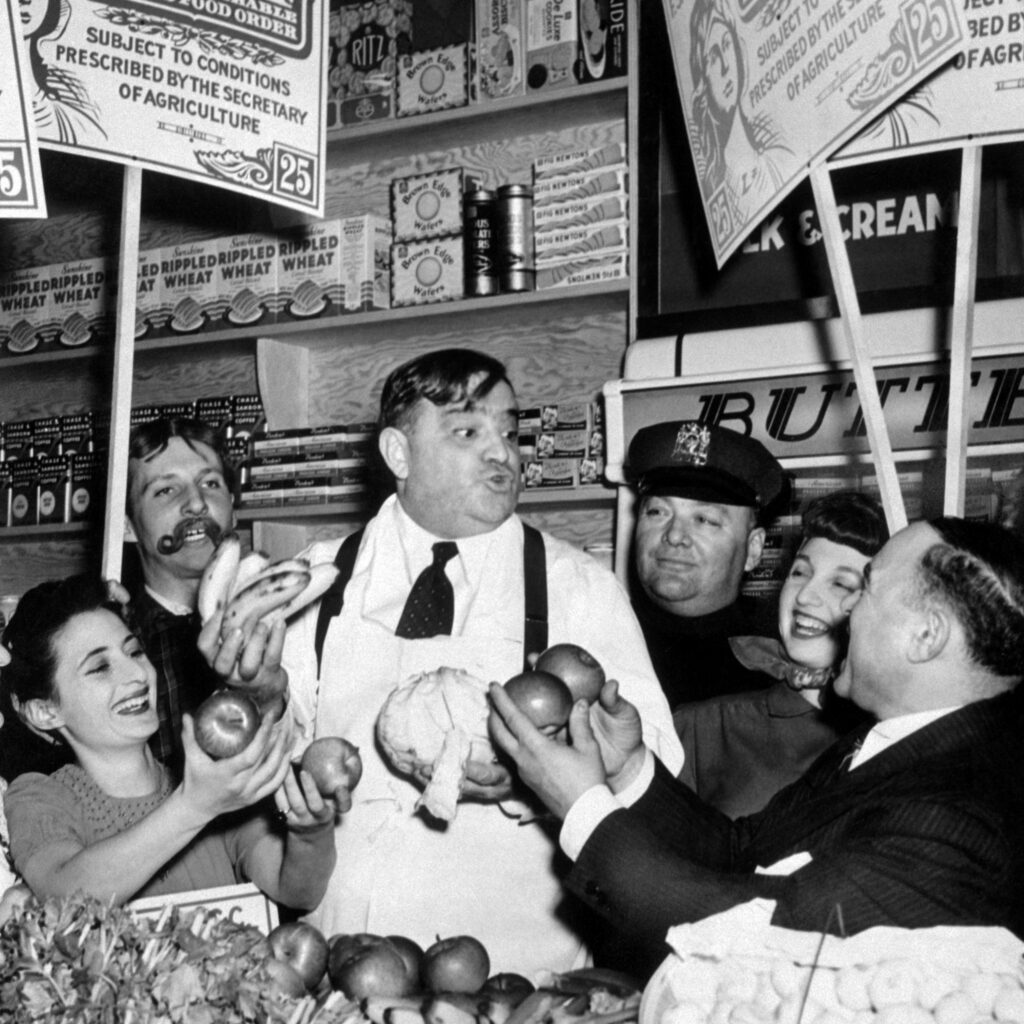
The American welfare state was born in New York City. Progressive Era New York—where labor protections, universal education, public hospitals, and old-age pensions transformed the lives of working people—set precedents for reform movements in other cities, eventually offering a template for the New Deal. Under the administration of La Guardia—who declared, “Only a well-fed, well-housed, well-schooled people can enjoy the blessings of liberty”—New York experimented in socialized urban life in ways that far surpassed any federal initiative.La Guardia, like Mamdani, was elected to unsettle the city’s political establishment. A longstanding opponent of Tammany Hall, the Democratic Party machine notorious for corruption and patronage politics, La Guardia was a Republican who won the support of the city’s immigrants and reform-oriented Democrats. His three-term mayoralty ushered in decades of progressive urban policy. The city’s welfare system swelled throughout the 1930s and 1940s—and again during the Great Society era of the 1960s—to include rent regulation, public housing for both low- and middle-income residents, day care centers, a wide array of antipoverty services, and arts and culture programming, paid for through a combination of federal and local funding.
All this was made possible by a powerful labor movement that had the clout to demand a livable city. The metropolis that emerges from Joshua Freeman’s now-classic Working-Class New York: Life and Labor Since World War II (2001)is fueled by the vigor of organized workers who, he writes, forged “a social democratic polity unique in the country in its ambition and achievements.” Dense with union members and activists who clung to a Popular Front strategy well after the defeat of fascism, New York remained a center for leftist politics even during the depths of McCarthyism.
Anticommunism could not curtailworking-class power in New York, but the fiscal crisis did. As the Twentieth Century Fund predicted, in the 1980s city government began actively soliciting global finance, real estate, and related service industries through deregulation, tax breaks, and a slew of new agencies that smoothed the path for business. In stark contrast to his predecessors, Ed Koch, who assumed the mayoralty in 1978 and presided over the reorganization of city policy and politics, was openly belligerent toward organized labor. Claiming he would “end wasteful union work rules” during his campaign, he continued to antagonize city workers once in office, even skipping the Labor Day parade in 1988. His attitude toward the city’s poor people was just as unsympathetic and—combined with his attacks on the municipal unions, which were engines of social mobility for people of color—reeked of racism. On his first day in office, complaining of “poverty pimps,” Koch issued an executive order that placed the city’s Great Society antipoverty programs under his direct control to better facilitate steep cutbacks.
The fiscal crisis would officially be declared over in 1981 when the city achieved a balanced budget. But the costs of this turnaround were profound, and they were not shared equally. The discourse of crisis—urban, fiscal, or otherwise—had permeated academic and popular debates on New York’s fate in the 1960s and 1970s. But now boosters began to speak of recovery and revitalization while openly heralding a return to elite dominance. The city’s bankers, who insisted that municipal bonds be de-risked by tying them to city sales tax revenues, were able to reap the benefits of New York’s return to solvency without bearing its burdens and uncertainties. Instead, the risks of market capitalism were effectively transferred to working-class and poor New Yorkers, for whom the crises of the 1970s never ended.
Statistics offer a window into the quotidian anguish many New Yorkers endured. As the city’s public-sector jobs were eliminated and deindustrialization continued apace, unemployment reached highs not seen since the Depression. In 1974, the Department of Labor reclassified the New York area’s jobless rate as “substantial” (the next tier after “moderate”) when it hit 7.5 percent. By 1976, the share of working-age New Yorkers without steady work had risen to 11 percent—over three points higher than the national average—and persistently high unemployment became the norm throughout the 1980s and 1990s.
Rising poverty followed job losses and reduced social services. By 1979 about 20 percent of city residents were living in poverty, up from an already-alarming 14.5 percent a decade earlier. Poverty rates in New York have hovered around 20 percent ever since—in stark divergence with national averages, with the Bronx home to the poorest congressional district in the US. On this front, too, what had once been discussed in the language of crisis was now an unsurprising, if unfortunate, fact of urban life. “Whenever you have to reduce dollars, it will impact to a greater degree on poor people,” Koch told a gathering of Black and Hispanic lawmakers in 1982.
Life got crueler for ordinary New Yorkers in countless other ways. The closing of fire houses and public hospitals compounded their vulnerability to avoidable catastrophes. Between 1970 and 2000, as AIDS ravaged poor neighborhoods and the city’s queer community, the number of acute-care hospitals dropped from 119 to 62.
Perhaps nothing better encapsulated the reorientationof city prioritiesthan the transformation of the housing market. With Wall Street on a tear, yuppies replaced blue-collar workers as the object of municipal social planning (if one could still call it that by then). As federal disinvestment in cities made New York ever more dependent onlocal taxes to fill its coffers, the prospect of luring back high-income residents drove housing policy. Deindustrialization and yuppie housingwent hand in hand. Laws promoting loft conversions forced out small factories in favor of apartments for downtown office workers. David Rockefeller led the effort to hasten the decline of manufacturing in Lower Manhattan to make way for the luxury enclave of Battery Park City.
Affordable housing—the anchor that made possible other forms of social stability after World War II—was outsourced to the private sector through loosely interpreted tax exemptions that mostly encouraged the construction of high-end developments. Petty slumlords cashed in too: Emboldened by the city’s incentives for modernizing dilapidated properties, owners of regulated buildings tormented their tenants into self-evicting (with glue in the locks, drug users in empty units, vermin everywhere) so that they could make minor upgrades and hike the rent. As the market for cheap housing contracted, homelessness skyrocketed; the resulting scenes of immiseration recalled the photographs of Jacob Riis that had inspired Progressive reform in the early twentieth century. Koch’s response was to mop the floors of Port Authority with ammonia and make public space otherwise hostile to people sleeping rough.
While city finances were subject to harsh discipline, Wall Street veered toward a culture that celebrated turmoil. The high interest rates of the Reagan-era Fed drew capital to US securities markets, invigorating the “shareholder revolution” that sought to financialize all aspects of the economy and led to the evisceration of domestic industries whose labor costs made them insufficiently profitable to investors. As factories shuttered across the country, the bankers who coordinated hostile takeovers from Lower Manhattan made a killing in fees that they funneled into Battery Park condos and Tribeca lofts.
The rise of neoliberal governance in New York and beyond was abetted by fractures on the left that went back to the 1960s, when New Left activists split with organized labor over union leaders’ support for the war in Vietnam—a rift that eventually helped catapult Ronald Reagan into office as white working-class voters defected from the Democratic Party.
Although the Democratic Socialists of America was founded in 1982 in an attempt to heal the chasm between blue-collar workers and what the DSA cofounder Barbara Ehrenreich and her husband John called the “professional-managerial class,” it was not until Occupy Wall Street in 2011 that DSA began to find real traction as an organizing force—and not until the election of Alexandria Ocasio-Cortez to Congress in 2018 that it proved its electoral potency. But if AOC’s surprise victory was an augury of a resurgent left, Mamdani’s was a thunderclap, one that far exceeded any previous DSA gains in both scale and symbolism.
DSA has been caricatured as an organization of college-trained, mostly white young people embittered by the disappointments of late capitalism. The stereotype is not exactly untrue, though it obscures the organization’s ever-evolving demographic composition (it is worth noting that as recently as 2013 the median age of DSA members was 68; by 2021, it was 33). But to dismiss DSA for its appeal to these constituents is to overlook both their legitimate grievances and their vision for a shared future that echoes the past their grandparents had enjoyed. It is no wonder that once its model was cemented with Mamdani’s election the membership of DSA’s New York chapter and its national organization expanded dramatically (from 6,000 to 14,000 and 52,000 to 93,000, respectively, between October 2024 and December 2025).
Mamdani’s self-identification as a socialist, a position once assumed to make a mayoral candidate unelectable, even in New York, has only amplified his success with younger voters. Most of them likely know nothing of the city’s 1975 fiscal crisis, but they have lived in its shadow. Educated young professionals, once the beneficiaries of the neoliberal turn in New York and elsewhere, find themselves increasingly vulnerable to the instabilities wrought by market forces beyond their control. The historical shifts precipitated by the city’s fiscal crisis ultimately came for them as well, even if others bore their consequences more painfully andimmediately. The global financial crisis in 2008 made clear, among other things, that Wall Street’s culture of risk-taking was disastrous for all but the few for whom it was staggeringly lucrative.
In her 2009 ethnography of Wall Street,the anthropologist Karen Ho locates the finance bro at the heart of this culture of risk, which has upended nearly every sector of the global economy, almost always to the disadvantage of the average worker. Yet her subjects’ apparent indifference to the suffering they cause lies not so much in malice than in a projection of their own job insecurity. As Wall Street firms downsize and reconstitute in cyclical fashion, their employees become habituated to both their own disposability and the volatility of capitalism.
Mamdani’s insistence that voters need not accept the idea that markets should determine the contours of their lives managed to break through to the very people charged with manipulating the levers of global finance: The CEO Dan Loeb was quoted in Business Insider declaring “a hot commie summer” in the back offices of Wall Street. Among the top firms, the number of Mamdani donors, most of them drawn from the grunt ranks, edged out the managers and executives who filled the war chest of his adversary Andrew Cuomo. By the time of the general election, the Financial District swung definitively for Mamdani. Young white-collar workers—neoliberalism’s lodestar, on whose behalf a new market-oriented municipal governance was inaugurated—voted for the socialist. As one of them put it, “rent is crazy.”
Whether Mamdani can realize his ambitious agenda—and surely he will not achieve it all, at least not without compromises—remains open. But many of its building blocks, and the traces of a more humane city, are still there, if in diminished form: public hospitals, rent regulation, a top-tier urban public university system. And New York is still a working-class town, with the highest rate of union membership of any large city in the US.
To overturn the logics that have shaped municipal policy since 1975 will no doubt require tangible material change. But discarding or disarming the old platitudes is just as vital. For fifty years, the drumbeat of “there is no alternative” drowned out all serious counterarguments to austerity and privatization. When Mamdani met Donald Trump in February and secured a promise of $21 billion in federal housing grants to New York City, the mayor seemed to grasp this entanglement of the material and the symbolic. He presented the president with two framed newspaper front pages, one real and the other aspirational: “Ford to City: Drop Dead” and “Trump to City: Let’s Build.” Placed side-by-side they suggest that the historical era inaugurated by the fiscal crisis—one defined as much by dogma as policy—may finally be over.
Sarah Miller-Davenport is a historian of twentieth-century US and graduate program director at the Committee on Global Thought at Columbia University.