Vargas Vive
On the evening of August 24, 1954, Getúlio Vargas, the president of Brazil, called an emergency cabinet meeting. Earlier that month, members of his personal bodyguard had attempted to assassinate a political adversary, but only succeeded in killing a major in the air force. This unleashed a ferocious political crisis as generals demanded Vargas’s resignation. As pressure mounted, he gathered his cabinet. The ministers themselves were deeply divided. Some argued that he should resist and even proposed obtaining weapons to confront the military uprising; others insisted that resignation was the only possible path. A coup loomed. Out of options, Vargas dismissed the cabinet, wrote a tortured note, and shot himself in the heart with a revolver. Two hours later, his suicide letter was read on national radio. “Serenely, I take my first step on the road to eternity,” he concluded. “I leave life to enter history.”
Contrary to his expectation, history has largely forgotten Vargas. In Brazil, he is neither properly celebrated nor loudly rejected. Outside of it, he is barely known. Other strongmen like Franco, Salazar, Atatürk, De Gaulle, and Perón remain central references. Vargas, though equally decisive in shaping the Brazilian state, lacks similar symbolic presence. But his tumultuous and dramatic career holds urgent lessons for the politics of today.
The Rejection: A Decisive Figure Without Clear Ideological Heirs
Most political currents today reject Vargas. Liberals argue he came to power illegitimately after losing the 1930 election, leading a revolution that dismantled the Constitution, dissolved Congress, and interrupted the peaceful transfer of power that defined Brazil’s Oligarchic Republic. Progressives see him as authoritarian, also accurately: He ruled as a dictator from 1930 to 1932, carried out a self-coup in 1937 in order to stay in power, and during the Estado Novo era (1937–45) he again dissolved Congress, canceled elections, forbade all political parties, censored the press, and governed by decree. Even between 1934 and 1937, when he had been democratically elected, he suspended liberties and ruled through a state of exception after 1935.
Communists see him as the most relentless anti-communist in Brazilian history: Following the 1935 uprising, the regime brutally repressed opponents, imprisoned thousands, and persecuted figures like Luís Carlos Prestes, whose Jewish wife, Olga Benário, was deported while pregnant to Nazi Germany (she was gassed in 1942). Socialists associate him with fascism, given the features of Estado Novo that were inspired by Mussolini, such as corporatism and a cult of personality. Nor does the right want Vargas. Conservatives accuse him of demagoguery and the disorderly expansion of social rights. Under him, key rights were established earlier than in many European and Latin American countries: women’s suffrage in 1932 and a legal minimum wage in 1940.
Pro-market critics argue he built a bureaucratic, interventionist state: The Consolidation of Labor Laws (1943) instituted proper labor rights for the first time in the country, including paid leave and the eight-hour day; the Department of Administration and Public Service (1938) professionalized bureaucracy; and policies of industrialization and economic nationalism limited market dynamism. On the far right, Vargas is seen as opportunistic, having allied with movements like Integralist Action and then repressed it after the failed coup in 1938. He is often accused of corruption and even labeled a socialist. In short, the right associates him with the left, while the left defines him as right-wing.
These critical readings of Vargas often rely on European ideological frameworks that impose coherent categories onto realities that resist them. In Latin America, figures like Vargas are frequently dismissed as “barbaric”: anti-institutional, violent, or anachronistic. This misreading reflects a deeper inheritance. The opposition between “civilization” and “barbarism,” articulated by the Argentine intellectual and politician Domingo Faustino Sarmiento in Facundo (1845), became central to Latin American political thought. Civilization was associated with Europe—order, rationality—while barbarism encompassed rural life, caudillos, and non-European heritage. Vargas escapes this frame. He is both heir to caudillismo and an architect of the modern state: a figure of synthesis rather than coherence.
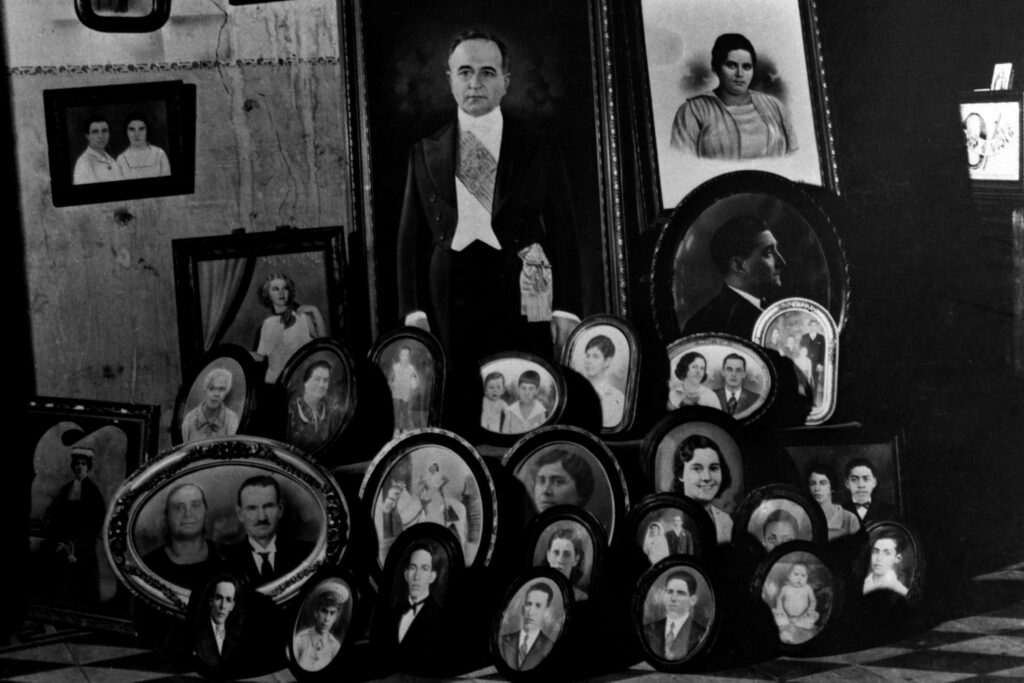
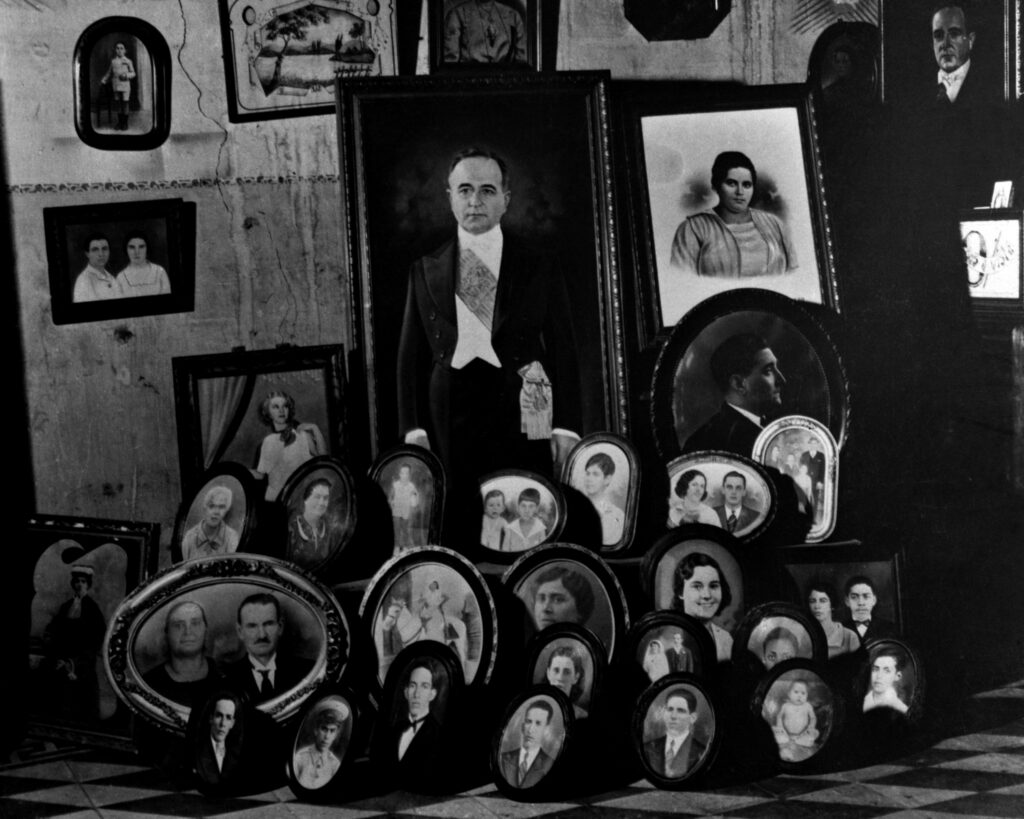
While Brazilian intellectual and political elites deeply disliked Vargas, significant parts of the population genuinely loved him. He was widely seen as a paternalistic figure—the “father of the poor” and protector of workers. The scale of this popular attachment became unmistakable the morning after his suicide. More than a million people filled the streets of Rio during his funeral. Crowds spontaneously attacked newspaper headquarters associated with the anti-Vargas opposition, while Carlos Lacerda, Vargas’s preeminent opponent, had to seek refuge inside the American embassy and was later evacuated by helicopter to avoid being lynched. Protesters also invaded Air Force buildings, leading to clashes between unarmed civilians and the military. This emotional identification also shaped the culture: Jackson do Pandeiro wrote a popular song inspired by Vargas’s suicide letter called “Ele Disse,” and the following year Estação Primeira de Mangueira won Carnaval with a tribute to Vargas.
Why revisit him now? Brazil is approaching a presidential election that will decide who leads the country through 2030, the centenary of the 1930 Revolution that brought Vargas to power. It is also likely the last election centered on Luiz Inácio Lula da Silva, who is often compared to Vargas as one of the country’s most consequential leaders. This suggests a closing cycle, not only of Lula’s trajectory, but of the Brazil forged under Vargas, which now appears increasingly exhausted. In many ways, Brazil itself has drifted back toward some of the structural vulnerabilities Vargas sought to overcome: precarious and fragmented labor, weakened collective organization, renewed dependence on agricultural exports and extractive activities, a widening technological gap in relation to global powers, and growing dependence on infrastructures controlled by foreign companies. The threats to Brazilian sovereignty today are no less significant than they were a century ago—but they have taken a different form. The challenge is no longer simply industrial backwardness or foreign control over commodities, but dependency within a digital, financialized, and platform-driven global order. In this sense, Vargas may also offer lessons beyond Brazil itself, particularly as several Western democracies increasingly display dynamics associated with the “Brazilianization” of the world, a process anticipated by the Brazilian philosopher Paulo Arantes.
The Inspiration: Getúlio as a Network-Actor
Vargas was a wide-spectrum political operator, capable of absorbing and reorganizing diverse social forces within a single state arrangement—translating tensions into institutions, policies, and symbols. At the same time, he arbitrated among them, becoming the unavoidable point of passage through which all had to move: labor movements, fascist movements, Catholic movements, Black and women’s movements, student movements, communists, and the military. In this sense, he resembled a network-actor, stitching together alignments and adapting to shifting contexts. He did not merely govern Brazil from 1930 to 1954; he condensed the central contradictions of its modern formation.
We can identify four strategies that structured his political practice and offer inspiration for contemporary struggles: the construction of transversal identities, the production of a shared future, the suspension of ideological coherence, and the primacy of politics over all other logics.
Vargas governed a fragmented society by producing political categories to reorganize it. The most important was the trabalhador. This was not an economic class defined by class struggle, as European socialism would have it, but a moral and political category: disciplined, respectable, and socially legitimate. Vargas embodied this identity, presenting himself as the “first trabalhador of Brazil” and even receiving the first labor card issued in 1932, despite being a landowner from an oligarchic background.
By expanding the meaning of the worker beyond the industrial proletariat, Vargas created an inclusive but state-mediated category. Recognition as a worker depended on state certification, and access to rights—such as healthcare and education—became tied to this status. Citizenship itself was effectively anchored in being recognized as a worker, generating strong incentives for inclusion. This dynamic was illustrated by the jangadeiros (fishermen) from Ceará, who traveled to Rio to demand recognition of their labor and access to rights, an episode later recounted by Orson Welles in his unfinished film It’s All True.
Alongside this, Vargas helped construct the identity of the Brazilian, echoing ideas such as José Vasconcelos’s “cosmic race,”1 which framed racial mixture as a civilizational strength. Vargas’s policies incorporated Afro-Brazilian cultural elements—once marginalized or criminalized—into a national identity. Samba, capoeira, and Carnival were reclaimed as central symbols of a mestiço(nation). Symbolically, Vargas replaced Brazil’s patron saint, Pedro de Alcântara, with the Black icon Our Lady of Aparecida, declaring her “Morena (dark-skinned) like all Brazilians.”
In this framework, trabalhador and Brazilian2 function together: One organizes inclusion through labor and rights, the other through identity and belonging. Both are expansive, state-mediated categories aimed at transforming fragmentation into unity. Both proved remarkably durable. They remain embedded in popular imagination: Some people still identify primarily as Brazilian3 rather than by their race, and to say “I am a trabalhador” is not merely descriptive but a moral claim of dignity and legitimacy.
To be Brazilian is not a fixed identity but an ongoing synthesis; to be a trabalhador is not a given at birth but achieved through action and recognition. This produces a form of conditional universalism: Unlike liberal or Christian universalism, where dignity is assumed to be inherent, Vargas-era belonging was something socially constructed and earned.
This model is both powerful and dangerous. It transforms individuals into active participants whose rights are tied to contribution, but it also generates exclusions: Those not recognized as trabalhadores, or outside the symbolic national synthesis, may be denied access to rights. By promoting the idea of a harmonious mixed nation, the state helped obscure persistent hierarchies in which Blackness remained devalued and whiteness continued as the implicit norm. According to the historian Ynaê Lopes dos Santos, the valorization of “mixture” was tied to a long-term project of whitening, not to genuine racial equality, enabling a form of racism that functioned without explicit segregation while remaining deeply structural.
Crucially, these identities were not merely forms of recognition; they defined the central political subjects responsible for building the future. The trabalhadores were not just individuals seeking inclusion, but the agents tasked with constructing an industrialized, sovereign nation. At the same time, the figure of the Brazilian pursued a parallel mission: to embody and realize the promise of a racial democracy. This promise was grounded in the powerful myth that Brazil was a society in which racial differences were harmoniously integrated, where coexistence across races was not only possible but already achieved. Both identities were bound to a shared horizon: the worker building the material foundations of the “Brazil of the future,” and the Brazilian enacting its symbolic and civilizational promise. At their core was a political faith: the belief in a better tomorrow, which Vargas used to sustain collective action.
The construction of a common horizon was conducted through the suspension of ideological coherence. Unlike leaders guided by rigid doctrines, Vargas operated through adaptation. His trajectory combined alliances with the military, regional elites, fascists, and labor movements. This plasticity was methodological: Politics, for him, was not the application of ideas, but the strategic recombination of instruments, constantly recalibrated. He did not align reality to doctrine; he bent doctrine to political construction, privileging centrality over coherence.
This allowed him to move across camps without being captured by any. Ideology was secondary to maintaining his position as the indispensable node through which competing forces passed. This logic shaped the post-Estado Novo party system: Vargas helped create the PSD4 on the right and the PTB5 on the center-left not as ideological parties, but as political architectures organizing elites and workers within a system he designed. Conflict was not eliminated, but structured.
This suggests that political effectiveness depends on the ability to escape rigid ideological boundaries. In Vargas, politics is a construction rather than a matter of moral purity, where coherence is sacrificed for efficacy. His pragmatism should not be seen only as opportunism, but as a way of reorganizing isolated interests within a broader political community.
His suicide in 19546 should be read through this lens. It was the culmination of his method: Even his life became an instrument of political strategy. Through his death he sought to reconfigure forces, mobilize popular sentiment, and secure the continuity of his project. In his suicide, Vargas’s pragmatism reached its most radical form: a politics without external limits, where ideology, institutions, and even life itself are subordinated to political construction.
Linked to this suspension is another central aspect of Vargas’s political practice: the primacy of politics over all other logics. Vargas governed as if no economic theory, social structure, or institutional rule could dictate political action. Constraints existed, but they did not determine decisions in advance. Political will came first. In this sense, politics was not simply the management of existing conditions—it was the force capable of reshaping them.
The success of sheer political will is best seen through how Vargas and his government confronted the Great Depression. The great Brazilian economist Celso Furtado argued that in the beginning of Vargas’s government his finance minister Oswaldo Aranha defied financial orthodoxy by conducting an extraordinarily bold countercyclical policy. Furtado described this approach as a form of proto-Keynesianism, predating the New Deal and the consolidation of Keynesian orthodoxy. It aimed to sustain domestic demand through active state intervention, including the maintenance of commodity prices (going so far as to destroy surplus coffee stocks), the preservation of income in key sectors, the tight regulation of banks and interest rates, the expansion of public spending, and the deliberate use of state instruments to stabilize employment and consumption. In Furtado’s interpretation, this early commitment to demand management not only mitigated the severity of the crisis in Brazil but also anticipated, conceptually and practically, the principles that would later define Keynesian economic policy. As a result, Brazil was one of the first countries to emerge from the 1929 crisis.
Similarly, the 100% minimum wage increase in 1953 defied fiscal and technical advice, asserting that wages and dignity are political decisions, not merely economic ones. The creation of Petrobras followed the same logic: Instead of relying on foreign capital, Vargas prioritized sovereignty over efficiency.
What Can Brazil and the World Learn from Vargas Today?
In some domains, Vargas’s legacy endures. In foreign policy, the pragmatic logic that he promulgated persists. Brazilian diplomacy continues to operate through flexible alignments, strategic ambiguity, and a refusal to be fully captured by a single geopolitical bloc. In this respect, there are clear parallels between Vargas and Lula.
At first glance, Lula’s current government appears to echo Vargas’s. There is a clear emphasis on increasing the purchasing power of workers, on rebuilding elements of an industrial policy, and on repositioning Brazil as a major energy producer, particularly through the expansion of oil production. Lula can be read as attempting to extend the Vargas era. But this resemblance also reveals a deeper limitation.
To be a varguista today is not to continue Vargas’s policies. It is not to replicate industrialization, expand oil production, or even strengthen labor protections in their original form. Lula’s approach, in many ways, remains anchored in the extension of an existing model—one that seeks to recover and adapt the developmentalist framework of the mid-twentieth century. To be a varguista today means placing Brazilian sovereignty above all else and thinking strategically about the country’s insertion into the global economy in ways that avoid new forms of dependency. It would mean reproducing Vargas’s strategic orientation, not his specific policies.
What defined Vargas was not the specific content of his policies, but his capacity to reimagine the country’s trajectory altogether. He looked at a Brazil structured around coffee monoculture, marked by deep inequality and consequences of slavery, and envisioned something radically different: an industrialized nation, with a new system of rights, a stronger state, and a claim to sovereignty. This is precisely what is missing today. Just as Vargas refused to accept that Brazil’s destiny was tied to agricultural exports, Brazil’s contemporary challenge is to resist the temptation of a new extractivist horizon, privileging oil over the forest and short-term revenue over long-term sovereignty.
Beyond Brazil, Vargas’s method is valuable to democracies undergoing a profound transformation of their social and economic foundations. At the core of this challenge is the transformation of labor. Across democracies, work is increasingly fragmented, precarious, and platform-mediated, eroding the institutional bases of collective organization. Under these conditions, bottom-up organization alone no longer suffices. As in Vargas’s time, there will be a need for more deliberate efforts to structure and integrate these workers into new forms of collective life.
But organization is not enough. Vargas did not merely regulate labor; he gave it meaning. The trabalhador became a political and symbolic identity, capable of conferring dignity and belonging. Today, this identity has dissolved without being replaced. The challenge is therefore to construct new, transversal identities—formed through action, not inheritance—capable of aligning individuals across differences within a shared project.
This requires rethinking the value of work itself. The debate remains trapped between restoring traditional wage labor and accepting fragmented, task-based compensation. What is missing is the invention of new mechanisms that combine protection, recognition, and dignity, even in the absence of stable employment.
Underlying these challenges is the persistence of economic determinism. Vargas’s defining move was to defy what seemed economically rational: To him, no constraint was final. Reality was always treated as malleable. Crises, structural weaknesses, and dependency are not accepted as given, but as starting points for intervention. For Vargas, politics begins with uncertainty. Evidence matters but does not determine action; identities matter but are not fixed; constraints exist but can be reshaped.
This offers a lesson for contemporary politics. Too often, progressive politics tries to legitimize itself through claims of scientific inevitability or economic necessity, as if moral and political commitments alone were somehow insufficient. But many political decisions are ultimately grounded in values, not in technical certainty. The Covid-19 response is a good example. In many cases, societies made an ethical choice to prioritize the protection of life, particularly the lives of the elderly and the vulnerable. Yet progressives often struggled to articulate this as an ethical commitment, preferring instead the language of “following the science,” as though science itself could dictate political priorities independently of moral judgment. Science can inform decisions, but it cannot determine what societies ought to value. Vargas offers a different model: governing as if moral and political commitments were sufficient justification for action.
This means that democracies today must move beyond both orthodox austerity and its Keynesian oppositions, and confront new forms of dependency, as Marcos Nobre has argued in these pages—particularly those linked to digital infrastructures, platforms, and climate change. Sovereignty can no longer be defined only in relation to external enemies. It must be understood as the capacity of societies to maintain control over the conditions of their existence: over work, technology, and ecological systems.
Vargas’s legacy, therefore, lies not in his policies, but in his ambition: the willingness to redefine constraints and project a collective future. The question for democracies today is whether they can do the same.
- This thesis proposed that Latin America would give rise to a new stage of humanity, founded on the mixture of European, Indigenous, African, and Asian populations. Against European racial hierarchies and North American segregation, mestizaje was framed as a positive and even superior synthesis. ↩︎
- The category of the “Brazilian” as an individualized subject was not explicitly constructed by the regime; this is an analytical move I introduce here. In its own discourse, the state did not refer to a singular “Brazilian” subject, but rather to a collective defined as the “Brazilian race.” It is only for analytical purposes that one can extract from this collective formulation a figure of the individual subject of miscegenation. The persistence of this logic is visible in contemporary self-identification, where many mixed-race individuals do not define themselves strictly as white, Black, or even pardo, but instead as “cor de brasileiro”—literally, “the color of a Brazilian.” This expression does not describe a precise phenotype; rather, it marks a deliberate ambiguity, a way of belonging to the nation while avoiding rigid racial classification. ↩︎
- In fact, claiming whiteness in Brazil often requires highlighting a European heritage (“I am Italian” rather than “I am Brazilian,” whereas in other similar countries the national identity is perfectly associated with whiteness, i.e. “I am American” does not imply non-whiteness, quite the contrary). ↩︎
- PSD: Political party that represented the regional elites supporting Vargas’ project—right wing party. ↩︎
- PTB: Political party that aimed to represent the workers—center-left party. ↩︎
- Getúlio Vargas’s suicide in August 1954 can be understood as the outcome of a profound political impasse. By that point, he faced mounting pressure from the press, significant sectors of the military, and large segments of the governing elites, all demanding his resignation. At the same time, he retained strong and mobilized support among the popular classes. This created a dual risk: on one side, the likelihood of a coup d’état if he remained in power; on the other, the possibility of widespread unrest—or even civil conflict—if he chose to resist. In this context, his decision to take his own life can be interpreted as a political act that simultaneously disrupted the momentum of the impending coup and averted a potentially violent confrontation, transforming a moment of acute institutional crisis into one of symbolic resolution. ↩︎