
The recent killing of Jalisco narcotics trafficker “El Mencho,” one of the most wanted drug lords alive, was a landmark event in the history of Mexican organized crime. For Mexican scholar Carlos Pérez Ricart, the murder marked a moment of deepening chaos in a violent military confrontation that has already lasted over twenty years. The debased yet mutually reinforcing cycle of drugs to the north and guns to the south, Pérez Ricart writes, has led to countless atrocities and a lost generation. Yet it persists. Can President Claudia Sheinbaum mitigate the violence without El Norte’s cooperation to tackle the demand side of this structural problem?
Writing from Nairobi, Christine Mungai then takes us on a tour d’horizon of democratic disfigurement in l’Afrique. My colleague, historian Nils Gilman, has long argued that modernization theory has never really gone out of style. Mungai would agree and seeks to ‘rediagnose’ our thinking on democracy’s assumptions by making it clear there are countless ways to achieve or lose democracy. We need far less hubris and much more modesty about the outcomes of “democratization.”
The Bulgarian political scientist Dimitar Bechev complements Mungai’s exploration of damaged quasi-democracies by looking at the bloated yet (for some) alluring concept of illiberalism. Has too much airtime been given to the concept, and does it need a rest? Are we overstating the coherence of the illiberal project both as theory and as global phenomenon? Is the illiberal paradigm too riven by its own contradictions to sustain itself?
Our curated section kicks off with an Aeon essay on the scholarship of Argentine decolonial theorist Walter Mignolo by Federico Perelmuter, a sharp young Argentine writer. Perelmuter suggests that Mignolo flattens conceptions of the West and perilously essentializes complex conditions. In historicizing Mignolo’s own trajectory, Perelmuter takes the measure of the man’s contributions. There’s less than meets the eye.
In International Affairs Caio Gontijo analyzes the power of Brazil’s Bolsonarista forces online, arguing that Brazil’s far-right “online organic intellectuals” have been key to renewing Brazil’s neo-liberal order under Bolsonaro: his movement is less of a rupture than a restoration. With Bolsonaro’s son, Flavio, neck and neck with Lula in the upcoming 4 October elections, Gontijo’s Gramscian-inflected look at far-right digital influencers is of particular relevance.
Pan Africanism, for some, has run the risk of becoming an empty signifier—meaning everything and nothing at the same time. Concerned by that reality, Daniel Mulugeta writes in African Affairs that proper analytical investigation of the historical concept, not only normative arguments on its behalf, must take pride of place.
Our musical selection looks back at the heyday of Brazilian Tropicalia with the multi-instrumentalist Giberto Gil performing the lyrics of Torquato Neto. A Rua (The Street) is about the social space under late‑1960s Brazilian modernity—space that was both seductive and violent.
—Leonard Benardo, vice president at the Open Society Foundations
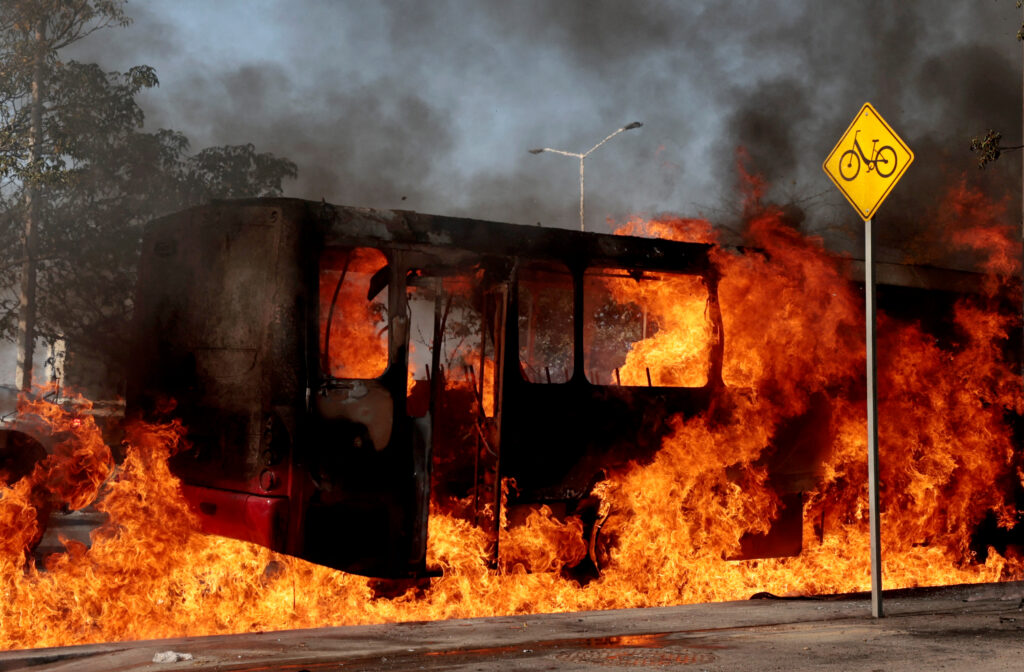
Mexico’s Forever War on Drugs
Carlos Pérez Ricart
The Ideas Letter
Essay
From spectacular arrests to recurring waves of violence, Mexico’s twenty-year war against drugs has produced a sense of constant escalation without resolution. The familiar language of cartels, kingpins, and crackdowns no longer captures what is unfolding; the conflict has outgrown the terms meant to contain it. What persists is not a coherent battlefield, but a diffuse and evolving landscape of violence that resists conventional explanation.
“For a long while, we thought the problem was criminal organizations. Over time, it has become clear that the issue lies not only with the actors, but with the system—a system that connects consumer markets, transit routes, global supply chains, and transnational criminal economies. Mexico is where these flows converge. It has not been merely fighting criminal organizations. It is situated, perhaps trapped, at the center of an architecture.”
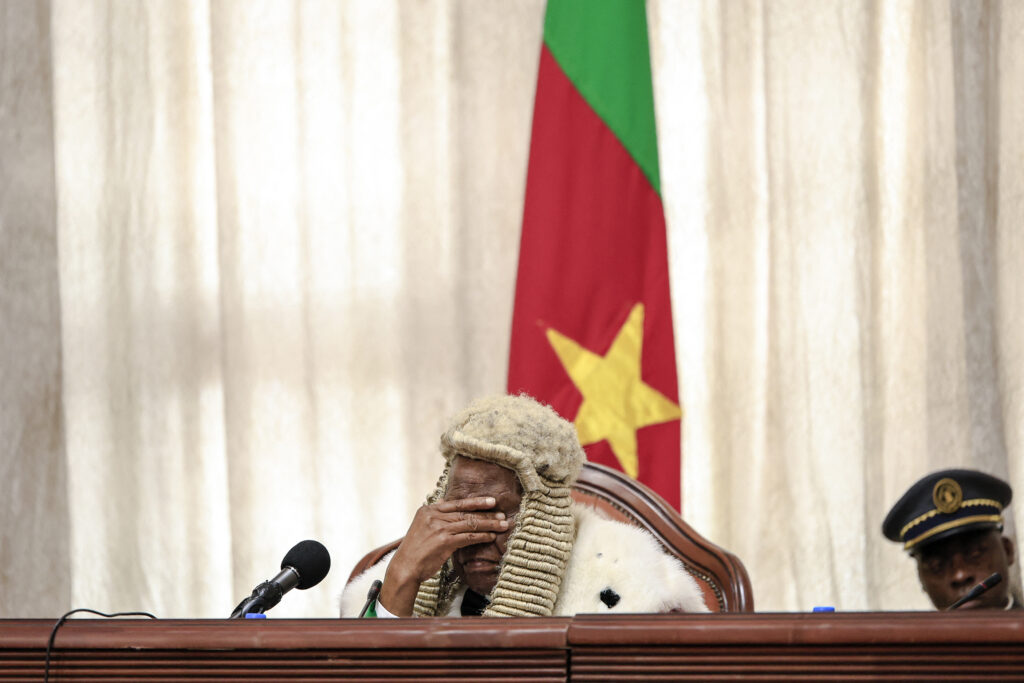
Democracies Disfigured
Christine Mungai
The Ideas Letter
Essay
Across a growing number of African elections, incumbents are no longer waiting to manipulate results—they are shaping the field before the vote even takes place, excluding credible challengers and emptying competition of meaning. What remains is a system that looks procedurally democratic but functions to preempt contestation altogether. The problem is not simply flawed elections, but a deeper misreading of how power is being reorganized: pro-democracy organizations risk being coopted by rising authoritarians.
“What does it mean, in practice, when we talk about ‘strengthening’ democracy? This metaphor assumes that something is fundamentally sound but under strain—something that can be shored up or reinforced with the right support. It implies linearity, a tendency towards democratic consolidation, and that all that is needed is that the right people and the right institutions are supported. Much of the global democracy-support ecosystem is built on precisely this premise. But if we take the evidence sketched here seriously, then democratic erosion often advances through perfectly legal procedures, bureaucratic maneuvering, and reformist language, through administrative acts that reroute power while leaving institutions formally intact.”
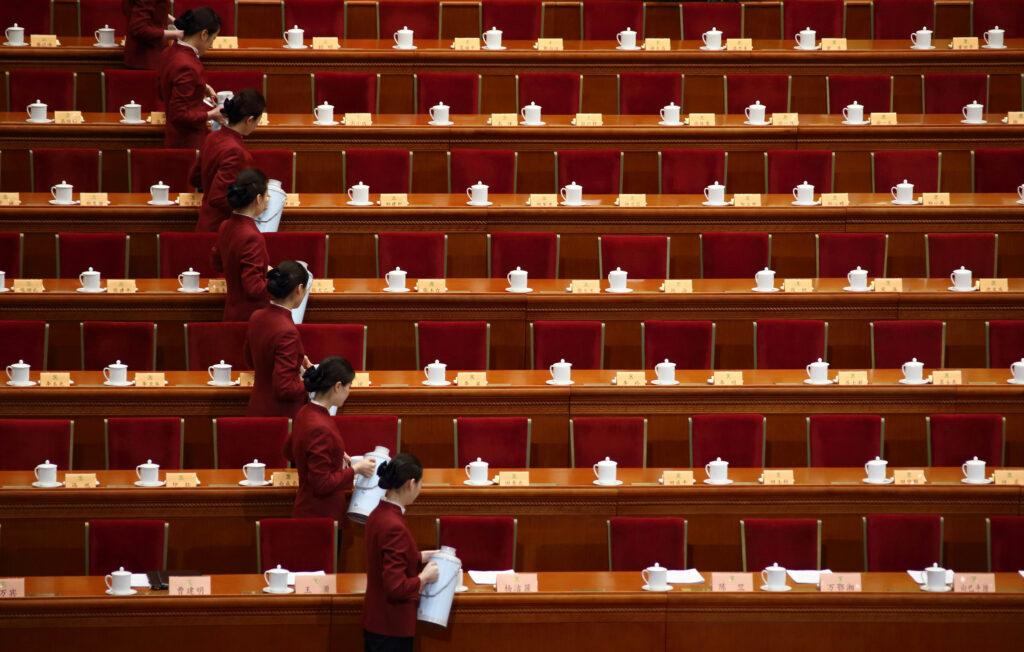
Illiberalism as Anti-Liberalism
Dimitar Bechev
The Ideas Letter
Essay
Illiberalism is often cast as a rising ideological alternative to liberal democracy, with its own internal coherence and global ambition. But Bechev argues that this apparent convergence masks deep contradictions between populists and authoritarian regimes, whose interests, constituencies, and governing logics diverge sharply. What looks like a coordinated project is, in fact, something far less stable—and far less coherent.
“Illiberalism is not an ideological construct so much as just an assault on the established order, domestic and international. It offers no positive blueprint for the future. It wants to do away with institutions that limit executive authority or protect the separation of powers and individual rights and freedoms; it does not seek to establish God’s Kingdom on Earth. Illiberalism is only anti-liberalism.”
Who is Walter Mignolo?
Federico Perelmuter
Aeon
Essay
Walter Mignolo is one of the central architects of decolonial theory, reshaping how modernity and empire are understood from Latin America. But, Perelmuter argues, in Mignolo’s work a powerful critique of Eurocentrism often drifts into abstraction, privileging epistemology over material analysis and political strategy. The result is a body of thought that is expansive in ambition, yet uncertain in its implications. In answer to the all-important question ‘What is to be done?’ Mignolo has little to say.
“Mignolo’s wayward tendency towards unearned coinage and ill-conceptualised ideas is on full display in Local Histories/Global Designs. For instance, he insists on the importance of using ‘border gnosis’ instead of ‘border thinking’, as ‘gnosis’ evokes a (mystical) knowledge marginalised by the ‘epistemology and hermeneutics’ model established with the Enlightenment, and its use thus ‘open[s] up the notion of ”knowledge” beyond cultures of scholarship.’ Yet it is never clear what work this terminological shift achieves – we are, in the end, still reading a scholarly book in the American tradition.”
Online Organic Intellectuals
Shoring Up Neo-Liberalism in Brazil
Caio Gontijo
International Affairs
Journal Article
Bolsonarism is often seen as a revolt against Brazil’s political and economic establishment. But Gontijo contends that the movement is better understood not as a break from neoliberalism but as its renewal in a moment of crisis: restoring the social order from the right while selectively absorbing popular grievances. Far-right digital influencers did not simply radicalize public debate—they helped transform economic discontent into a new neoliberal settlement.
“Understanding Bolsonaro’s emergence as a reinforcement of neo-liberal hegemony necessitates revisiting Gramsci’s notion of passive revolution, which, as Coutinho delineates, always entails two complementary moments: restoration, signifying conservative reaction and ideological retrenchment, and renovation, involving selective concessions and strategic reforms implemented from above to mitigate social pressures. In the Brazilian context, Bolsonarist organic intellectuals capitalized on the profound legitimacy crisis that crippled the PT’s governance, presenting Bolsonarism simultaneously as a conservative restoration, championing moral traditionalism, nationalist rhetoric and security-focused authoritarianism, and as a limited political renovation, acknowledging specific socio-economic grievances through populist rhetoric and gestures that framed them as caused by an alleged left-wing globalist elite.”
Bringing Pan-Africanism Back In as an Analytical Category
Daniel Mulugeta
African Affairs
Journal Article
Pan-Africanism is often treated either as a failed political project, a nostalgic ideal, or a language too compromised by institutional ritual to retain analytical value. Mulugeta argues instead that these debates have narrowed how Pan-Africanism is understood, obscuring its usefulness as a way of tracing how African political agency is actually articulated across states, institutions, and popular struggles. Rather than asking whether Pan-Africanism has lived up to its promise, he asks what becomes visible when we treat it as a category of inquiry in its own right.
“Approaching Pan-Africanism analytically, therefore, shifts attention away from questions of ontological verification or normative fidelity and toward the conditions under which Pan-Africanist claims acquire political force. The point is not to determine what Pan-Africanism is, nor to adjudicate whether particular invocations conform to an underlying essence, but to examine how Pan-Africanism is mobilized to frame political problems, organize authority, and render certain forms of action plausible or necessary. In this sense, and as demonstrated throughout the article, bringing Pan-Africanism back in does not entail a prescriptive method or a positivist schema, but a reorientation of analysis toward the empirical sites and practices through which Pan-Africanist politics is enacted.”