
Some four decades ago, the historian Arno Mayer sparked a historiographical firestorm by arguing that the Nazi destruction of the European Jews was not the outcome of a long-settled master plan. Rather, Mayer wrote, it radicalized into a policy of continent-wide annihilation only at the end of 1941, when the Nazis’ campaign to destroy the Soviet Union failed to achieve the rapid victory they had expected. Jochen Hellbeck’s recent World Enemy No. 1 has traces of the Mayer volume but goes further and returns the Soviet Union to center stage in the chamber of horrors of World War II, after a decades-long interlude during which Poland had become the historiographical center of gravity. Through the novel deployment of personal diaries and other sources, Hellbeck shows that the Nazis imagined Soviet communism as a Jewish-led existential threat and that their 1941 invasion of the USSR became the laboratory in which Nazi mass murder radicalized. The great historian of genocide and memory culture A. Dirk Moses takes the full measure of Hellbeck’s essential tome.
Benjamin Moser’s new book on anti-Zionism has also attracted both foes and friends. Through a series of vignettes, Moser explains that Jewish opposition to Zionism is not a recent aberration or merely an expression of antisemitism, but a long-standing and often suppressed current within modern Jewish thought. Barnaby Raine, an editor at the revitalized socialist British publication Tribune, is an intellectual historian who has written and spoken considerably on theories of contemporary antisemitism. His judicious reading of Moser’s book will, one hopes, complicate the debate and move it past customary loggerheads.
In 2024 Jonathan S. Blake and Nils Gilman published the powerful (and powerfully speculative) book Children of a Modest Star, which established a clear conceptual demarcation between the global and the Planetary. For The Ideas Letter, they deepen their analysis and underscore how the Planetary is not just new fodder for political theorists but a concept that can help rebuild foundational social categories. Planetary thinking for them is about wearing down the assumptions embedded in familiar ideas such as citizenship, the state, the political, and freedom. I had the good fortune of hearing the argument in Rome in June when Gilman presented it at a workshop on democracy and the future I helped convene. Soon enough, we might all become (intellectual) Planetarists.
I first met Gazelle Mba after reading her sharp essays in publications like The London Review of Books. For The Ideas Letter, Mba examines the controversy around the Museum of West African Art (MOWAA) in Benin City, Nigeria, and explains why returning the Benin Bronzes cannot, by itself, repair the damage of colonialism. Restitution has brought artworks back to Nigeria, but it has also intensified unresolved disputes over who rightfully owns cultural heritage and whether that authority belongs to the Oba of Benin, Edo State, the Nigerian federal government, or wider Nigerian and diasporic publics. Mba provides a cogent and humane take on many of the story’s thorny and sensitive questions.
Our curated content kicks off with Francesca Antonini in Modern Intellectual History, who digs into the Italian theorist Vilfredo Pareto’s shifting attachments to Caesarism. Pareto moved from treating it as a dangerous politics of personal worship to regarding a Caesar-like dictator as a possible remedy for political paralysis and social crisis. Antonini uses this shift to rethink the relationship between Italian elite theory, mass democracy, and, naturally, the rise of fascism.
Next up, the political theorist Jonathan White (who also participated in the Rome conference) argues in European Journal of Social Theory that the neo-monarchist jag currently regnant on the far right is hardly new. Instead, it revives the age-old claim that democracy is too short-termist to govern well, whereas concentrated executive power (modeled on monarchy) can more adequately plan for the future. White reconstructs this argument historically and connects it to neoliberal technocracy and Silicon Valley capitalism, and he asserts that its promise to bring long-term stability is upended by the realities of corporate-influenced rule.
Our musical selection comes from the most inspired group of the late 1970s, Wire. Their first record Pink Flag, a “punk suite” as the music critic Robert Christgau dubbed it, remains a classic, and for its fiftieth anniversary next year none other than James Wolcott will be writing about it for us. For now, enjoy its mesmerizing track “Strange.” One can only imagine what Tony Iommi thought of the song’s central riff.
—Leonard Benardo, vice president at the Open Society Foundations
Of Bolsheviks and Jews
Another History of the Holocaust
A. Dirk Moses
The Ideas Letter
Essay
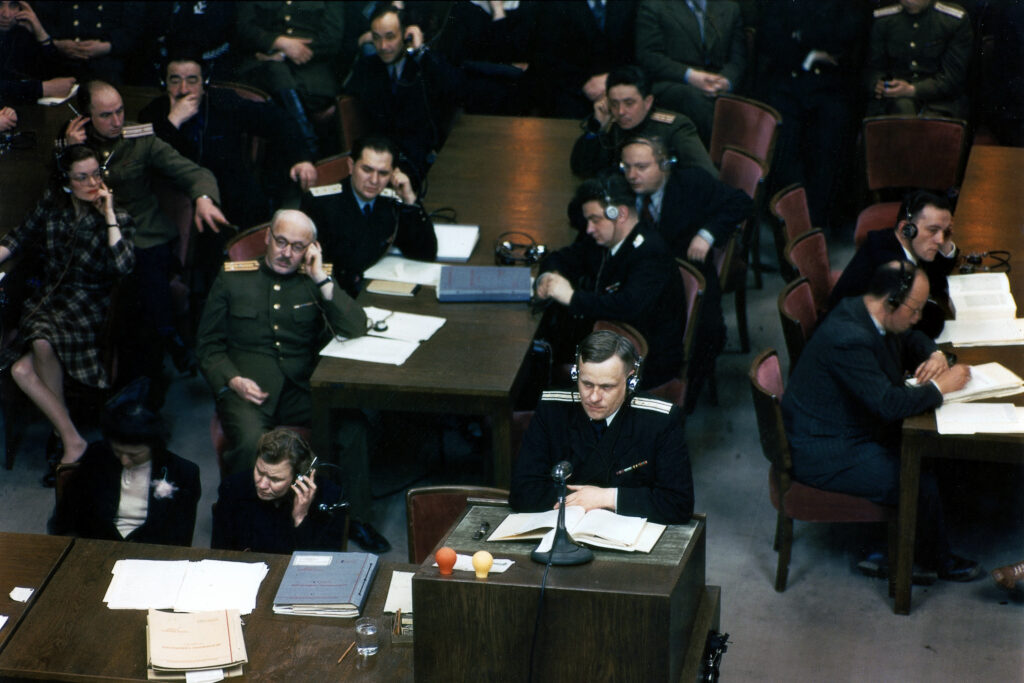
Moses, in his review of Jochen Hellbeck’s World Enemy No.1: Nazi Germany, Soviet Russia, and the Fate of the Jews, credits the author for challenging dominant interpretations of the Holocaust as the culmination of a murderous antisemitic obsession. Hellbeck argues that the Nazis’ campaign to exterminate Jews was principally driven by their long-standing existential fear of Bolshevism, which they saw embodied in Soviet Jews, and then was broadened to all Jews (as well as other groups) to become truly genocidal. The Holocaust was a political crime before it was an ethnic and racial one. But Moses also faults Hellbeck for saying too little about the Soviet regime’s own crimes, including against the peoples of the USSR—especially given the implications for Russia’s war in Ukraine today.
“Instead of the antisemitic-racial hate crime of exterminating a people solely on the basis of its identity—destroying ‘a national, ethnical, racial or religious group, as such,’ per the definition of genocide in the Genocide Convention—the Nazis’ real evil was, above all, politically motivated: It was the paranoid destruction of a political enemy imagined as a genocidal danger. The Nazis’ project was to eliminate, as an act of preventive self-defense, people they perceived as future threats so as to achieve Germany’s ‘permanent security’—to use a phrase from Otto Ohlendorf, the leader of the death squad Einsatzgruppe D, during his trial at Nuremberg in 1947. Analytically centering antisemitism to understand the Holocaust, Hellbeck argues, ‘misses the fact that the deadliest forms of Nazi violence targeted a presumed political enemy.’”
Encountering Zionism
Barnaby Raine
The Ideas Letter
Essay
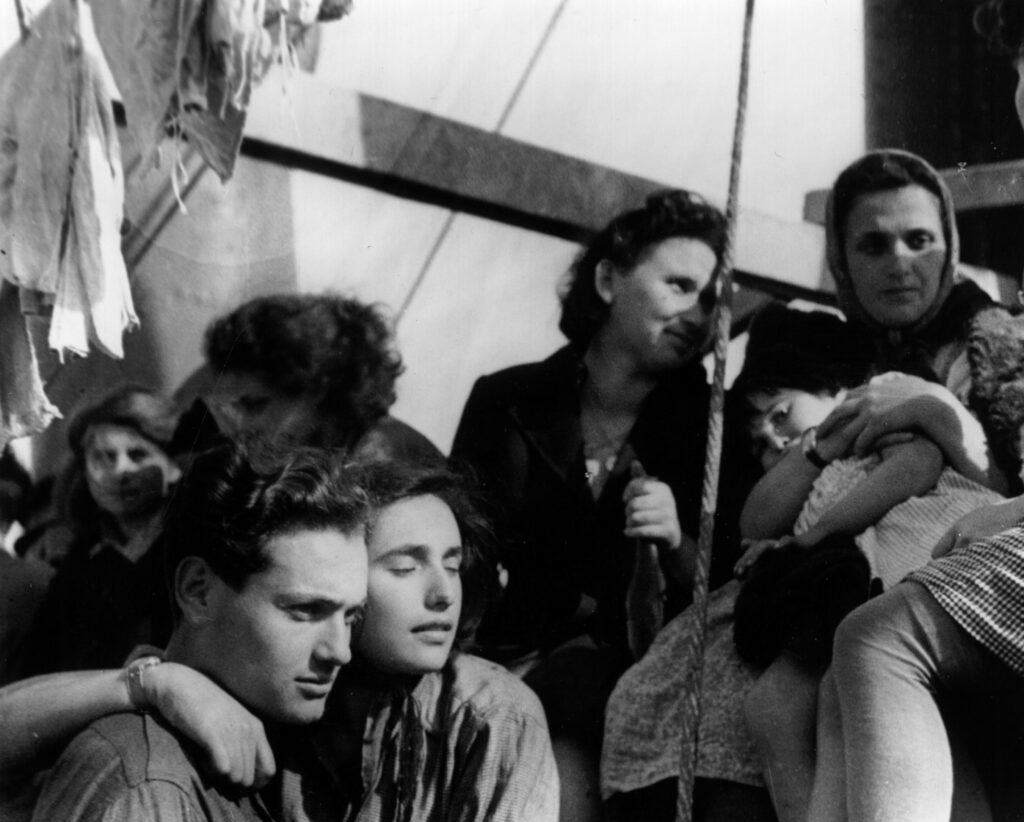
In his wide-ranging assessment of Benjamin Moser’s new book on Jewish opposition to Zionism, Raine asks how the stories that many Jews were taught about Israel’s founding shaped their understanding of Palestinians and Jewish history itself. Moser tells a different history through twelve Jewish dissenters, tracing how Zionism drew on European nationalism and imperial power while closing off possibilities for shared life in Palestine and beyond. For Raine, their lives also reveal traditions of Jewish solidarity that resisted the demand to choose between belonging to a nation and living alongside others.
“Amid an orgy of violence unleashed by the Israeli state in Gaza, the West Bank, Lebanon, and the wider region—much of it apparently enjoying the support of most Israelis—people now look at Zionism and ask, ‘what went wrong?’ By identifying a fairy tale, and beginning with Herzl, Moser suggests one answer. It was rotten from the start, which is why it depended on a version of the psychological mechanism Freud called ‘disavowal,’ where we tell ourselves stories to avoid facing the wronged people in front of us.“
The Politics of the Planetary

Jonathan S. Blake and Nils Gilman
The Ideas Letter
Essay
First articulated around the turn of the millennium as a critique of globalization, Planetary thinking is a conceptual framework that understands human societies as embedded within an integrated Earth system, rather than treating the planet as the backdrop for a human-centered globe of markets, states, and societies. Blake and Gilman argue that this shift in perspective exposes how the foundational categories of modern political thought—from citizenship and the nation-state to politics and freedom—were built around bounded territories, human actors, and relatively short timescales that do not correspond to the systems on which human life depends. In an era of climate change, pandemics, and other forms of biospheric disruption, the Planetary represents not simply a new object for political theory but a challenge to the scale, assumptions, and categories through which the social sciences understand political life.
“The advent of Planetary thinking, in other words, is not merely additive to the repertoire of the social sciences. One cannot append the Planetary to the existing table of contents, while leaving the existing chapters intact. The category doesn’t request a place on the bookshelf of political theory; it changes the shape of the bookshelf itself. What it is forcing is a revision of the ontology and epistemology of the social sciences: a rethinking of what the social is, what counts as a political actor, and across what spans of space and time political analysis has to reach. In Thomas Kuhn’s terms, the anomalies within traditional social science have piled up, and a paradigm shift is upon us.”
Give It Back

Gazelle Mba
The Ideas Letter
Essay
The tumultuous opening of the Museum of West African Art in Benin City last year exposed a conflict over who should control and interpret the legacy of the plaques and sculptures known as the Benin Bronzes, which were looted by British forces from the Kingdom of Benin in 1897. Should it be the Oba of Benin, the Nigerian state, or a new internationally backed museum? Mba argues that a received vision of restitution, not a full reckoning with colonialism or engagement with disputes over cultural ownership, led to their relocation to Nigeria, revealing deeper tensions over Bini identity, Nigerian nationhood, and the authority of the postcolonial state.
“The value of MOWAA might lie precisely in this lesson, which should prompt a profound national reckoning about how the history of slavery and colonialism still functions in Nigeria today. History has been under attack as a subject in Nigerian schools since the 1970s. In the early 1980s, General Olusegun Obasanjo replaced it with civic education. As a result, Nigerians have never been able to understand the origins of the recurring crises of their own political culture. One example of this lacuna appears in the links between the bronzes and slavery: Benin’s rulers were themselves significant slave traders, known for ritual killings in which the blood of victims anointed royal bronzes; British accounts describe chipping dried blood from the objects they seized. That history does not excuse the theft, but it complicates any attempt to project innocence onto the precolonial kingdom—a complication which the Restitution Study Group has pressed hard on.”
Caesarism in the Age of Elitism
The Case of Pareto
Francesca Antonini
Modern Intellectual History
Journal Article
Antonini examines how Vilfredo Pareto’s thinking about “Caesarism” shifted alongside his growing disillusionment with liberal democracy. In the 1890s, he condemned rule centered on a powerful individual as an irrational form of political personalism; by the 1920s he had come to see dictatorship as a possible way out of political crisis. As Pareto became convinced that the normal circulation of elites had broken down, the strong leader went from being a symptom of democratic decay to a potential means of renewing the ruling class and saving the state. This evolution, according to Antonini, reveals a broader pattern: Confronted with liberal democracy’s apparent inability to manage mass politics and renew its elites, thinkers who had initially sought to explain or contain Caesarism increasingly turned toward it as a solution.
“Not only do Pareto’s decades-long reflections on the crisis of Italian and European bourgeois societies and political systems contradict the allegedly immutable cyclicity of the elite informing his sociological theory. These late observations on the rule of the single one over the rest of the people also seem to move, theoretically speaking, in a different direction. Pareto’s resorting to analogies, which are as evoking as unstructured, seems to me exactly a sign of the fact that something is changing, although the process is still ongoing. Caesarism is no longer a condemnable (yet minor) consequence of the current crisis: it is a major challenge and opportunity for the future.”
Time and the Neo-Monarchist Turn
Jonathan White
European Journal of Social Theory
Journal Article
An old argument against democracy is that elected governments are inherently short-termist, whereas rulers who are insulated from electoral pressure can govern more consistently, with an eye to the future. White traces the revival of this logic from the neoliberal case for technocratic institutions to a more radical “neo-monarchism” associated with figures such as Curtis Yarvin, Nick Land, and Hans-Hermann Hoppe and increasingly intertwined with Silicon Valley’s model of the powerful founder-CEO. But neo-monarchism contains its own contradiction: Concentrating power in individuals and dismantling the institutions that constrain them might produce precisely the instability, arbitrariness, and short-term plunder that advocates of neo-monarchism attribute to democracy.
“Contemporary neo-monarchism attaches its political claims to a ‘techno’ vision of algorithmic governance, whereby much of the bureaucratic state is to be replaced with automatised systems. In some respects, this would seem to add new credibility to the notion of insulating the polity from the inconstancy, instability and short-term plunder attributed to democratic rule. By minimising the scope for human agency at all levels of the polity other than at the seat of the sovereign, this model would seem to put sharp constraints on uncertainty and unpredictability. But what this model also does, of course, is concentrate power and discretion in certain places, not least in the owners of this technology and those humans who remain in the loop. Again, this would seem to redouble the susceptibility of political authority to distortion by corporate interest.”