Against Post-Post-Apartheid
A Response to William Shoki

William Shoki’s “Post-Post-Apartheid” is an intellectually ambitious and politically urgent essay that seeks to critically analyze South Africa’s recent anti-migrant mobilizations. His central argument is that the June 30, 2026, anti-migrant “deadline”—however contained its immediate violence—marked a decisive rupture in South Africa’s politics. “What June 30 tells us,” he writes, “is that the political order built in 1994 has ended.” He continues: the “The ANC’s real monopoly was over the horizon. What crystallized on June 30 is instead a mass politics whose demands are premised on the contraction of freedom.” Shoki christens this new period the “post-post-apartheid” era.
This is a powerful and seductive argument. It captures something real: the exhaustion of the ANC’s national liberation narrative, the failure of the left to organize an alternative, and the emergence of a mass politics organized around expulsion rather than emancipation. Yet Shoki’s thesis rests on a fundamental conflation of the decline of a political project (the ANC’s hegemonic settlement) with the end of a structural legacy (apartheid’s racial architecture). The former has indeed occurred; the latter has not. To declare South Africa post-post-apartheid is to mistake the collapse of the ANC’s political hegemony for the transcendence of apartheid’s material and ideological foundations.
This distinction becomes concrete in the history of land. The 1913 Land Act confined Africans to about 7% of the country—later 13%—destroyed independent Black farming and sharecropping, and drove dispossessed communities into cheap labor on white farms and in the mines. It thus laid the material foundations for spatial segregation, forced removals, and the Bantustans—structures the 1994 settlement did not dismantle. Shoki’s analysis focuses on apartheid’s political ideas and hegemonic narratives while overlooking the horizon of political possibility. It illuminates apartheid’s superstructure but obscures its enduring, deep-seated racialized economic order preserved by the very structures the post-apartheid state left in place. While this is valuable political analysis, it tells us little about who owns what.
The 1994 settlement, as Shoki acknowledges, “transferred the state, but not the economy.” The conglomerates that dominated the minerals-energy complex kept their owners and their commanding position. Black Economic Empowerment (BEE) created a class of shareholders and intermediaries, not an industrial bourgeoisie. The racial ordering of the class structure—white wealth at the top, Black poverty at the bottom—remained largely intact. As he notes, “No statute now reserves the skilled trades for whites, yet the occupational hierarchy remains racially ordered from top to bottom. No pass law confines non-whites to the townships and the former homelands, yet the residential geography of apartheid has scarcely shifted.”
If the material structures of racial capitalism remain intact, then the “prism” of apartheid has not been discarded; it has been internalized and naturalized. The fact that a thirty-year-old born after 1994 does not consciously interpret her poverty through the lens of apartheid does not mean that apartheid is not the cause of her poverty. It means that the structural violence of apartheid has become so normalized, so taken-for-granted, that it no longer appears as violence at all. This is what Pierre Bourdieu calls “doxa”—the naturalization of the arbitrary. What Shoki takes as evidence of transcendence is, in Bourdieu’s own terms, evidence only of doxa.
His framework is implicitly Gramscian: he traces the rise and fall of hegemonic projects, from the ANC’s national liberation narrative to the emerging politics of expulsion. But Antonio Gramsci himself insisted that hegemony operates within a determinate material structure. The “common sense” of a given period is shaped by the material conditions of existence, not merely by the success or failure of political narratives.
Shoki’s argument that “national liberation is no longer the automatic horizon of South Africa’s politics” is correct as a description of political consciousness. But it does not follow that the conditions that made national liberation the horizon have disappeared. On the contrary, the persistence of racialized poverty, the failure of economic transformation, and the continued dominance of white capital are precisely the conditions that have frustrated the national liberation project and opened space for an alternative politics of scapegoating. The post-1996 politics of expulsion is not a transcendence of apartheid’s legacy, but a displacement of the rage that apartheid’s unresolved legacy produces.
Frantz Fanon provides a crucial theoretical correction to Shoki’s thesis. In The Wretched of the Earth, Fanon warned that where national consciousness stalls at the elite level, it turns downward into chauvinism against the stranger. This is precisely the dynamic Shoki describes: the ANC’s national liberation project, having failed to deliver material emancipation, has been displaced by a politics of expulsion. But Fanon’s point is that this displacement is colonialism—in this instance, apartheid’s own logic, redirected onto a new target.
Shoki cites Fanon approvingly but does not fully grasp the implication: the “new” politics of expulsion is not post-post-apartheid, but the return of apartheid’s logic in a new form. The apartheid state constructed the “native” as a temporary sojourner, a labor unit without rights or belonging. The post-apartheid state, in its immigration regime, has carried this logic forward by constructing the African migrant as a “native foreigner”—a body that is simultaneously inside the economy and outside the polity. The category has shifted, but the underlying logic of conditional belonging, of bodily exclusion based on geographic and racial otherness, remains intact.
Shoki’s claim that “the legacy of apartheid is no longer the prism through which South Africans interpret their present” is empirically contestable. The 2024 National Assembly election results showed the enduring influence of political traditions rooted in the liberation movement: together the ANC, MK Party, and EFF received 10,333,953 votes—64.28% of the national total—and secured 256 of the Assembly’s 400 seats. Statistical evidence further demonstrates that apartheid’s racial hierarchy persists across virtually every measurable dimension of social and economic life. According to data from the South African Reconciliation Barometer and Statistics South Africa, the racial income gap has narrowed only marginally since 1994. In 1994, Black African households earned approximately 12% of what white households earned. By 2024, this figure had risen to approximately 22%—a modest improvement, but one that leaves the racial hierarchy fundamentally intact. White households still earn, on average, more than four times what Black African households earn. The racial ordering of income—White > Indian/Asian > Colored > Black African—has remained unchanged for thirty years.
This is not merely a legacy in the sense of a historical residue. It is an active structure reproduced by the post-apartheid economy. As Shoki notes, “Suppose that racial prejudice had expired with the laws that codified it, then no employer, banker, or landlord ever again would have preferred white to Black. But the racial ordering of the class structure would have persisted regardless, since life chances in a capitalist economy follow inherited resources and that inheritance was apartheid’s.” This is precisely the point: apartheid’s legacy is not a memory to be overcome, but a material inheritance that continues to structure life chances.
The unemployment data tell an equally stark story. In 1994, Black African unemployment stood at approximately 32%; by 2024, it had risen to approximately 36.5%. White unemployment, by contrast, rose from approximately 5% to 7%. The racial ordering of unemployment—Black African > Coloured > Indian/Asian > White—has remained unchanged for three decades. What has changed is the absolute level of unemployment, particularly for Black Africans, which has worsened as the economy has shed manufacturing jobs and failed to create new ones.
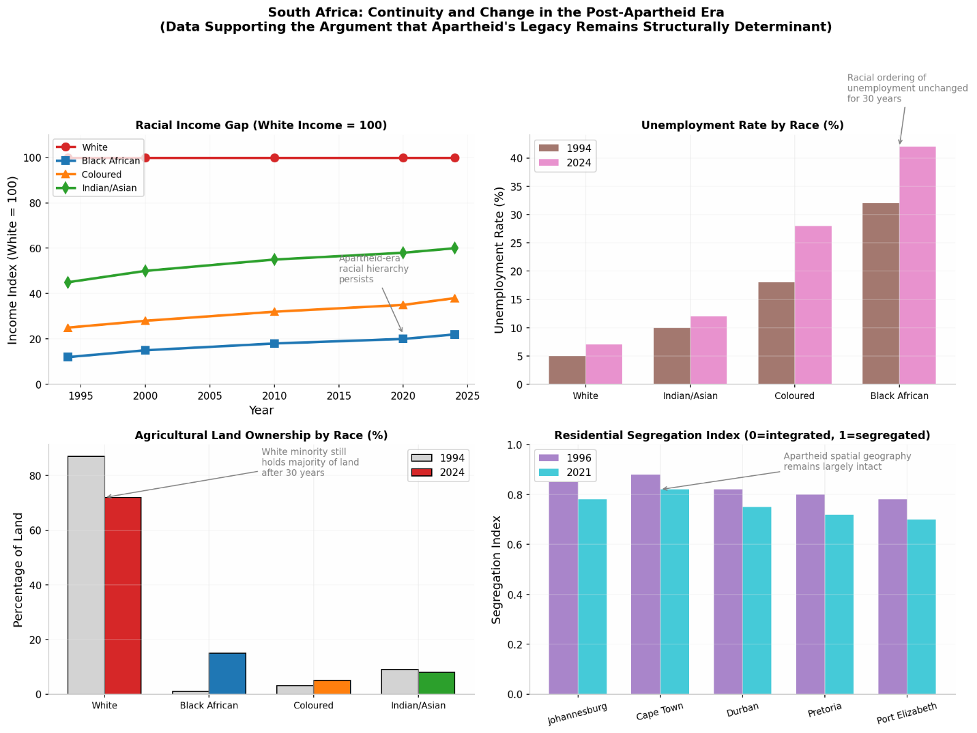
Figure 1: South Africa: Continuity and Change in the Post-Apartheid Era
This is the intensification of an apartheid-era pattern. Shoki refers to the historian Harold Wolpe, who argued that apartheid was a system for keeping the African majority half-inside the capitalist economy—wages in the mines and factories, subsistence in the reserves. The post-apartheid economy has completed the proletarianization that apartheid began (by destroying the rural fallback through forced removals) while simultaneously shedding the jobs that proletarianization required. The result is a “surplus population” that apartheid’s logic of exclusion is perfectly suited to manage.
Land ownership remains the most visible symbol of apartheid’s persistence. In 1994, white South Africans—comprising approximately 8% of the population—owned approximately 87% of agricultural land. By 2024, after thirty years of land reform, white South Africans still own approximately 72% of agricultural land. The pace of land redistribution has been so slow that, at current rates, it would take over a century to achieve equitable distribution. This is not a legacy that has been transcended; it is a legacy that has been preserved by the post-apartheid state’s adherence to market-based land reform and constitutional property protections.
Furthermore, residential segregation indices for South Africa’s major cities—a demographic measure of how evenly racial groups are distributed across a city’s neighborhoods, scored from 0 (full integration) to 1 (complete separation)—show only modest declines since 1996. Johannesburg’s segregation index fell from 0.85 to 0.78; Cape Town’s from 0.88 to 0.82; Durban’s from 0.82 to 0.75. These figures indicate that South African cities remain among the most segregated in the world. As Shoki acknowledges, the spatial geography of apartheid—white suburbs, Black townships, coloured and Indian areas—“has scarcely shifted.”
His claim, though, that the “political order built in 1994 has ended” is factually contestable when we examine the legal and administrative instruments that the post-apartheid state has preserved from the apartheid era. The immigration regime demonstrates a direct continuity that Shoki understates.
The Aliens Control Act of 1991—passed on the eve of the democratic transition—removed explicit racial language while preserving the architecture of exclusion. The post-apartheid state, rather than dismantling this architecture, has reinforced it. The Immigration Act of 2002, the Refugees Act of 1998, and the establishment of the Border Management Authority in 2020 have all operated within the same framework: migration as a security problem, deportability as a standing condition, and the undocumented migrant as a figure of threat.
This is a direct continuation of apartheid’s immigration logic. The apartheid state constructed the “native” as a temporary sojourner whose presence in white South Africa was conditional and revocable. The post-apartheid state has constructed the “undocumented migrant” in precisely the same terms. Only the label has been swapped out; the apparatus of permits, deportability, and exclusion that apartheid built to manage the “native” now manages the “foreigner” instead.
Shoki writes that “when xenophobic attacks broke out in 2015, the government sent the army, and Operation Fiela, which had begun as a response to anti-migrant violence, became within weeks a program of mass deportation.” This is a crucial fact, and it cuts against the post-post-apartheid thesis rather than supporting it: it shows a democratic state responding to xenophobic violence not by protecting its targets but by joining in their expulsion. The apartheid state handled communal violence against “illegal” Africans in the townships the same way, meeting it with deportation and police action against the people attacked, not the people attacking them. Operation Fiela does not break from that pattern; it repeats it.
Shoki references the practice of language testing by Operation Dudula members: the linguist Zakeera Docrat “has described Dudula members administering language examinations at hospital gates and in commercial streets, demanding of would-be users of those services to speak in isiZulu or Sepedi and treating any hesitation as a basis for determining who could enter, trade, stand in line.” He correctly identifies this as “racecraft”—the production of racial categories through social practice.
But this is not a new phenomenon of the post-post-apartheid era. The apartheid state also used language as a racial test—particularly in the classification of “Coloured” versus “Native” under the Population Registration Act. The apartheid state required proof of “European” descent or “Bantu” language proficiency to determine racial classification. The post-apartheid language tests reproduce this logic: they construct a racial boundary (South African versus foreign African) through linguistic performance, just as apartheid constructed racial boundaries through linguistic and cultural tests. The content has changed, but the form—the use of cultural markers to produce racial exclusions—is identical.
Shoki notes that “the tribe—the identity apartheid had built for the countryside Bantustans (Black homelands) and what are known as ‘hostels’ (single-sex, migrant-worker dormitories often organized along ethnic and regional lines)—survived the transition intact.” Here Shoki concedes more than his thesis can afford. If tribal identities “survived the transition intact,” then the transition did not end the political order built on apartheid’s categories; it merely renamed them. The “post-post-apartheid” politics of Zulu nationalism that marched through Durban on June 30 is the same politics that Inkatha mobilized against the ANC in the 1990s, now redirected against migrants rather than the nonracial liberation movement.
“Anyone who watched the amabutho march through Durban on June 30,” he writes, “in the regalia of Zulu regiments, was looking at the part of decolonization that never happened.” The decolonization that “never happened” belongs to the post-apartheid era, not the post-post-apartheid one—it is what happens when a settlement fails to dismantle apartheid’s tribal categories and instead sanctifies them as culture and tradition. What marched through Durban was not a new ethnic nationalism but an apartheid-era political form that the 1994 settlement failed to dissolve.
The theoretical core of Shoki’s periodization is his claim that apartheid’s materials are inherited but the relation is new, because a “labor-shedding” capitalism is now assembling a “different race.” This is worth interrogating on several grounds.
To begin with, the labor-hungry/labor-shedding binary is overdrawn. Apartheid was never simply “hungry for labor”; it was hungry for cheap, disposable, rightless labor, and the Bantustans were mechanisms for producing surplus, not just recruiting workers. The post-apartheid economy inherited and matured that surplus; it did not invent it. Nor is it accurate to call what has emerged a “different race”: the citizen/foreigner boundary does not manufacture a novel racial subject; it reactivates the same apartheid “native” under a new administrative heading—conditional presence, deportability, exclusion from political community. Neocosmos’s “foreign native / native foreigner” frame is useful here precisely because it shows the category has been renamed, not newly made.
The premise of a Black political unity that this politics has somehow “cut across” is equally shaky, since that unity was never achieved in the first place. Apartheid’s genius was to fragment its Black subjects all along; Inkatha’s Zulu nationalism was already dividing “the population once unified politically as Black” in the 1980s and 1990s. June 30 merely brought out old fractures, rather than creating new ones. There is also a functionalism running through the argument that lets the state off the hook too easily: Shoki writes as if the economy is “tooling” a race automatically, but the securitization of migration, the 2002 Immigration Act, and the Border Management Authority were political choices, not structural necessities. A different state could have treated regional migration as a developmental opportunity rather than a threat. And Shoki’s own concession, finally, is turned back on him: he admits that “white wealth and apartheid’s social geography continue to organize South African society.” If those organizing structures are still apartheid’s, then the “successor economy” is a mutation within the same racial-capitalist organism, not a different economy making a different race.
Shoki’s most provocative claim is that “anti-migrant politics has become the first mass politics native to the period the country has entered.” This claim rests on a distinction between the old politics of national liberation, which spoke the language of emancipation, and the new politics of expulsion, which speaks the language of contraction. But this distinction overstates the novelty of anti-migrant politics and understates how thoroughly it’s shaped by apartheid’s legacy. What Shoki has described is the same racial-capitalist economy adapting its techniques of exclusion to new conditions—just as it adapted from slavery to segregation to apartheid to its present form.
The apartheid state was explicitly anti-migrant, constructing the “native” as a temporary sojourner, regulating movement through pass laws and influx control, and deporting “surplus” Africans to the Bantustans. The apartheid state’s hostility to African migrants from beyond South Africa’s borders was equally explicit: the 1937 Aliens Act restricted African immigration, and the apartheid state consistently treated African migrants as security threats.
Afrophobia operates through a perpetrator-victim dynamic: the Black South African, constructed as the object of apartheid violence, reproduces that violence against a new target. This is apartheid’s politics of racial exclusion, now performed by those who were once its objects.
Shoki’s analysis of the political economy of scapegoating is sophisticated, but it does not fully acknowledge how much of this scapegoating apartheid’s legacy still accounts for. As he writes, “An economy that reproduces apartheid’s distribution without apartheid’s instruments wrongs people namelessly, and people do not sit with a nameless wrong for long. They look for someone to hold responsible, and the queue supplies a candidate who is visible and undefended.”
This is correct, but it implies that the “nameless wrong” is a feature of the new economy, whereas it is, ironically, a feature of the same economy that apartheid built. The “queue” that supplies the migrant as scapegoat is the same queue that apartheid’s migrant labor system created. Apartheid taught that belonging was conditional, that the African body was temporary and disposable, and that the “native” was the source of white South Africa’s problems. The post-apartheid state has preserved this queue and this logic; it has merely changed the identity of those standing in it.
Shoki notes that the forced removals from the 1960s to the 1980s ensured that “the proletarianization that enclosure had performed elsewhere over centuries was now completed at gunpoint.” This created a “surplus population” that the post-apartheid economy cannot employ—an observation that sits uneasily with his own thesis.
The surplus population is not a post-post-apartheid phenomenon, but the direct product of apartheid’s proletarianization combined with the post-apartheid economy’s failure to create jobs. The rage of this surplus population is not directed at apartheid’s legacy because that legacy has been naturalized—it appears as the natural order of things, not as a historical injustice to be overcome. The migrant becomes the scapegoat not because apartheid’s legacy has ended but because it has been so thoroughly internalized that it no longer appears as a legacy at all. This is what Fanon called the “colonized mind”—the internalization of the oppressor’s logic to the point where it becomes self-evident.
Shoki’s post-post-apartheid thesis is not without merit. But in declaring apartheid’s legacy “no longer the prism through which South Africans interpret their present,” Shoki risks obscuring the deeper structural continuities that make this new politics intelligible, and his periodization—post-post-apartheid—risks performing the same ideological function that he critiques in other accounts: it comforts us with the thought that something has ended, that a new period has begun, that the old struggles are no longer relevant. But if apartheid’s legacy still sets the terms on which the country operates, then the struggle against it is not over; it has merely changed form.
Rather than a settlement that has ended, the post-apartheid period is better understood as a managed transition that has preserved apartheid’s core structures while democratizing access to them. The ANC’s project was not to dismantle racial capitalism but to democratize it—to allow a Black elite to participate in the structures that apartheid had reserved for whites. This project has succeeded for the elite and failed for the masses. The post-post-apartheid politics of expulsion is the result of the settlement’s success in preserving the structures that produce mass poverty and its failure to provide an emancipatory alternative.
The political task is not to construct a new politics for a new era but to resume the unfinished project of dismantling apartheid’s racial architecture. That means structural economic transformation—not BEE for a Black elite, but the democratization of the economy through land redistribution, public employment, and industrial policy. It means dismantling apartheid’s spatial geography, desegregating not merely in law but in practice, through public housing, transport, and service delivery. It means transforming the immigration regime, moving from migration treated as a security problem to migration understood as a developmental opportunity, one that recognizes the regional interconnectedness of Southern African economies. It means rebuilding Pan-African solidarity, not as moral nostalgia but as a material politics of regional economic integration and labor rights. And it means the slow, patient work of building unions, civics, and political formations capable of articulating a class politics rather than a nationalist politics of expulsion—organizations that carry an alternative description of what South African politics could be.
Apartheid’s legacy remains structurally determinant in South Africa. The racial hierarchy of income, employment, land, and space persists. The legal and administrative instruments of apartheid-era exclusion have been preserved and reconfigured. Afrophobia, at bottom, is apartheid’s racial logic finding a new outlet for a grievance the settlement never actually resolved.
To declare South Africa “post-post-apartheid” is to risk abandoning the unfinished project of racial justice at the very moment when it is most urgently needed. The post-post-apartheid thesis, however brilliant, is a premature funeral for a struggle that has not yet been won.