The Century of Eric Hobsbawm
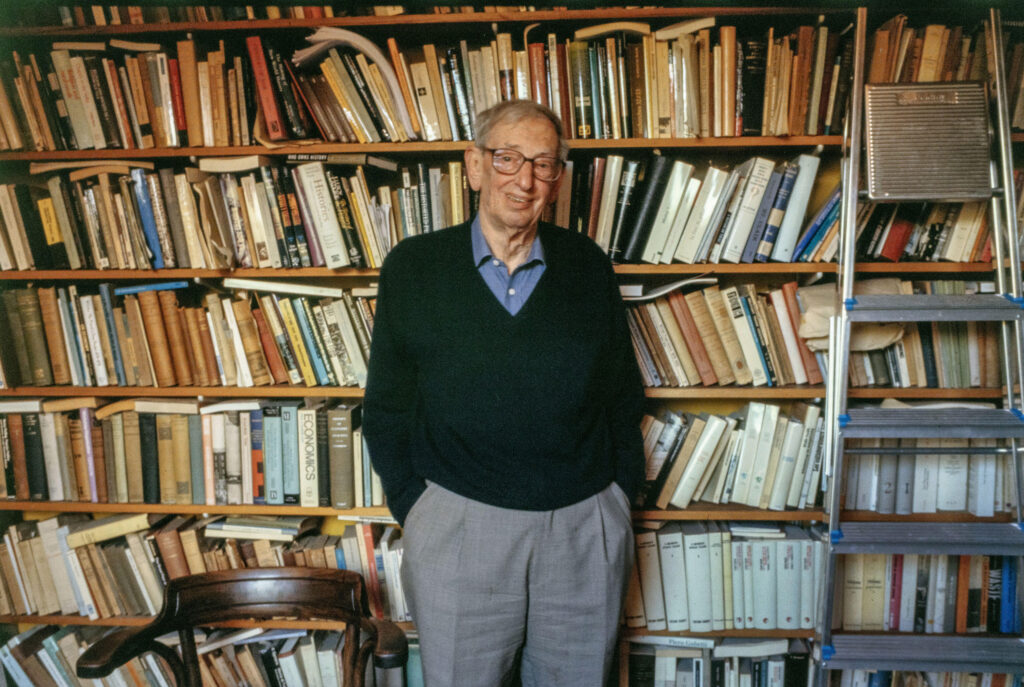
Memoirs by historians are rare, and biographies of them more so. Eric J. Hobsbawm stands as an exception: He published critically acclaimed memoirs, and today—fourteen years after his death—is the subject of two biographies, the latest of which, authored by Emile Chabal, is scheduled for publication later this year.1 This exception is well deserved, and Chabal did not accomplish an easy task. Richard J. Evans knew Hobsbawm personally, and his book, from 2019, stands as a kind of official biography, based on an extensive investigation of primary sources (some provided by Hobsbawm’s wife).2 Evans carefully reconstituted a historian’s life and wrote with empathy, not without an apologetic touch. Chabal’s approach is different; he does not reveal any new dimensions of Hobsbawm’s life or personality. He has interviewed many people in several countries, but he does not explore new materials, and he gives fewer biographical details than Evans did. Yet his acknowledged distance is beneficial, and his gaze more analytical. Extremely readable, his book is a fascinating critical portrait.
Hobsbawm is frequently depicted as the greatest historian of the twentieth century, a superlative that is not abused if it means that he was the most important scholar to have written on the history of the past century. At the conclusion of his book, unafraid of hyperbole, Chabal speaks of “two Hobsbawms”: the man and the myth. The myth appeared in the mid-1990s, when Hobsbawm published The Age of Extremes, the book that canonized him as a celebrity on a global scale, far beyond the boundaries of academia.3 Anyone who read this work at the time was deeply struck by such a tour de force: Under his pen, the twentieth century suddenly achieved a clear profile, as an age of cataclysms framed by the Great War and the end of communism (1914–91), broken in the middle by an eruption of apocalyptic violence during World War II. A past still perceived as part of the present became history; a vast constellation of scattered events found its place in the puzzle and could now be viewed from a historical perspective.
There was something unexpected about this scholarly accomplishment, considering that Hobsbawm’s primary research field was the nineteenth century. In the 1950s, his first works analyzed labor movements and rural rebellions in the age of industrial revolution—his studies on Luddism as a form of “collective bargaining by riots” remain unsurpassed. A decade later, he embarked on his trilogy covering the history of the “long” nineteenth century, rhythmed by The Age of Revolution:1789–1848, The Age of Capital:1848–1875, and The Age of Empire: 1875–1914.4 These three volumes, born of a fortuitous combination of circumstances (as Chabal mentions, the commission from the London publisher George Weidenfeld was initially offered to Jacob Talmon)5 and completed between 1962 and 1987, were not originally intended to be followed by a fourth on the twentieth century. The project changed along the way, yet it perfectly fit the author’s capabilities and predispositions. The trilogy became a tetralogy, shaped by a remarkable unity in conception and structure: a balanced synthesis in which economy, society, culture, and politics merge admirably.
Sketching the portrait of Europe from its apogee to its decline—from the French and Industrial Revolutions to the end of the Cold War—Hobsbawm displayed his talents as a narrator and a conceptualizer, and his capacity to explain in clear and engaging prose the enchainment of events rooted in a complex dialectic between social structures, political institutions, and human agency. He could not work without a solid theoretical framework, yet his writing about history was imbued with a significant literary sensitivity. The outcome is a form of critical understanding that, far from abstractions, interprets the past as a living landscape, animated by flesh-and-blood human beings. When Hobsbawm analyzes paintings or novels, they are inscribed in their social context and linked to class structures and collective imaginaries. When he studies popular cultures and traditions, he sketches a history of the laboring classes that coexists with the bourgeois ethos and the lifestyle of the ascendant elites in the age of capital. Accomplishing this requires a sophisticated hermeneutics that combines anthropological, cultural, economic, and aesthetic dimensions.
These qualities drew upon multiple sources. While Hobsbawm’s clarity was undoubtedly inherited from British historiography—notably his formative years at Cambridge—his global scope and interdisciplinary approach stemmed, respectively, from his cosmopolitanism and his Marxism, two tendencies he embodied in a very peculiar way. Borrowing this definition from his friend Isaac Deutscher, the famous Polish historian, Hobsbawm depicted himself as a “non-Jewish Jew”: a nonobservant Jew for whom Judaism meant neither a faith nor a national identity.6 An atheist and anti-Zionist, he never concealed his origins. He stood up as a Jew before antisemitism and as a cosmopolitan universalist opposed to any form of nationalism; he equally detested Zionists and self-hating Jews.
Yet as he admitted, his Jewishness remained a vague and ungraspable feeling that never structured his thoughts, and his cosmopolitanism was rooted as deeply in his Jewishness as in his status as a Briton born in 1917 in Alexandria, Egypt. In Vienna and Berlin, where he spent his childhood and adolescence until 1933, he was perceived more as English than as Jewish; in England during World War II, he never viewed himself as a Jewish exile from Central Europe. Despite his bilingualism—his mother was an Austrian Jew—he was an Englishman. In Berlin, his British citizenship protected him to some extent from antisemitism, and after moving to England in 1933, he did not experience Nazi persecution. Many critics reproached him for his astonishing silence regarding the Holocaust in The Age of Extremes, a historiographic hole for which he was never able to provide a convincing explanation. The true trauma of his life—or so Chabal seems to suggest—was not Auschwitz, but rather his “brutal orphanhood”7: He lost his father in 1929, when he was twelve years old, and then his mother two years later.
Hobsbawm was never a heretic, neither a Jewish nor a communist one. Born to an assimilated Jewish family, he was not subject to the constraints of Jewish orthodoxy. His Marxism—a product of his political experience in Berlin during the final years of the Weimar Republic—deeply shaped his entire life as an existential habitus. He belonged to the Communist Party Historians’ Group at Cambridge—created by a few talented young scholars such as Christopher Hill, Rodney Hilton, and E.P. Thompson—and distinguished himself as one of its most Stalinist members. In 1939, he coauthored a pamphlet with Raymond Williams, who had also been at Cambridge, in defense of the German-Soviet Non-Aggression Pact; in the early 1950s, he was “tremendously impressed” by Stalin’s Short Course (the official history of the Russian Communist Party), which he held to be a “beautiful, marvellous piece of popularisation,” particularly remarkable for its chapter on “dialectical and historical materialism.”
In 1956, he signed a petition denouncing the Soviet invasion of Budapest, but—unlike many other intellectuals, including most of his own friends—he did not break with the party. He wrote a letter to the party newspaper Daily Worker, in which he characterized this military occupation as a “tragic necessity,” expressing the hope that it would be quickly followed by a withdrawal. A year later, along with the British cultural theorists Stuart Hall and Ralph Samuel, he participated in the creation of the journal Universities and Left Review, but he later kept his distance from New Left Review.
Nor was Hobsbawm a heretic in the academic world. In 1952, he had co-founded a historical journal, Past & Present, whose interlocutors were not in Warsaw or Berlin, but in Paris, where he was a friend of Fernand Braudel, an influence on the Annales in postwar decades. He always felt at home at both Oxford and the University of London, where he taught for many years, maintaining excellent relationships with such a conservative thinker as Isaiah Berlin, who dominated the history of ideas at Oxford University. On the one hand, he was a Marxist historian, though certainly not a Stalinist; on the other, his dialectical skillfulness was of a very singular nature. Far from feeling torn, he appeared comfortable within both the Stalinist Communist Party and the British academic milieu, at a time when the latter was refractory, not to say hostile, toward Marxism.
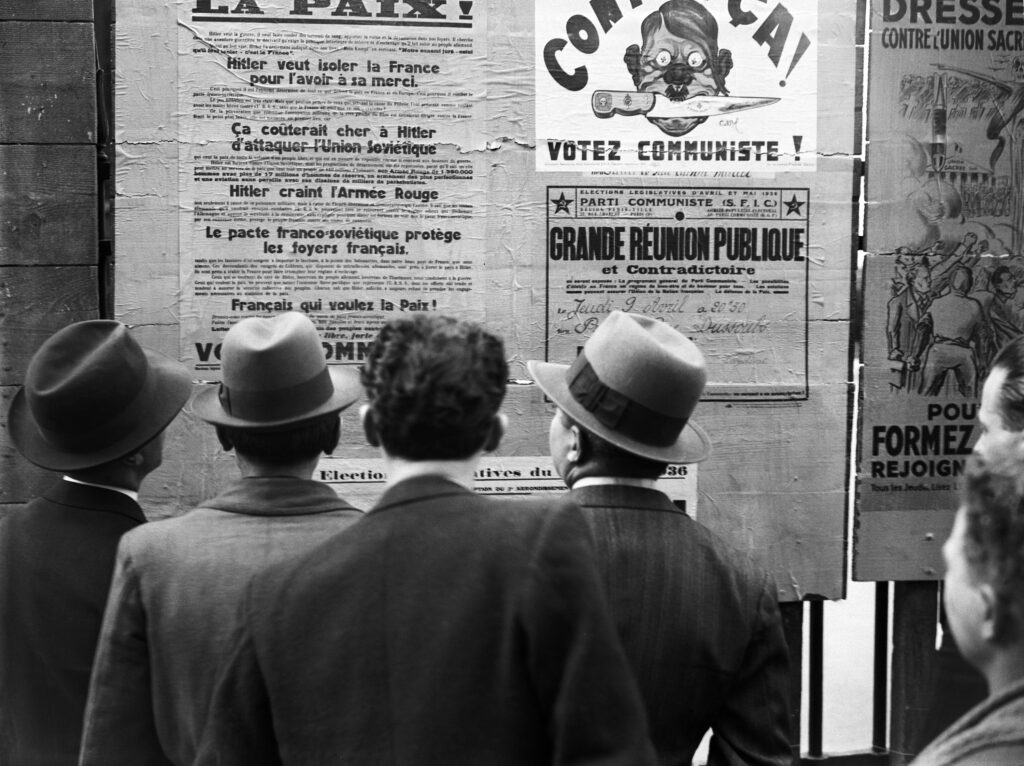
Hobsbawm’s communism was born in the twilight of the Weimar Republic, when the communist Rote Front and the Nazi SA marched in uniform through the streets of Berlin. It was the choice of a Jewish teenager at a time when, in his own words, “It was impossible to remain outside politics.”8 In 1936, he participated in the demonstrations in Paris that marked the advent of the Popular Front and traveled to Spain at the outbreak of the Civil War. As he wrote in his memoirs, he belonged to “the generation for whom the October Revolution represented the hope of the world.” This hope was more than a universal ideal of fraternity, equality, and human liberation. Symbolized by the Soviet Union’s hammer and sickle, it was an ideology, a state, and an army, and his loyalty to them never wavered. This explains his contemptuous detachment toward the protest movements of the 1960s, like feminism and the New Left. Anti-authoritarianism, anti-patriarchalism, and sexual liberation struck him as signs of weakness, amateurism, and a lack of discipline. As he admitted, “my generation would remain strangers in the 1960s.”9
Until 1956, Hobsbawm viewed Marxism, in Chabal’s words, as “something that covers everything” or a “totalising ideology,” and the Soviet Union as its temple.10 A corollary of this dogmatism was the hunt for heretics—a duty for all “organic” communist intellectuals, as Antonio Gramsci would have put it—which he zealously accomplished. In the early 1950s, he wrote the introduction to the English translation of a pamphlet directed against the Hungarian philosopher György Lukács written by the Hungarian Minister of Culture József Révai, which stigmatized Lukács’s admiration for nineteenth-century literary realism as a dangerous “bourgeois” tendency. Following his flamboyant History and Class Consciousness (1923), Lukács remained a suspect author (despite his allegiance to Stalinism), and his harmful influence had to be fought even outside the Soviet bloc.
After 1956, Hobsbawm abandoned the Marxist orthodoxy of his youth, yet he maintained his hostility toward a constellation of thinkers that the British critic Perry Anderson has since gathered under the label of “Western Marxism.” The only figure in this galaxy he really appreciated was Gramsci, whose Prison Notebooks he discovered in the 1950s. Reading Gramsci helped him to nuance his Marxist methodology and look at peasant rebellions and popular cultures through an anthropological lens far broader and more nuanced than a prism based purely on class.
Hobsbawm’s admiration for Gramsci, his skepticism toward the Frankfurt School, and his distance from the New Left had a common source, which was his attachment to the communist tradition. His Stalinism was neither a dogmatic ideology nor a form of political Machiavellianism, nor even an attraction for authoritarian leadership; it was a belief grounded in a historical diagnostic. In his view, it was communism that, during World War II, had saved civilization from collapsing into barbarism. Despite the Gulag and Stalin’s tyrannical power, the USSR had resisted and, for him, embodied the legacy of the Enlightenment. This position was strategically and theoretically incompatible with both the New Left and critical theory, which took Stalinism to be one of the faces of modern barbarism, an authentic expression of the “dialectic of Enlightenment,” according to Max Horkheimer and Theodor W. Adorno.11 Hobsbawm’s appraisal reflected both a deep sense of epos and a tenacious defense of teleology: History was a tragedy, but progress remained its horizon. Stalinism meant authoritarianism; despite its crimes, however, it embodied a historical evolution.
Unlike Evans, Hobsbawm’s other main biographer, who seemed obsessed with proving that Hobsbawm was never dogmatic, Chabal adopts a more objective—one would be tempted to say “agnostic”—view. He warns readers that he is not a communist and did not write his biography because of his ideological or political affinities with the great British historian. At the same time, his narrative is not inspired by anticommunist prejudices; stigmatizing an unrepentant supporter of the USSR is not his purpose. He belongs to a new generation of post–Cold War historians for whom the communist predicaments of their ancestors are a fascinating object of investigation, maybe an enigma, but certainly not a shameful pathology nor a wickedness that should be condemned or needs forgiving.
Chabal observes that Hobsbawm, thanks to his Central European background, was one of the first English readers of the Frankfurt School. Although he never felt drawn to the dialectical subtleties of critical theory, and even less to Adorno’s philosophy of music, the German thinker exerted a paradoxical influence on his interpretation of popular music.12 Hobsbawm loved jazz—a passion he wrote about under the nickname of Francis Newton, becoming a reputed jazz critic for The New Statesman. But in this realm, too, his tastes favored the classics: In his eyes, Miles Davis and John Coltrane simply could not compete with Duke Ellington.13 He obviously could not endorse Adorno’s notorious hate for jazz, which the Frankfurt philosopher regarded as an authoritarian and tendentially fascist form of popular music. But neither did he reject Adorno’s disdain for the “culture industry.”14 For Hobsbawm, this label indiscriminately encompassed any form of pop music, with its cortege of outfits and hairstyles.
From the 1960s, however, this became the mass culture of a new generation, that of his own students as well as the New Left, and it never found his favor. He frequently emphasized his aversion to blue jeans and the social habits he thought came with them, an attitude that revealed some affinities with the aristocratic Marxism of his German colleague. And at times this attitude could become the source of monumental misunderstandings, as evidenced by the articles he devoted to pop music, which he depicted as ephemeral trends. His judgments—Chabal quotes some that are particularly revealing—were as peremptory as despising: Rock and roll was simply commercial music that deprived American folk music of “its modest technical and its considerable human interest”15; the Beatles were “an agreeable bunch of kids” who had “nothing to do with music, but with clothes, haircuts and stance”; Bob Dylan was a pure product of mass society that had “atrophied not merely men’s souls but also their language.”16 Adorno certainly shared such final verdicts.
Except for these marginal affinities, though, Hobsbawm was never drawn to Horkheimer’s and Adorno’s reflections on the dialectic of reason, nor to Walter Benjamin’s allegories of the “Angel of History.” He had abandoned his youthful faith in orthodox Marxism, but his conception of history remained teleological, as his three volumes on the nineteenth century clearly showed. In his view, history was a long march of civilization toward progress and socialism, punctuated by revolutionary breaks and darkened by tragic throwbacks, such as the two world wars and fascism. The collapse of the Soviet Union in 1989–91 dramatically called into question this teleological conception, hence the notably melancholic flavorof The Age of Extremes. Yet Hobsbawm stoically reaffirmed his loyalty to Soviet communism, never renouncing the commitment of his entire life.
Of course, Stalin had been a horrible dictator and the Gulag a totalitarian nightmare, but in his view the USSR saved civilization from eclipse. With a similar philosophical stance, he always distrusted post-structuralism. He radically rejected what he saw as its anti-humanism, as well as, during the last two decades of his life, postmodernism and the “linguistic turn,” which in his eyes embodied a new and dangerous form of skepticism and irrationalism.17 Having lived through the age of the Battle of Stalingrad, he could not consider history as a textual construction or as a narrative interchangeable with and indistinguishable from literary fiction. Historians write the past, but history is inscribed in the flesh and bones of living human beings. This criticism of postmodern assumptions implies a fundamental corollary, which is a faith in universalism. Between universalism and the quest for identity, Hobsbawm’s choice was clear: Historians, he pointed out, don’t write history for Jews, or African Americans, or women, or homosexuals, or proletarians; they don’t write for “any special section of humanity.”18 They write for everyone.
Another upshot of Hobsbawm’s historical teleology was Eurocentrism. His trilogy on the nineteenth century clearly was a history of Europe from 1789 to 1914. Although The Age of Extremes was a “history of the short twentieth century” that explicitly stated the end of Europe as the planet’s heart, it still adopted a European—even Western European—point of view. Hobsbawm’s periodization may have seemed obvious on the Old Continent, but it was highly problematic for others elsewhere. The “long nineteenth century” had been anything but a peaceful intermezzo in Algeria, Congo, China, or India.
Viewed from Africa, the twentieth century did not start in 1914 but in the 1880s, with the Berlin Conference that defined a new colonial order. Viewed from Asia, the decades marked by the Chinese Revolution, the Korean and Vietnam wars, the military coup in Indonesia, and the Cambodian genocide could hardly be depicted as the equivalent of a European golden age. Conversely, the first half of the twentieth century undoubtedly constituted an “age of catastrophe” for Europe, but not so for Argentina or Mexico. This simple factual assessment explains the methodological precautions of many contemporary world historians, whose criteria of periodization are much less trenchant. For instance, the German historian Jürgen Osterhammel, considering the uneven dynamics and distinct turns specific to each continent, depicts the nineteenth and twentieth centuries as ages framed by flexible and open temporal boundaries.19
Hobsbawm’s gaze was also Eurocentric when it came to peoples he called the “primitive rebels” of rural societies, whom he studied with passion and empathy, from Sicily to Peru and Brazil. Postcolonial scholars did not like this definition, the adjective “primitive” implying backward and pre-modern conditions. He remained attached to Marx’s vision of India as a continent where British imperialism, despite its violent and inhuman rule, had brought progress and economic development. It was precisely against these clichés of orthodox Marxism that many Latin American and Indian scholars such as Aníbal Quijano and Ranajit Guha created the decolonial and subaltern studies. In their view, colonial domination cared little for social or cultural consent and ultimately proved incapable of establishing its hegemonic rule. Reading Gramsci with different lenses, they refused to interpret the anticolonial struggles waged by insurgent peasants, rebels, and bandits as “primitive” or “pre-political.” On the contrary, according to them, these movements were exquisitely political insofar as they denounced the violence of imperialism.20 This criticism reveals a striking aporia in Hobsbawm. In 1959, the year of the Cuban Revolution, he presented Primitive Rebels as a collection of “studies in the archaic forms of social movements”; yet from the book’s very first pages, he pointed out that these movements had made the twentieth century “the most revolutionary in history.” This contradiction pitted the brilliant historian of subaltern subjects against the conventional historian who posited an evolutionistic historical lineage and believed that the European industrial working class had a leading role in changing the world.
Perhaps Hobsbawm’s canonization—his “myth,” to borrow Chabal’s term—was a Western tribute to a great historian who had erected a monument to Europe at the time of its decline, when the lights and shadows of its civilization appeared, in retrospect, as a vanished past, as impressive as it was tragic. Hobsbawm’s entire life unfolded under the sign of decline and fall. He was born in Egypt to an English father and an Austrian mother, just one year before the collapse of the Ottoman and the Habsburg Empires. He lived in Berlin during the twilight of the Weimar Republic and, a dozen years later, witnessed the end of the British Empire. He had believed in the future of socialism, embodied by the USSR. The collapse of the Soviet Union, and of this universal hope, was, for him, a final failure, one he intimately endured and lucidly analyzed. Hobsbawm was acclaimed on a global scale at the end of his life, and this ultimate recognition relieved the failure of his dreams and the defeat of his political commitments. Chabal’s biography offers a balanced and critical portrait of a great historian whose life and thought were deeply intertwined with his century.
- Emile Chabal, The Age of Hobsbawm: The Life of a Revolutionary Historian (The Belknap Press of Harvard University Press, 2026). Forthcoming. ↩︎
- Richard J. Evans, Eric Hobsbawm: A Life in History (Oxford University Press, 2019). ↩︎
- Eric J. Hobsbawm, The Age of Extremes: A History of the World, 1914–1991 (Michael Joseph, 1994). ↩︎
- Eric J. Hobsbawm, The Age of Revolution: Europe 1789–1848 (Weidenfeld & Nicolson, 1962), The Age of Capital, 1848–1875 (Weidenfeld & Nicolson, 1975), and The Age of Empire, 1875–1914 (Weidenfeld & Nicolson, 1987). ↩︎
- Chabal, The Age of Hobsbawm, 177. ↩︎
- Isaac Deutscher, The Non-Jewish Jew and Other Essays (Verso, 2017). ↩︎
- Chabal, The Age of Hobsbawm, 1. ↩︎
- Eric J. Hobsbawm, Interesting Times: A Twentieth-Century Life (Pantheon Books, 2002), 57. ↩︎
- Ibid., 252. ↩︎
- Chabal, The Age of Hobsbawm, 31, 53. ↩︎
- Max Horkheimer and Theodor W. Adorno, Dialectic of Enlightenment: Philosophical Fragments (Stanford University Press, 2002 [1947]). ↩︎
- Theodor W. Adorno, “On Jazz” and “Perennial Fashion—Jazz,” Essays on Music, with an introduction, commentary, and notes by Richard Leppert (University of California Press, 2002), 391–436, 288–317. ↩︎
- Francis Newton [Eric Hobsbawm], The Jazz Scene (Weidenfeld & Nicolson, 1959). ↩︎
- Theodor W. Adorno, The Culture Industry: Selected Essays on Mass Culture, ed. J. M. Bernstein (Routledge, 1991). ↩︎
- Quoted by Chabal, The Age of Hobsbawm, 224. ↩︎
- Ibid, 225. ↩︎
- Eric J. Hobsbawm, On History (Weidenfeld & Nicolson, 1997). ↩︎
- Ibid., 277. ↩︎
- Jürgen Osterhammel, The Transformation of the World: A Global History of the Nineteenth Century (Princeton University Press, 2014). ↩︎
- Aníbal Quijano, Foundational Essays on the Coloniality of Power, eds. Walter Mignolo, Rita Segato, and Catherine E. Walsh (Duke University Press, 2024). Ranajit Guha, Elementary Aspects of Peasant Insurgency in Colonial India (Duke University Press, 1999 [1983]). ↩︎