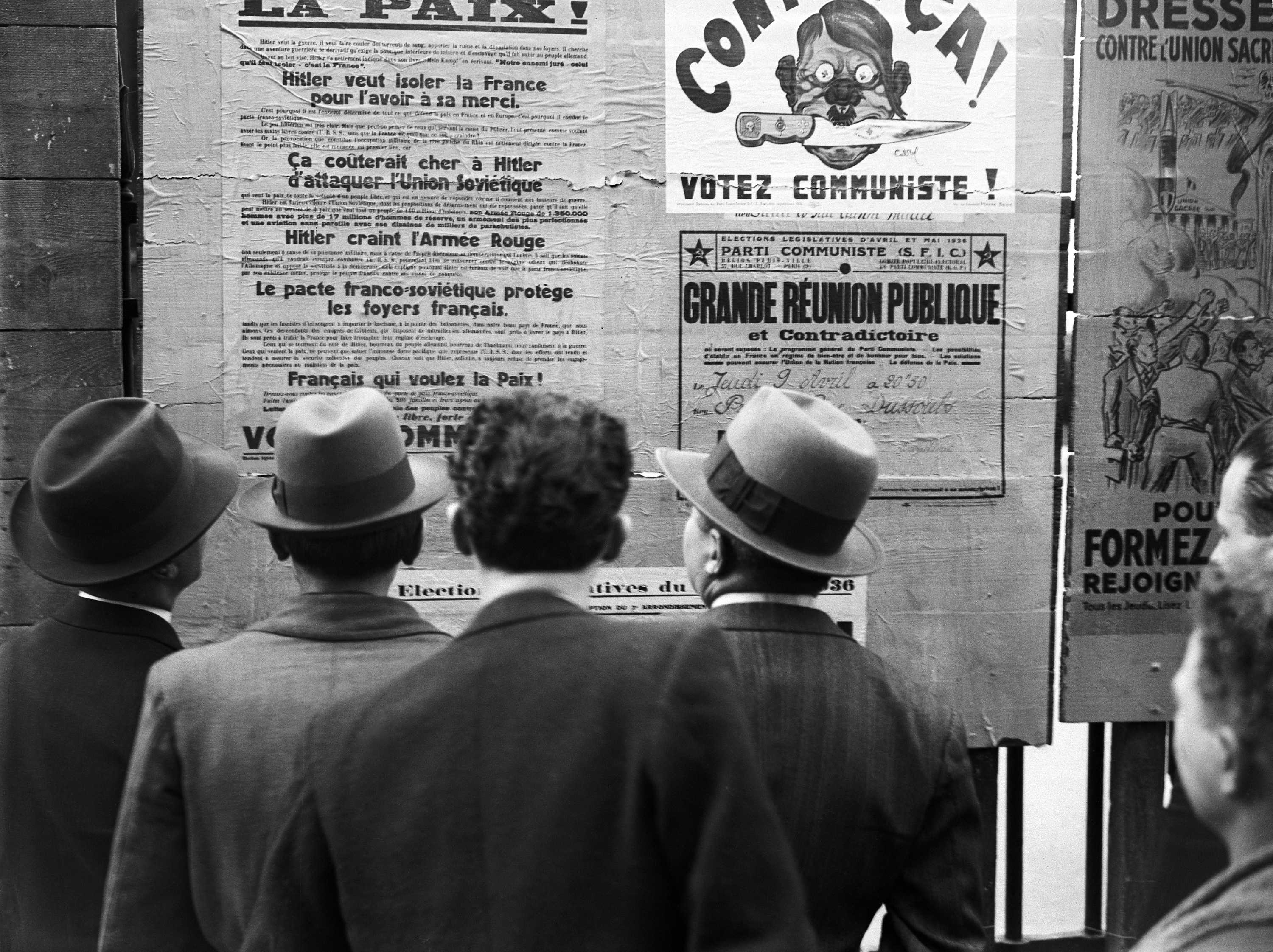
Enzo Traverso is one of the most esteemed intellectual historians of our time, and Eric Hobsbawm is arguably the greatest historian of the twentieth century. What an honor to feature an essay by Traverso that takes the measure of a forthcomingintellectual biography of Hobsbawm. Hobsbawm wrote from a Marxist perspective yet always rejected reductive determinism, emphasizing complex interactions among class, culture, and contingency. Traverso’s essay is in part a lament for Hobsbawm’s brand of historical writing.
Then Leo Robson, in a comprehensive interview with me, deftly and imaginatively explains the contemporary role of the critic. Few cultural critics are as wise and expansive as Robson, and we discussed what exactly the craft of criticism is about, how it has changed, and why it continues to matter. His explanations are lucid and deeply informed.
Next up, Phil Tinline argues that optimization—using mathematical models and data to pursue specific objectives—has spread from engineering and wartime logistics to nearly every area of modern life. Optimization models show up in the workplace, on tech platforms, in economics, and in social policy. You don’t need to be a critic of instrumental rationality to recognize that optimization is a powerful but problematic tool when elevated into a creed that claims to improve society by through quantification.
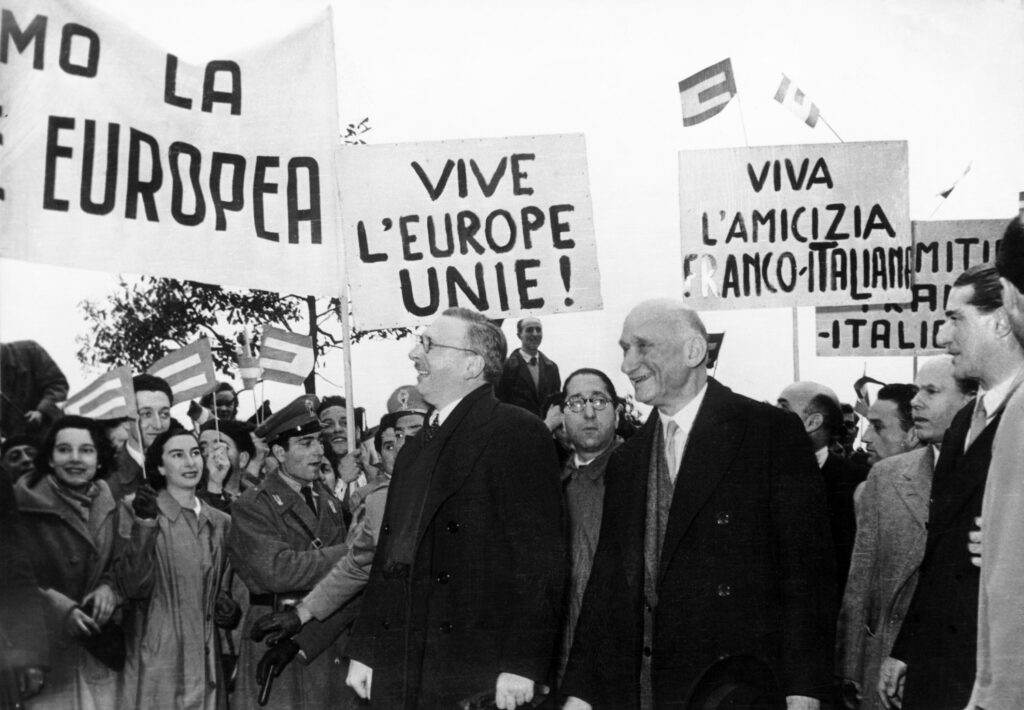
To close our section of commissioned pieces, Nathalie Tocci, a great expert in affairs European, thoughtfully explains how Europe built a postwar identity by repudiating its violent past and anchoring itself in rights and law. That identity provided moral purpose and diplomatic influence—even if imperfect in practice. Alas, the world—and Europe—has changed markedly, and Tocci seeks to explain Europe’s future in light of that evolution.
Our curated section kicks off with a Spanish-language interview by my dear colleague, Mario Arriagada, with the fine Mexican journalist and political analyst Carlos Bravo Regidor. The subject is Bravo’s book of interviews with intellectual worthies from far and wide Mar de dudas: Conversaciones para navegar el desconcierto (Sea of Doubts: Conversations for Navigating Disorientation).
Then we offer a provocative critique of liberal philanthropy, written from a Gramscian perspective and with an empirical focus on the California-based Hewlett Foundation. Its conclusion—that the work of such groups is undercut by their position and role in the US power elite—should be hotly debated.
I am writing this introduction from Rome, and our musical selection for Issue 67 reflects that setting. Francesco De Gregori is one of the great Roman singer-songwriters (cantautore); his 1978 “Generale” is a moving antiwar ballad and a plea for peace.
—Leonard Benardo, vice president at the Open Society Foundations
The Century of Eric Hobsbawm

Enzo Traverso
The Ideas Letter
Essay
Eric Hobsbawm’s enduring power lay in his ability to synthesize vast historical processes into compelling narratives that made the modern world legible. Yet, argues Traverso, the celebrated Marxist historian’s achievements were inseparable from both the commitments and the blind spots that shaped him: a lifelong attachment to communism, a faith in historical progress, and a Eurocentric framework that often left colonial and postcolonial experiences at the margins. Reviewing a new biography of Hobsbawm by Emile Chabal, Traverso offers a critical portrait of a historian whose life and thought were deeply intertwined with the rise and fall of the twentieth century he so famously chronicled.
“Hobsbawm is frequently depicted as the greatest historian of the twentieth century, a superlative that is not abused if it means that he was the most important scholar to have written on the history of the past century. … Under his pen, the twentieth century suddenly achieved a clear profile, as an age of cataclysms framed by the Great War and the end of communism (1914–91), broken in the middle by an eruption of apocalyptic violence during World War II. A past still perceived as part of the present became history; a vast constellation of scattered events found its place in the puzzle and could now be viewed from a historical perspective.”
Closer to Rude than Snide
An Interview with Leo Robson

Leonard Benardo
The Ideas Letter
Essay
Criticism is not a secondary form of creation but a distinct craft, contends Robson, tracing its flourishing after World War II through a generation of charismatic public intellectuals who made the practice both glamorous and culturally consequential. He rejects nostalgia for a lost age of critical authority and instead defines criticism as the work of explanation and judgment.
“LB: What does society lose when fewer critics roam the earth?
LR: Well, in my view, there would be less instruction and pleasure, less invitation to think about our relationship to art or what works of culture are about, whether they work or don’t, and why. Such a situation would be deleterious to the status of art and thought, and this would in turn be exacerbated by the scarcity of critical discourse. But I am not convinced there are fewer critics, overall.”
The Cult of Optimization

Phil Tinline
The Ideas Letter
Essay
Optimization began as a mathematical tool for solving complex logistical problems, but, according to Tinline, it has evolved into a broader social philosophy. “Social optimization” holds that society itself can be improved by applying the logic of optimization to everything from workplace incentives and media consumption to philanthropy and artificial intelligence. Drawing on critiques of social engineering, technological solutionism, and social Darwinism, Tinline warns that privileging what can be measured risks undermining democratic judgment, collective values, and fundamental questions about the structure of power.
“Optimization has refocused the media around the measurable preferences of the individual, as tallied in clicks, page views, unique browses, and similar metrics. This erodes the shared moments that build a culture and the shared truths that underpin democracy. Social media takes this even further: Algorithms are optimized to maximize attention, incentivizing people to respond to political issues not with thought but vivid expressions of feeling, rewarding users numerically in follows, likes, and shares. Meanwhile, tracking apps increasingly normalize the optimization of health metrics.”
Pragmatic Failure
Nathalie Tocci
The Ideas Letter
Essay
Europe’s greatest threat is not internal division but the erosion of the civic-liberal identity that has defined the European project since 1945. Tocci argues that, faced with the collapse of the liberal international order, European leaders have increasingly embraced transactionalism and power politics, even though Europe’s most significant diplomatic achievements—the 2015 Iran nuclear deal, its support for Ukraine—have come when it has acted in defense of the law, multilateralism, and collective purpose. In a more multipolar world, Europe must choose between becoming just another geopolitical player or helping build the next international order in which norms and institutions must reflect new distributions of power.
“European leaders may think they are more realistic today than their idealistic predecessors. The opposite is true. If Europe abdicates its commitment to rules, norms, and law, however imperfectly it lives up to these, it will cease to exist as a collective entity, as European integration is hollowed out from within. The EU is a community of rules and law. Without it, the continent would slip back into a Europe of nations, which is precisely what far-right forces in Europe, as well as imperial aspirants in Moscow and Washington, would like it to be. If Europe abandons its principles and laws, rather than working to reassert them alongside other small and middle powers, it will not emerge as a muscular global player but will instead be pulled apart by predatory players like Russia and the US.”
Sea of Doubts
An Interview with Carlos Bravo Regidor
Mario Arriagada
The Ideas Letter Podcast – New Books Network
Podcast
What happens to liberalism when the script that guided it for three decades stops corresponding to the real world? The Mexican political analyst and historian Carlos Bravo Regidor discusses with Arriagada the intellectual journey that led him from the certainties of the 1990s—the triumphalism of the post–Cold War era, democratic transitions, market liberalism, the rule of law—to a reckoning with the structural flaws of that paradigm. They talk, among other things, about the partial and elite-driven nature of Latin American democratizations, including Mexico’s transition, which is a paradigmatic case of party-based negotiations with superficial social roots.
“I believe that perhaps the fundamental insight regarding populism is that it poses difficult questions for liberal democracy. It presents profound challenges that do not necessarily run counter to democracy, but rather expose its shortcomings or its unfulfilled promises, above all, I believe, in terms of representation, on the one hand, and in terms of results, on the other. Democracy, then, does have a grandiloquent rhetoric, especially when you’re coming out of transitional processes. I mean, there’s an inflation of expectations during every election season, and if you compare the results to that, there’s always a shortfall—something disappointing. And I think populism is, in a way, a movement that rubs salt into the wound.”
Liberal Crisis Machine
The Hewlett Foundation in the Era of Polycrisis Philanthropy
Inderjeet Parmar
Economy and Society
Journal Article
The Hewlett Foundation functions not as a neutral philanthropic institution but as a liberal “crisis manager” that works to contain radical change and stabilize existing power structures, according to Parmar. Through initiatives focused on constitutional governance, post-neoliberal reform, and U.S. competition with China, it helps build elite consensus while channeling political conflict into forms compatible with the existing order. Drawing on Gramscian theory, he portrays the Hewlett Foundation as an architect of elite knowledge networks that span foundations, think tanks, universities, and state institutions and that help reproduce US hegemonic power by privileging top-down technocratic reform over grassroots mobilization.
“… a Gramscian approach suggests that the HF is an elite power-oriented crisis machine that is diagnostic, prescriptive and catalytic in building elite consensus for managed change. This also explains why the HF expressly excluded grassroots mobilizations and resistance movements from its reform strategies, in favour of a top-down, elite-led, technocratic philosophy, rooted, among other influences, in the thinking of James Madison.”