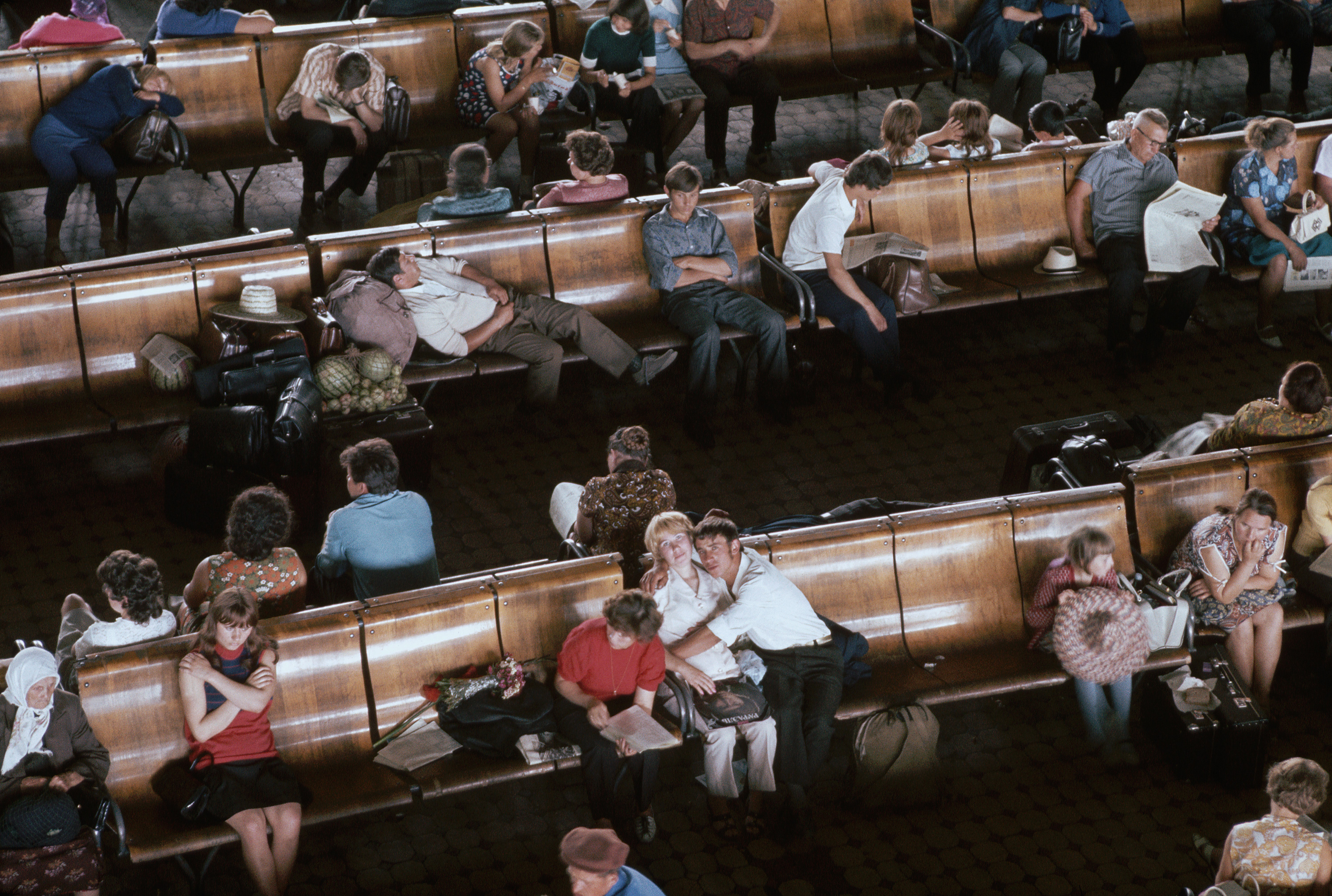
I once asked the Berkeley anthropologist Alexei Yurchak, whose Everything Was Forever, Until It Was No More is the definitive book on the late Soviet period, what he thought of the social category of the sovok. He bristled at the question. A card-carrying social scientist focused on culture and its systems of meaning, Yurchak believed that encapsulating the Soviet person in a catch-all category was absurd. There is indeed something derogatory about the term which refers to a person who expects the state to provide for them, and who labors to get ahead in the deeply bureaucratic, often poorly functioning USSR. Nonetheless, the concept seems useful to address many of the pathologies of the Soviet Union in its “normal” phase after Stalin’s death.
The historian Sergey Radchenko assays similar late Soviet territory in his examination of a new book by Mark Smith, Exit Stalin: The Soviet Union as a Civilization, 1953-1991. Smith argues that the post-Stalin USSR was neither a frozen dictatorship nor a society in terminal decay, but a functioning and distinctive civilization with its own social order and everyday rhythms. Stephen Kotkin, in his peerless tome Magnetic Mountain: Stalinism as a Civilization, came to this terrain first, but his focus was largely the 1930s. Can the civilizational concept also be of utility after the war?
Arash Azizi has a special place in his political heart for the self-styled democratic communists of yesteryear, above all the great Italian leader Enrico Berlinguer. And rightly so. Azizi offers a remembrance of a significant but largely forgotten current of twentieth-century communism—mislabeled, in his view, as Eurocommunism—that was genuinely committed to pluralist democracy and peaceful political change, breaking from the authoritarianism that marked Moscow. What do we lose, he wonders, by misrepresenting this history?
Next up is Peter Kuras, a writer and translator in Berlin, who takes the measure of Germany’s recent wave of plagiarism scandals and related moral controversies. Germany is a strange country these days. Kuras is less interested in the genuine ethical violations than the nation’s deeper cultural dynamics, which are shaped by what he terms a “cold” political culture.
Finally, a palate cleanser by José Natanson, a music maven and editor of Le Monde Diplomatique Southern Cone Edition. Natanson judges two prominent styles of Argentine popular music: rock and trap. He asserts that the history of Argentine music mirrors the country’s social history: rock rose from the middle class, while trap reflects a more unequal and precarious Argentina. The shift from rock to trap is not just a musical fashion change, but a sign of social transformation. What does this illustrate about the cultural condition of Argentina?
Our curated section kicks off with a lovely essay from our friends at The Dial. Short dramas have become the rage in China, built on brief, addictive episodes that are only around two minutes long, and a business model optimized for engagement rather than prestige. Lavender Au writes that these shows have gone from an underdog phenomenon to a massive industry shaped by audience feedback and AI generation.
Then Rúrion Melo for the São Paulo-based Revista Rosa takes on Habermas (hope you’re not Habermas’d out). He is presented here as one of the most important critical theorists of modern politics. Melo traces the great man’s career from his Frankfurter days to his legendary theory of communicative action and normative defense of democracy.
I am glad to hand over the musical selection to José Natanson, who writes: “This issue’s music recommendation is one of the songs mentioned in my article on the shift from rock to trap as a reflection of Argentina’s social transformation. The song, ‘Ana no duerme,’ (Ana Doesn’t Sleep) was composed in 1969 by Luis Alberto Spinetta, perhaps the most important figure in Argentine rock. Rich with multiple meanings, it tells the story of a girl who wants to get out from where she is, even though she doesn’t know exactly where to. It’s a fine example of Spinetta’s lyrical depth and musical genius.”
—Leonard Benardo, vice president at the Open Society Foundations
The Communist Mystique

Sergey Radchenko
The Ideas Letter
Essay
Mark Smith’s new book Exit Stalin reconstructs the Soviet Union as a coherent civilization whose everyday life felt normal, legitimate, and enduring. In his review, Radchenko argues that this framing captures an important truth but overlooks another: Soviet culture was never self-contained, drawing on both Russia’s imperial past and the wider world, and left a legacy that still shapes post-Soviet life. How we describe the USSR, he suggests, is not merely a matter of terminology but of historical and moral emphasis.
“Does it matter in the end whether the Soviet Union was a civilization or an empire? Different terms come with different connotations and different emphases. A ‘civilization’ is a broadly positive concept, something that one would contrast with barbarism, for example. It implies normality and legitimacy rather than coercion and violence. By exploring this particular angle, Smith takes sides in the long-running debate: Was the Soviet system ultimately underpinned by actual or implied repressions and the use of force, or was there a popular buy-in? The unhelpful answer is that it was likely both. But by choosing this particular—civilizational—framing Smith seems to have downplayed the imperial aspects of the Soviet experience, and it’s an experience that probably meant, and continues to mean, more to the victims of the far-flung empire than the Moscow-based scientific and intellectual elites that are the focus of Exit Stalin.”
Hammer and Ballot
Arash Azizi
The Ideas Letter
Essay
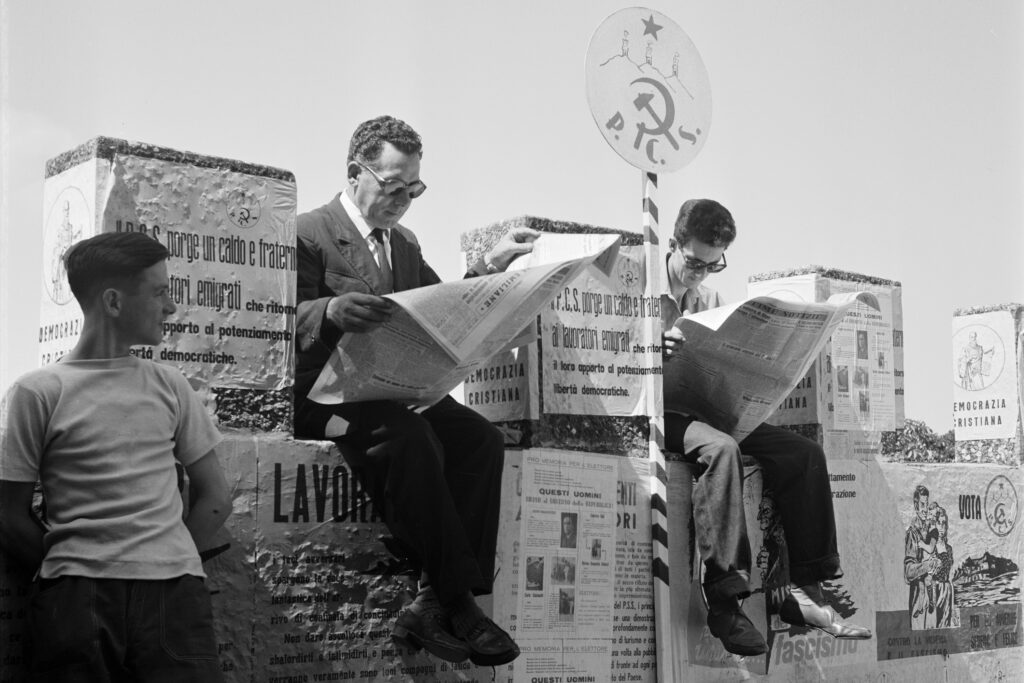
Communism is often remembered as undemocratic, the ideology that undergirded the authoritarian regimes of Lenin, Mao, Stalin, Tito, and Castro. Working against this blinkered view, Azizi recovers a powerful democratic tradition within the history of communism. He revisits the legacy of figures such as Italy’s Enrico Berlinguer and Spain’s Santiago Carrillo to show how “democratic communists” sought to reconcile socialism with pluralism, civil liberties, and parliamentary politics, influencing democratic transitions and governance well beyond Europe.
“The track record of democratic communists also gives us an excellent example of how radicals can balance day-to-day politics with a larger vision. Communists knew how to be good mayors (the importance of picking up the trash on time) while also holding on to the goal of a classless society. They understood that the latter couldn’t happen overnight but required gradually winning a democratic majority for socialist ideas. Unlike many on the left today, they didn’t condemn the existing parliamentary systems just because they couldn’t win a majority. Instead, they patiently built power, transforming the lives of real people and constructing enduring institutions. Even after the collapse of communism, these institutions—the parties as well as associated trade unions—proved crucial in the subsequent development of the left (examples include Chile, France, India, and Spain).”
Die Groß Chill

Peter Kuras
The Ideas Letter
Essay
Unlike the American obsession with sex and drug scandals, Germany’s political class is frequently engulfed in scandals of a higher brow: plagiarism. This obsession reveals something deeper than a commitment to academic integrity. For Kuras, it reflects a political culture shaped by a broader “cold culture” that prizes discipline and intellectual rigor while leaving little room for ambiguity or democratic disagreement. He explores how cold culture informs contemporary battles over plagiarism, antisemitism, abortion, and free speech, arguing that its selective moralism threatens to upend established democratic norms.
“These students, like those wrongly accused of plagiarism or antisemitism, are victims of a culture that fetishizes ‘cold’ virtues like honor, discipline, and accuracy over ‘warmer’ values like empathy, spontaneity, and creativity. Those cold values have served Germany in good stead, maintaining a high standard of living despite global political and economic instability. But they come with dangers. Prosecution of critics of rearmament or of German foreign policy not only infringes upon the rights of individuals, but forestalls crucial conversations, substantially degrading the quality of the public sphere.”
Soundtracks to Argentina’s Democracy

José Natanson
The Ideas Letter
Essay
The evolution of Argentine popular music, according to Natanson, mirrors the country’s broader social transformation. Argentina’s distinctive rock scene emerged in the 1960s from a prosperous, middle-class society and ultimately became the soundtrack of democratic restoration after dictatorship. Today, trap reflects the sociology of a more unequal, informal, and digitally connected Argentina, where entrepreneurial aspiration and the insecurities of contemporary capitalism have reshaped both culture and identity.
“Trap has prevailed over rock. For my 15-year-old daughter, ‘national rock’ might be okay, but it feels as distant to her as tango. Trap is definitely the genre of the moment, the one that best fits the cultural fabric of this ‘Peruvianized’ country—which is also President Javier Milei’s country. In short, there is a harmony between trap and this era in Argentina, between the musical genre and the new sociological reality.”
Dopamine TV
Lavender Au
The Dial
Essay
Short dramas – episodes lasting around two minutes – are booming in China, transforming storytelling for an age of fragmented attention. These bite-sized, emotionally charged series have become a cultural phenomenon not simply because they are faster than traditional television, but because they deliver instant emotional payoff while reflecting the aspirations and anxieties of contemporary China, argues Au. As AI lowers production costs and platforms increasingly tailor stories to audience behavior, short dramas are redefining not just how stories are told, but what audiences expect from them.
“People can watch short dramas on their smartphones in the tiniest increments of time at their disposal. They don’t need to wait for new episodes like in some TV dramas. Because the stories are designed around the possibility that you might swipe away at any second, they offer viewers a heightened, condensed experience and a seemingly infinite library of possibility and entertainment. But what appears to be a world of choice is in fact a handful of tried and tested tropes. A short drama is a deconstructed story, rebuilt from what triggers the most emotional response.”
Habermas, The Critical Theorist of Politics
Rurión Melo
Revista Rosa
Essay
Jürgen Habermas transformed critical theory into a sustained defense of radical democracy, writes Melo. Across seven decades of work, Habermas sought to reconcile Marxist social criticism with constitutional democracy, insisting that democratic institutions survive only through an active public sphere. In our era of democratic backsliding and digital fragmentation, Melo argues that Habermas’ most enduring legacy lies in showing that emancipation depends not on technocratic expertise but on the continual renewal of democratic life.
“By investigating the tensions between facticity and validity, between power and legitimacy, Habermas demonstrates that law cannot be understood as a mere instrument of social stabilization, but rather as a field of normative dispute shaped by the action of civil society. His conclusion is unequivocal: even in relatively stable institutional contexts, it is not possible to establish or preserve the rule of law without the ongoing revitalization of practices of radical democracy.”