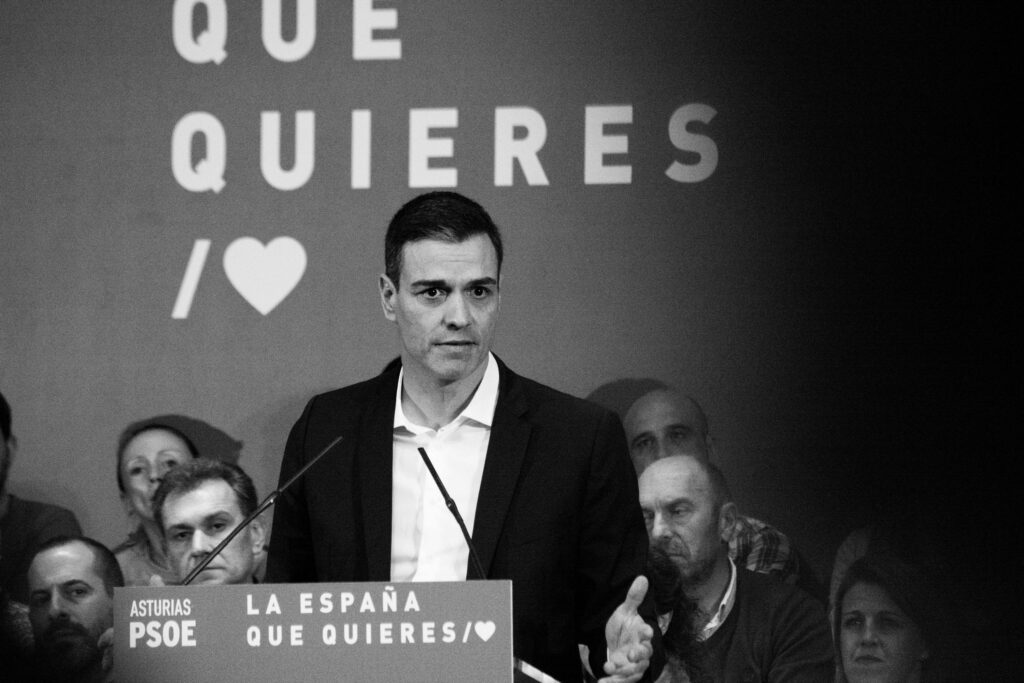
Ekaitz Cancela, a formidable Bilbao-based intellectual who stewards Verso Libros, has penned a synoptic essay on the present conjuncture in his home country. Prime Minister Pedro Sánchez has pulled endless rabbits out of the political hat of Spanish politics yet fundamental contradictions remain. Cancela takes the measure of Sanchismo and makes clear why its future matters for Europe.
Next, the fine writer and critic Shehryar Fazli (featured before in our pages) sizes up a sharp new reinterpretation of US civil rights history found in Brandon M. Terry’s Shattered Dreams, Infinite Hope: A Tragic Vision of the Civil Rights Movement. Fazli probes whether Terry’s upending of the romantic story of American democracy in favor of a more tragic vision stands to reason.
Finally, the political analyst Jeremy Shapiro analyzes the constellation of forces shaping AI and proposes that the global race for AI supremacy misses something deeper: the social integration of technological change. Drawing on Karl Polanyi’s master concept of “embeddedness,” Shapiro argues that the true determinant of geopolitical strength will not be who develops the most advanced AI systems, but who manages to embed them in stable social and political institutions without provoking backlash.
Our curated section kicks off with a masterful essay on Howard French’s new book on African liberation in which Kwame Nkrumah takes center stage by Ayisha Osori. She places French’s text in a broad African and global context, with edifying conclusions.
Two more pieces on the European right follow that reward being read together. First, from our friends in the Illiberalism Studies Program, is a probing essay on the intellectual appeal of the right-wing political philosopher Alain de Benoist, a founding figure of the French Nouvelle Droite. As a companion, we include an ethnographic exploration by Agnieszka Pasieka, published in Aeon, on why so many young Europeans find a sense of belonging in far right movements.
Jesse Jackson, a monumental figure in postwar American history, died this week. Our musical selection is in his honor. “In the Upper Room” is sung by the legendary gospel singer Mahalia Jackson, who long resided, like Jesse Jackson (and my wife), on Chicago’s South Side.
—Leonard Benardo, senior vice president at the Open Society Foundations
Sanchismo’s Last Stand
Ekaitz Cancela
The Ideas Letter
Essay
Pedro Sánchez’s Spain is the last functioning stronghold of European social democracy, combining welfare reforms, economic growth, and geopolitical ambition while much of the continent shifts rightward. As Cancela argues, this success rests on deep contradictions: reliance on markets, corporate subsidies, militarization, and Big Tech, alongside strained public services and rising political fragility. Sanchismo embodies an exhausted social democracy—progressive in image but structurally constrained—leaving Spain vulnerable to the same far-right surge reshaping the rest of Europe.
“The tradition of fighting for the oppressed to which social democracy appeals will only endure if it wrests control of the future’s imagination from authoritarian capitalism. That means returning to progressivism’s roots: a project that dismantles hierarchies of race, gender, and class so that each individual can flourish through socially and institutionally mediated environments. Creativity, becoming, and discovery—these, Morozov argues, are its core values. Europe built and scaled them through the welfare state, but also through cultural and media institutions. If neoliberal forces are winning, it is because they have succeeded in positioning the market as the only institution capable of facilitating these processes.”
The Long Civil Rights Movement
Shehryar Fazli
The Ideas Letter
Essay
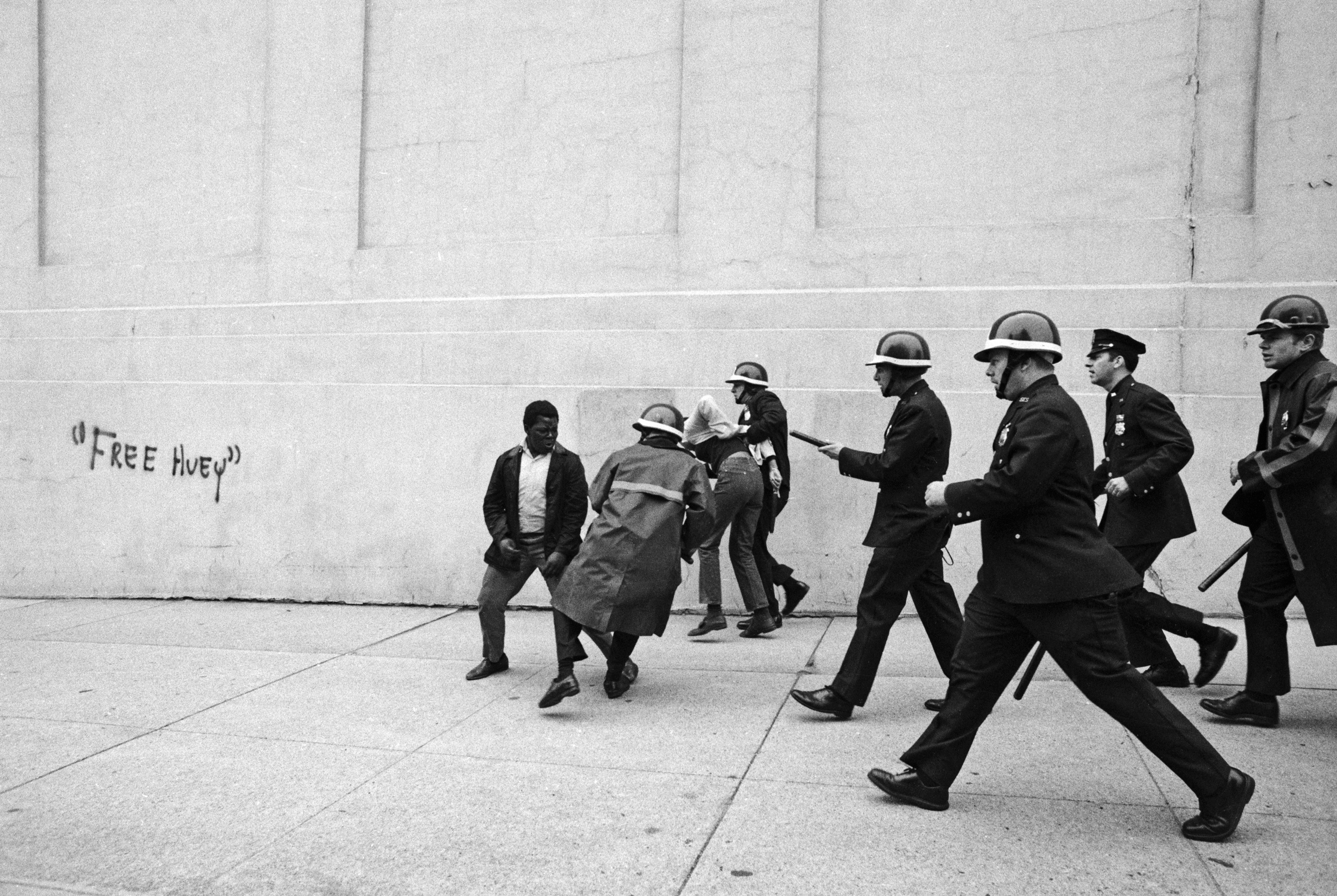
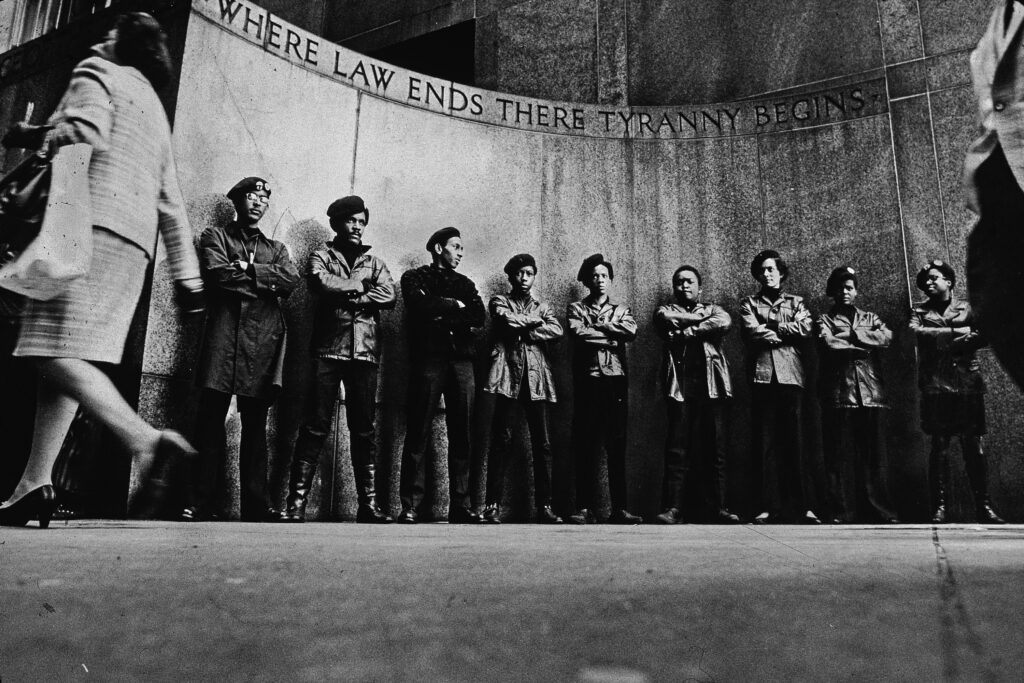
Fazli reviews Brandon M. Terry’s Shattered Dreams, Infinite Hope, which argues that the civil rights movement should be understood not as a triumphant moral resolution but as a tragic, unfinished struggle in which victories coexist with enduring structures of racial domination. Terry rejects both liberal romanticism and total despair, proposing instead a “tragic vision” that recognizes persistent conflict, adaptation of white supremacy, and the contingency of political gains while sustaining faith in collective action.
“In the liberal discourse, the binary between integrationism and Black Power is a moral one, between moderation and excess, respectively. Terry sees this as a product of narrative forms—in his words, ‘emplotment’—that assume false ethical clarity and flatten the intricate texture of Black political struggle by ignoring the civil rights movement’s own compromises and imperfections. One of the decisions he focuses on is that of using the children of Birmingham in a 1963 march for desegregation, where they were subjected to fire hoses and attack dogs. While televised images of brutal acts against children was a public relations win for the campaign, the deliberate exposure of kids to violence was ethically dubious at best and something that King agonized about. It’s easier to reconcile oneself to the decision when it’s seen as one in a chain of events towards a historic moral triumph, but less so if that triumph has ultimately proved incomplete.”
The Next Great Transformation

Jeremy Shapiro
The Ideas Letter
Essay
AI is widely framed as a geopolitical arms race, but Shapiro argues that the real contest is social, not technological. Drawing on Karl Polanyi, he contends that states will gain power not by developing AI fastest, but by embedding it in social institutions that preserve stability, legitimacy, and meaning in the face of economic disruption. In the age of AI, geopolitical strength will ultimately depend on which societies can absorb technological transformation without tearing themselves apart.
“The West has won this competition before, precisely because it learned to re-embed markets through welfare states, labor institutions, and public investment. It can again if it remembers the lessons of that victory … Of course, re-embedding markets in the AI age is not simply a matter of restoring the welfare state. There are two fundamental differences today that complicate the process of re-embedding. The first is the increased mobility of capital relative to labor, which makes it harder to socially embed markets at the national level. The second is the nature of work and employment in the twenty-first century.”
A World Reimagined in Black
Ayisha Osori
Africa is a Country
Essay
Osori reviews Howard W. French’s The Second Emancipation as a sweeping history of mid-twentieth-century Pan-Africanism centered on Kwame Nkrumah, portrayed not just as Ghana’s founding leader but as the political hub of a transnational Black network linking Africa, the Caribbean, and the United States. Through Nkrumah’s rise—from anti-colonial organizer shaped by U.S. racism to architect of Ghana’s independence and advocate of a federated Africa—the book traces both the high point of global Black political solidarity and the structural forces that narrowed and ultimately derailed it.
“Yet the book’s ambitions far exceed biography. French’s larger claim is that the era of decolonization must be understood as a continuation of a centuries-long global struggle for Black freedom—an unfinished emancipation that began with the abolition of slavery in 1833 in England and 1865 in the United States of America, and sought to culminate in full sovereignty and self-definition for African states. The ‘second emancipation’ of his title thus points to an ongoing aspiration: the attempt to complete the work that the first emancipation left unfinished. … It is in this context of an uncompleted vision and the limits of formal education in Africa about the politics of race and its symbiotic relationship to capitalism and imperialism, that three issues raised in Second Emancipation have bearing for Africa and Africans today.”
Alain de Benoist as an Interpersonal Node of Far-Right Intellectuals
Mintae Hwang
Illiberalism Studies Program
Essay
Alain de Benoist’s importance to the contemporary far right lies less in any single doctrine than in his role as a central relational hub linking intellectual networks across countries, according to Hwang. Through collaborations, mentorships, and shared institutions, he helped build transnational ecosystems that circulate ideas, confer legitimacy, and advance metapolitical strategies aimed at cultural influence.
“The case of the Nouvelle Droite and de Benoist is no exception to the conflicts between rivaling intellectual coalitions striving for finite resources. Part of the explanation for why the Nouvelle Droite managed to survive and thrive for over five decades lies in its actors’ capacity to a) accumulate symbolic capital through engaging in ‘high-stake exchanges’ and taking part in the intellectual world, be it ‘face-to-face’ or ‘in writing,’ and to b) establish (and maintain) interpersonal interactions and its networks that sustain the momentum of the movement by generating “emotional energy,” such as enthusiasm, confidence or motivation. What emerges is an analytic framework that captures the actors’ ability to cultivate recognition and maintain affective momentum through sustaining their own ‘coalition of mind’ within the broader economy of legitimacy, instead of the supposed inherent qualities of the ideas in question.”
Dreams of the Far Right
Agnieszka Pasieka
Aeon
Essay
Drawing on a decade of ethnographic research, Pasieka argues that young Europeans are drawn to far-right movements less by grievance or violence than by a powerful search for community, meaning, and belonging. These movements offer tightly knit moral worlds—structured by friendship, hierarchy, discipline, and national mission—that provide emotional support even as they sustain exclusionary politics.
“The centrality of community in far-Right activist practices has important implications for understanding the community question writ large. What I mean here more specifically is that it pushes us to enquire into the needs and desires that any young people may express. Although young people attracted by feminist, anti-racist or environmental activism might end up pursuing quite different goals, it may well be that what brought them to that activism, and what they find it offers them, would be interpreted by them in a way akin to far-Right youth’s motivations. Put differently, young people who become members of an evangelical church, a squatters’ movement or a student association may all be driven by similar needs, among which the wish to belong to a community and a critique of liberalism are central. And the reason why, increasingly, the far-Right offer is chosen from many other community options is what I call the capacity to link the tight community ‘here and now’ to a bigger ‘cause.’”