
Not long ago I read in the London Review of Books Leo Robson’s virtuosic retelling of his initiation to the world of cinema. In search of more criticism in these pages, I asked Robson to take the measure of film critic AS Hamrah, and Hamrah’s recent volumes published by n+1. Robson pulls no punches; Hamrah’s future reviewing might even be a beneficiary.
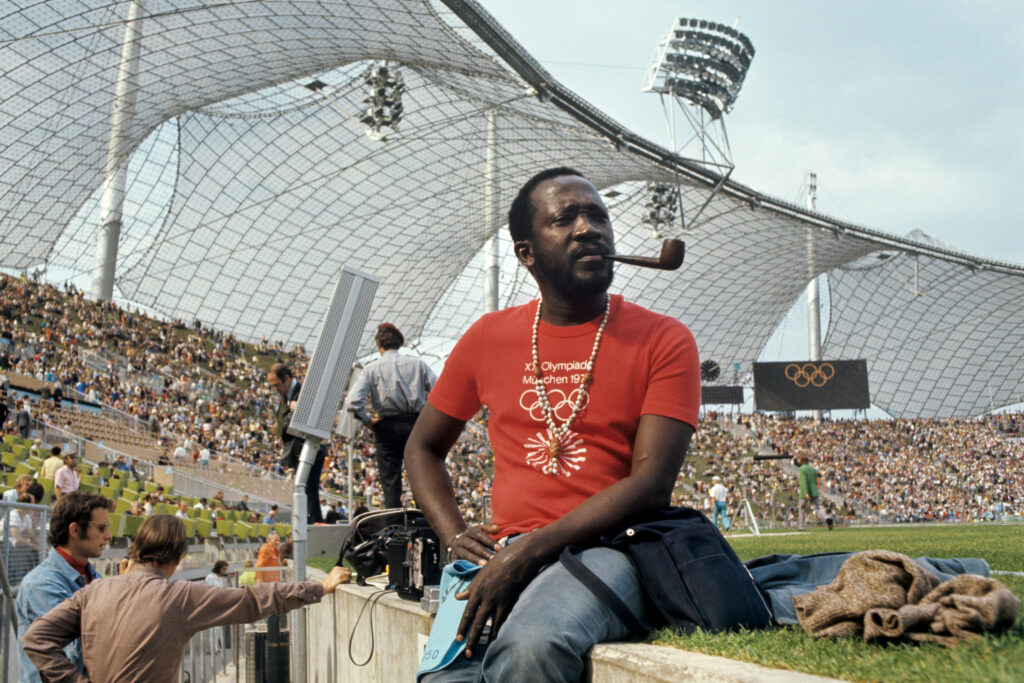
On the subject of film, the Nigerian writer and poet Kéchi Nne Nomu makes sense of the discarded footage of Senegalese filmmaker Ousmane Sembène during the ‘72 Munich Olympics. Sembène had sought to capture the interaction between African and African American athletes in the charged setting but was excluded from the group documentary Visions of Eight that resulted. His erasure is a starting point for Nomu to explore who gets to shape global narratives, and what is lost when particular perspectives are sidelined.
The historian Quinn Slobodian takes a break from his whistle-stop tour promoting his new co-authored book Muskism to examine the ubiquitous habit of framing digital capitalism in imperial terms. Slobodian argues that calling Big Tech and AI forms of empire and colonialism is rhetorically seductive but analytically sterile. Instead we need richer and more clarifying concepts to understand digital capitalism. Enter the digital nation-state.
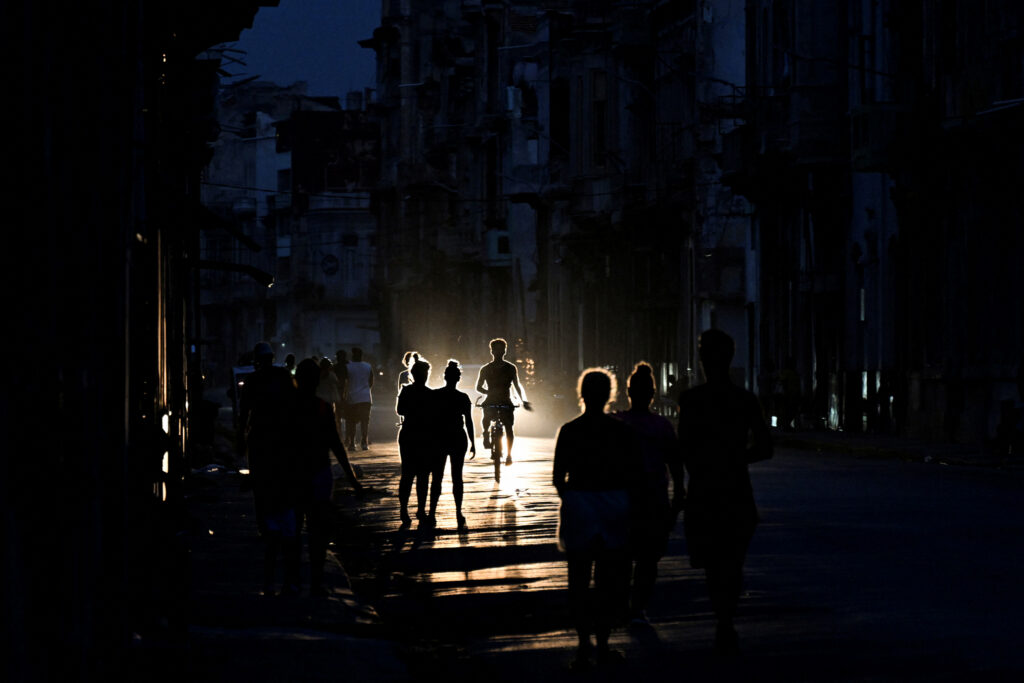
Last but hardly least, the esteemed Cuban novelist and journalist Leonardo Padura (author of the magisterial novel The Man Who Loved Dogs), writes from the darkness of Havana’s blackouts about the parlous state of play in the island nation. Padura offers trenchant and novel personal impressions of what is distinct in the Cuban condition.
Our friends over at Equator are publishing a lot of must-read essays and interviews, none more necessary than this conversation between one of Equator’s founding editors Gavin Jacobson and the writer Barnaby Raine. Their theme is antisemitism, and they masterfully cut through the cant and canards cluttering our crania to make sense intellectually and morally of what’s at stake.
Next, Balázs Trencsényi, a historian at the Central European University, offers in the Los Angeles Review of Books the most comprehensive and rigorous accounting of what transpired in Hungary. If you want to properly grapple with the demise of the “Viktator” and the corrupt regime he stewarded, look no further.
And from Commonweal, David Gibson argues that a deep rift has emerged between American Catholicism—especially its conservative wing—and the global Catholic Church, and that this conflict is evident in clashes between US political leaders and Pope Leo Quatorze. An American Pope today faces down the “phantom heresy” of Americanism.
I have been listening to quite a bit of Argentine rock from its heyday in the early 1970s and happened on a stunning record by the short-lived group Pescado Rabioso (Rabid Fish). The band’s leader, the late Luis Alberto Spinetta, among many standout tracks, penned a nine-minute suite, “Cantata de Puentes Amarillos,” that is as beautiful as it is imaginative and dark.
—Leonard Benardo, vice president at the Open Society Foundations
He Lost It at the Movies

Leo Robson
The Ideas Letter
Essay
What begins as a study of the combative film critic A.S. Hamrah becomes a broader meditation on the fate of criticism in an age of streaming, commercialization, and online discourse. Robson traces how Hamrah’s hostility to mainstream culture emerged from a resistance to reducing criticism to consumer guidance. But Hamrah’s relentless oppositional stance ultimately narrows his judgment and turns criticism into a performance of cultural decline. Can contemporary criticism still balance resistance with receptivity—or has cultural pessimism become its dominant mode?
“Although Hamrah rails against modern inanities, his writing reflects what the eminent film scholar David Bordwell, in an essay on Roger Ebert, called ‘the lightspeed punditry of the Web, which favors first-response witticisms.’ It is also symptomatic of a larger problem in contemporary discourse: rampant animus. Hamrah once contrasted David Thomson with ‘the horde of cheerleading critics whose hollow praise blights the film pages,’ yet he appeared to recognize the dangers of the alternative impulse. He wrote, ‘Thomson alone has made bitterness a career.’ One would be forgiven for thinking that Hamrah aspired to join him.”
Sembène Erased
Kéchi Nne Nomu
The Ideas Letter
Essay
The story of Ousmane Sembène’s lost footage from the 1972 Munich Olympics prompts Nomu to meditate on who gets to preserve and shape cultural memory. Sembène’s attempt to capture encounters between African and African American athletes—excluded by producer David Wolper from the final cut of the documentary Visions of Eight—stands in for a longer history in which African storytellers have been asked to make themselves legible to global audiences at the expense of their own narrative priorities. In an age shaped by platforms, archives, and AI, the struggle over storytelling has become inseparable from the struggle over historical memory and narrative sovereignty.
“… It’s important to note that the stakes were high for Sembène, and this impasse would have been more than a falling out between director and producer. It was emblematic of broader impositions on African storytellers, where the burden of legibility had been, in Sembène’s view, perpetually placed on African storytellers in the service of a global audience. In his own works, he would not indulge the conceptual horizons or barriers placed on him as a creative sovereign—even if it came at the cost of all that historical data and narrative experimentation.”
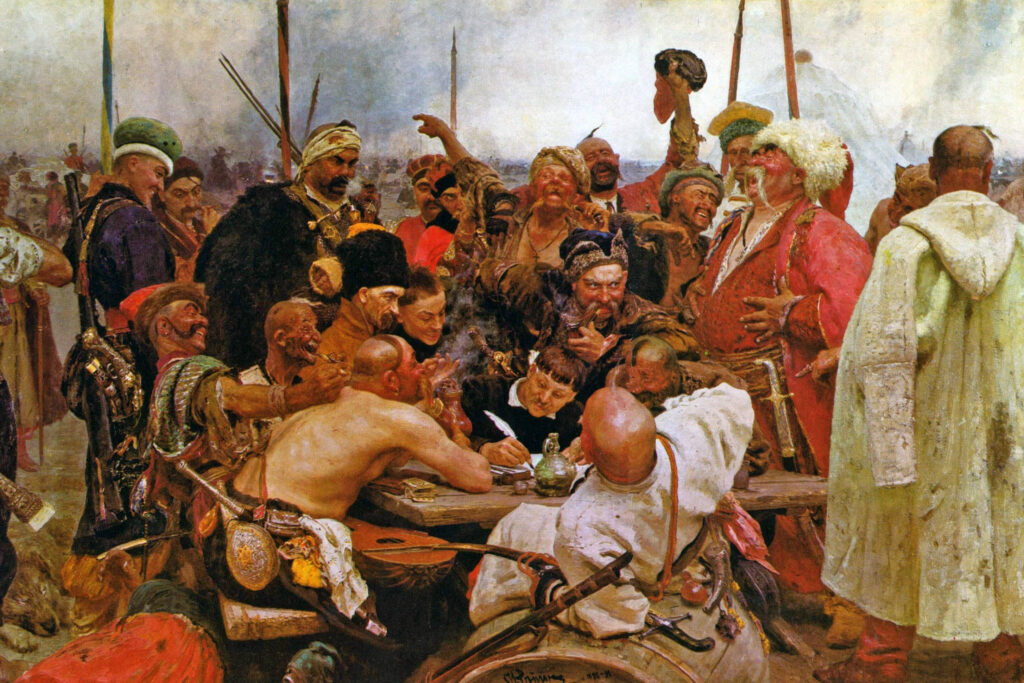
Digital Bandung
Quinn Slobodian
The Ideas Letter
Essay
The recent turn to the language of “digital empire” and “data colonialism” captures aspects of the concentration of technological power, but often mistakes polemic for analysis. Slobodian revisits the history of empire and pushes back against narratives of total domination. Instead he spotlights the unstable bargains, intermediary classes, and mutual dependencies that sustained imperial systems. Digital capitalism is a contested political formation—one that requires a new “Silicon Bandung” to challenge it.
“Digital counter-colonization would require many of the same things that actors in the Global South were asking for in the 1960s and 1970s: matching the promise of national sovereignty formally held out by international law with the capacity to exercise that sovereignty. Alongside digital empires, one could discuss a Digital Non-Aligned Movement and a Silicon Bandung to create space between the two poles of absolute refusal and absolute domination. Brazil’s legal pushback against the non-compliance of Musk’s X and recent push toward data localization and domestic data center construction under the banner of “digital sovereignty” represent efforts in this direction.”
Cuba, End of the Peculiar
Leonardo Padura
The Ideas Letter
Essay
Novelist Leonardo Padura explores the peculiarities—and unraveling—of Cuban life. Moving from censorship to economic collapse, migration, and the effects of Trump’s “maximum pressure” campaign, Padura argues that Cuba’s crisis cannot be understood through simplistic ideological narratives, but only through the contradictions of a society suspended between socialist structures and social disintegration. He reflects on the burdens of writing within a system shaped by political pressure, while portraying a country whose once-exceptional condition is slowly giving way to forms of precarity increasingly familiar across Latin America. In this moment of crisis, he breaks step and calls, unequivocally, for change.
“It can be difficult for someone who does not live under these creative conditions to grasp the way in which artistic processes in Cuba have developed over the course of six decades. Fear leads to the stifling practice of self-censorship, which is pervasive. For one’s work to be published, disseminated, and recognized socially and artistically, one must operate through cultural institutions and media outlets that belong to the very same single-party state that established that cultural policy and continues to implement it. Is it possible to fully comprehend the depth of the existential and creative conflict inherent in this social, political, economic, and intellectual situation outside of our local context?”
Good Jews, Bad Jews
Interview with Barnaby Raine
Gavin Jacobson
Equator
Essay
Contemporary debates about antisemitism have become trapped in a moral panic that misidentifies both its causes and its political function, according to historian Barnaby Raine. Tracing the rise of what he calls the “new anti-antisemitism,” Raine argues that liberal and conservative elites increasingly invoke Jewish vulnerability to legitimize anti-Muslim politics and the defense of a declining Western order, while obscuring the historical conditions that generate antisemitism itself. Against both Zionist nationalism and liberal identity politics, he recovers a Jewish radical tradition rooted in diaspora.
“I found that much of what I later discovered in Marx resonated with my early Hebrew school education, particularly the idea of a ‘chosen people’ (for Marx, the proletariat) who were not a master race, but a group burdened by a peculiar obligation to ensure universal emancipation. Though Marx grew up without Jewish observance, he came from a lineage that prized rigorous study and rituals that held together a people whose Messianism imagined a radically different future. He is an example of a thinker produced by a tradition but also able to look beyond it.”
Reclaiming the Small Circles of Liberty
How Hungary Rid itself of Viktor Orbán
Balázs Trencsényi
Los Angeles Review of Books
Essay
Reflecting on the unexpected defeat of Viktor Orbán in Hungary’s 2026 elections, Trencsényi argues that autocratic regimes often appear more stable than they really are. The essay traces how years of dispersed resistance—from investigative journalism and student protests to alternative cultural institutions and academic networks—gradually eroded the ideological legitimacy of Orbánism, even as the regime retained overwhelming institutional power. Orbán’s defeat was not a simple victory of liberals over nationalists or left versus right, rather the Hungarian opposition created a broad anti-autocratic coalition shaped by the long political memory of Eastern Europe’s dissident movements and the defense of what Trencsényi calls the “small circles of liberty.”
“One such symbolic battlefield was my own institution, the Central European University, targeted by a custom-made law in 2017. The university received strong popular support as evidenced by the 80,000-strong demonstration in Budapest, as well as an outburst of international solidarity. Eventually, in 2019, the CEU transferred its degree-granting programs to Vienna. Yet from the standpoint of April 12, the fact that the university refused to bend and kept certain institutional entities in Budapest (the Open Society Archives, the Democracy Institute, and the Institute for Advanced Study), which continued to maintain interactions with Hungarian civil society as well as the broader region, has had a powerful symbolic significance.”
Leo vs. the Americanists
A Heresy Comes of Age
David Gibson
Commonweal
Essay
The clash between Pope Leo XIV and the Trump administration reveals a deeper transformation within American Catholicism itself, according to Gibson. What was once dismissed as the “phantom heresy” of Americanism has hardened into a form of nationalist Catholicism increasingly detached from Rome and from the idea of the Church as a global body. Through the figure of the first American pope, the essay traces how MAGA-era Catholicism came to treat papal authority as subordinate to partisan identity.
“The fierce response to Leo’s words represents a historic shift in the religious sensibility of American Catholicism, away from the communal toward a radical individualism, from the universal to a tribal nationalism. MAGA Catholics act as if they are arguing with some guy dressed in white running an NGO in Rome; they are in fact rejecting what the pope speaks for, and from: a tradition developed over centuries and a “sense of the faithful” representing some 1.4 billion other Catholics around the world (US Catholics constitute just five percent of the Church).”