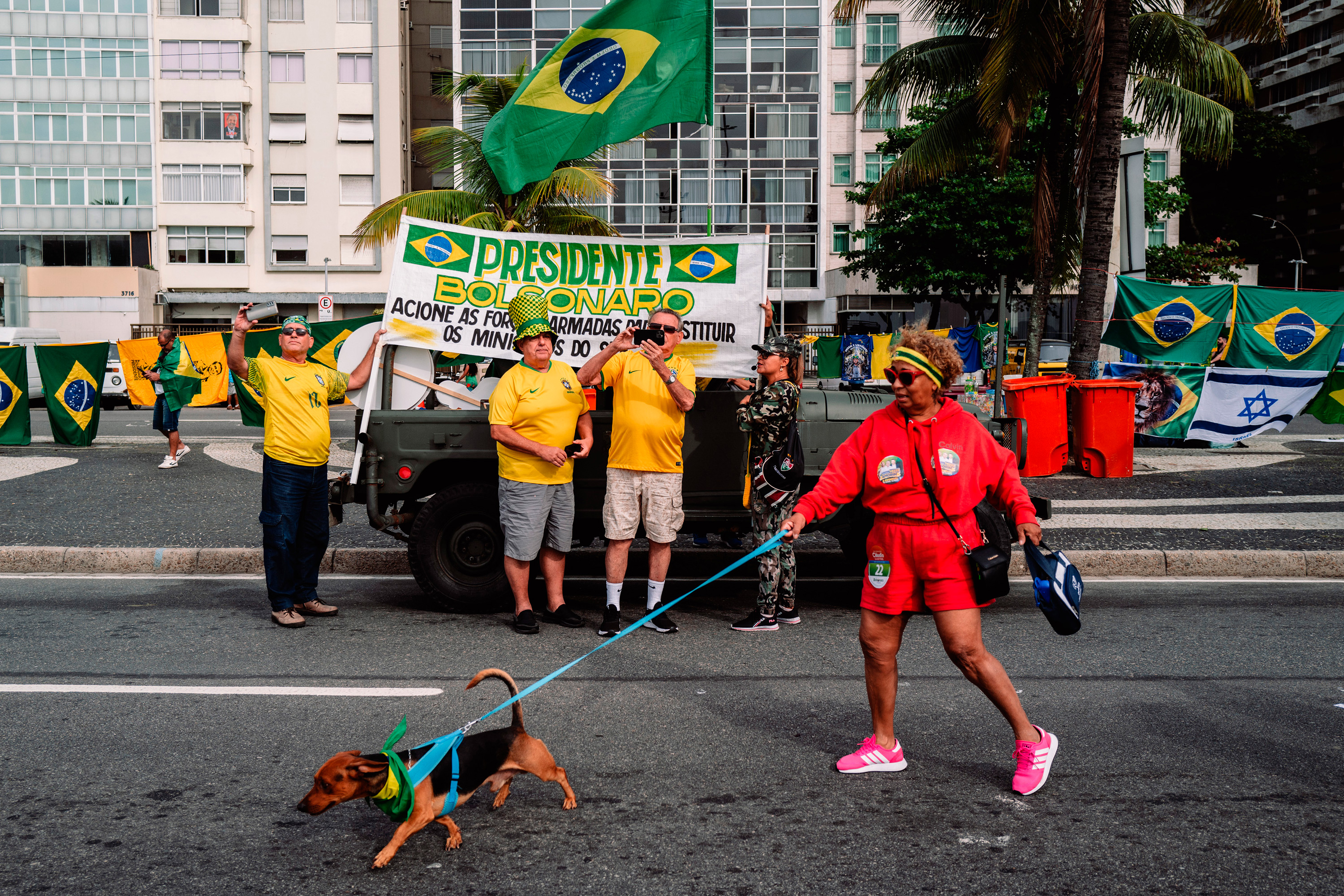
Brazil is playing an outsized role on the global stage, and for good reason. With the largest rainforest area in the world, the future of the planet hinges in no small part on decisions made in the Amazon. President Luiz Inácio Lula da Silva, “Lula,” has inspired a second coming of non-aligned states—middle powers, in today’s IR parlance—which strive to present a collective alternative to American empire. Elections will be held on October 4 to determine whether a member of the reactionary Bolsonaro clan will return to office and unseat Lula, the progressive champion, who is running for a fourth term. A lot is at stake. No small reason why The Ideas Letter 65 is focused on the largest country in South America, which the pre-colonization Tupi Indigenous people referred as “Pindorama,” the land of the palms.
First out of the gate is the remarkable political philosopher and public intellectual Marcos Nobre. You’ll recall that we featured an essay by Nobre in The Ideas Letter 14 that introduced his concept of neo-extractivism to make sense of a new form of the dependency model in Brazil and more broadly in the international system. In this piece, Nobre takes the measure of Brazilian history since the resumption of civilian rule in 1985 and traces the patterns and ruptures that produced this conjunctural moment. Nobre argues that Brazil faces a political crisis today and that the stakes of this year’s elections are high because the system based on elite accommodation established after the dictatorship is breaking down, giving way to a sharper conflict between a resurgent far-right and a weakened but still-central left. Nobre is hopeful but hardly optimistic.
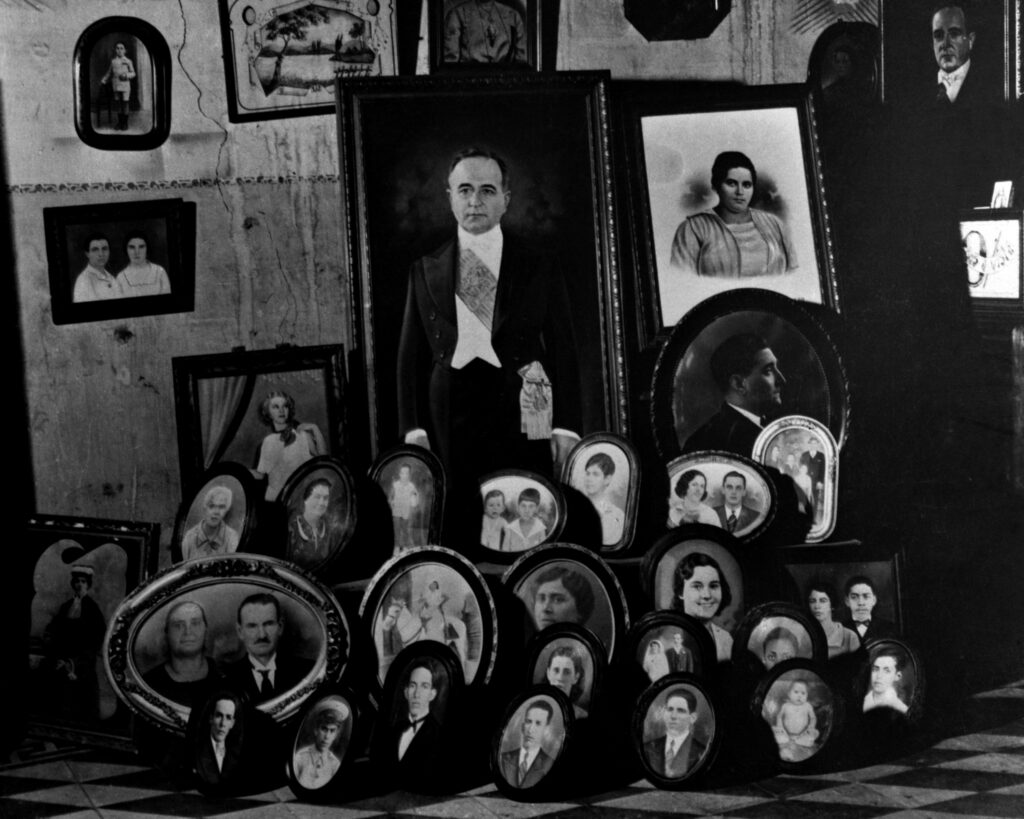
Returning to history, the Brazilian social scientist and policy analyst Miguel Lago reconsiders what could usefully be mined from the radical and authoritarian presidency of Getúlio Vargas (1930–45 and 1951–54). Lago argues that Vargas, one of the most consequential leaders in Brazilian history, has been misunderstood, ideologically misclassified, and thus marginalized from political memory. Vargas should be remembered less as an ideologue than as a network actor—a leader who mediated among diverse social forces while making himself the indispensable center of Brazil’s political life. His importance, Lago concludes, lies in his method not his doctrine.
Finally, Oliver Stuenkel, a Brazilian-German political scientist, pushes back on Daniel Bessner’s claims in IL 63 that that a new world order will be sharply demarcated into rigid spheres of influence claimed by the great powers. Using Latin America as a central case, he shows that in today’s interconnected world neither El Norte nor any other major country can fully dominate neighboring regions (or exclude its rivals from them). Brazil’s multi-alignment strategy is a better bet to avoid dependence. Hedging is destiny!
Were the great Marxist historical sociologist Moishe Postone still with us (he died in 2018), he would certainly be banging the drum for a deeper structural analysis of neoliberalism. We begin our curated section with an Andrew Liu essay from Critical Historical Studies, a publication Postone helped establish (with William Sewell), which argues that histories of neoliberalism should move beyond surface-level accounts of markets and toward studying the deeper capitalist dynamics of value and the changing composition of capital. Postone was a legend for those who knew him at the University of Chicago, and this essay on his thinking makes clear why that was so.
Following Postone, the journal International Political Sociology showcases a forum-style essay about how anti-colonial and decolonial language is increasingly being used by reactionaries and nationalists to attack liberal universalism. Wisely, the authors caution against treating every anti-imperialist claim as decolonial or progressive: Concepts like “multipolarity,” “civilizational states,” and “pluriverse” can be used to justify spheres of influence and extant hierarchies.
When you’ve finished the aforementioned and taken notes, we offer a palette cleanser: A love letter to the em-dash. This noble sentence mark has been having a devil of a time lately as AI seems to favor it in its slop. Before we allow LLMs to jettison the baby with the bathwater, Mihika Agarwal in The Walrus brings us back to our (punctuational) senses.
It should come as little surprise that for our musical selection we would spotlight Sonny Rollins, aka Newk, following his passing this week at the age of 95. In a cosmically coincidental moment, Rollins died the day before the centenary of Miles Davis’s birth. Newk and Miles played together extensively in the early 1950s, and here is a track of them from a 1954 side, along with Horace Silver, Kenny Clarke, and Percy Heath, performing the Gershwins’ “But Not For Me.” (Rollins comes in at 2:23).
—Leonard Benardo, vice president at the Open Society Foundations
Brazil’s Last Line of Defense

Marcos Nobre
The Ideas Letter
Essay
Brazil’s elections later this year could mark the definitive end of the political order that emerged from the country’s transition out of military rule in the mid-1980s, argues Nobre. For decades, democracy in Brazil rested on a system of accommodation in which the Centrão—a largely conservative bloc with roots in the dictatorship era—traded political support for access to state resources and progressive governments avoided direct confrontations over wealth and redistribution. Nobre argues that this accommodative order has now given way to a new right-wing coalition that fuses the transactional conservatism of the Centrão with the far-right energy of Bolsonarismo and its highly adaptive “digital party.”
“The digital party engages in permanent online political campaign mobilization, on which its cohesion and its very existence as a political actor depend. It operates through direct, continuous, and disintermediated communication with its base through social-media algorithmic logic. The result is neither simplistic manipulation nor then the spontaneous manifestation of public opinion. Campaigning creates a valuable feedback loop: It helps the Bolsonarista Digital Party monitor public reactions and identify social cleavages in real time and then adjust its discourse accordingly and rapidly reorganize its internal coalitions. It works on a dynamic of permanent and coordinated digital action that perpetually adjusts the relationship between leadership and base.”
Vargas Vive
Miguel Lago
The Ideas Letter
Essay
The Brazilian strongman Getúlio Vargas is one of the country’s most consequential yet ideologically elusive figures: Condemned by liberals, the left, and the right alike, he nonetheless remains deeply influential in Brazil’s political and social conception. Lago revisits Vargas’s political methodology, arguing that his real legacy was his ability to construct broad collective identities and treat sovereignty as an active process of national evolution. As democracies today face fragmented labor, technological dependency, and new forms of extractive subordination, Vargas’s vision for Brazil offers a provocative framework for thinking beyond both neoliberal fatalism and the exhausted developmentalism of the twentieth century.
“What defined Vargas was not the specific content of his policies, but his capacity to reimagine the country’s trajectory altogether. He looked at a Brazil structured around coffee monoculture, marked by deep inequality and consequences of slavery, and envisioned something radically different: an industrialized nation, with a new system of rights, a stronger state, and a claim to sovereignty. This is precisely what is missing today. Just as Vargas refused to accept that Brazil’s destiny was tied to agricultural exports, Brazil’s contemporary challenge is to resist the temptation of a new extractivist horizon, privileging oil over the forest and short-term revenue over long-term sovereignty.”
Spheres of Illusion

Oliver Stuenkel
The Ideas Letter
Essay
Stuenkel pushes back against a recent Ideas Letter essay by Daniel Bessner that argued that the decline of US hegemony will give way to a world divided into competing spheres of influence. Drawing on Latin America, anti-colonial history, and contemporary middle-power diplomacy, he argues that such frameworks systematically understate the agency of weaker states—and that global orders have always been shaped not only by great powers, but also by the countries and the movements that resist, bargain with, and constrain them.
“Yet the most significant weakness of the spheres of influence model is that it imagines a world in which great powers act and everyone else is acted upon. As a historical analysis shows, this understates the role that weaker states and colonized peoples have played in shaping the world order. In fact, at most of the major inflection points of the past century, governments and movements from outside the great-power club have done a substantial share of the work of constructing what followed, even when they were excluded from the rooms where the supposed architects met. This is the deeper reason Bessner’s spheres of influence model misleads: The global order has never been something great powers simply impose from above, and there is no reason to expect the new one to be the exception.”
Surface and Deep Structure
Moishe Postone and the History of the Neoliberal Era
Andrew B. Liu
Critical Historical Studies
Journal Article
Liu draws on the work of the Marxist theorist Moishe Postone to make the case that historians of neoliberalism have focused too heavily on the “surface” of markets, ideas, and policymaking while neglecting the deeper transformations in labor and production that underpinned the economic crises of the 1970s. Liu proposes understanding neoliberalism as one historical expression within capitalism’s longer history of recurring transformations.
“Without addressing the economics of the 1970s crisis, it strikes me, intellectual and political histories run into problems of specificity and causality. The neoliberalism story presupposes that ideas about market freedom were not new in the ’70s but a revival and modification of the nineteenth-century original, what Quinn Slobodian calls ‘paleoliberalism.’ Its resurgence must logically be partly attributable, then, to forces external to the ideas themselves. Had the ‘glorious’ years of mid-century Keynesian and socialist economics continued without crisis, that is, would the neoliberal consensus have caught on in the same way? If liberal ideas were so familiar, then why did they disappear and only later regain dominance at a specific moment? By contrast, many of the earliest explanations of the 1970s crisis were more materialist and economics-oriented in their concerns. Revisiting such works can be instructive for reintegrating the structural and intellectual histories of neoliberalism into a single story that points to forces beyond the control of individuals and classes yet which retains the strengths of the political and conjunctural approaches found in recent works.”
The Uses and Abuses of the Anti-Colonial in Global Reactionary Politics
Gorkem Altinors, Priya Chacko, Miri Davidson, Aliaksei Kazharski, Sivamohan Valluvan and Chenchen Zhang
International Political Sociology
Journal Article
As the liberal international order loses legitimacy, anti-colonial language is increasingly being repurposed by authoritarian and reactionary movements across both the Global North and the Global South, argue the authors in this collective discussion. Tracing unexpected convergences between postcolonial authoritarianism, the global far right, and strands of decolonial thought, they examine how critiques of Western universalism can coexist with neoliberal capitalism and new visions of a multipolar order organized around civilizational differences rather than emancipation.
Davidson writes: “But if anti-colonial history has reactionary threads running through it, the history of far-right thought is also woven with anti-colonial sentiments. Expansion into foreign territories and subjugation of sovereign peoples have not always been seen by far-right thinkers as positive. Principal here are the far-right advocates of ‘differentialist’ race-thinking, who viewed human races as fundamentally (perhaps originally) separate from and incompatible with one another. Unlike the ‘civilizing’ colonial racisms that viewed racial groups as corresponding to different stages on a single human evolutionary continuum—meaning that the ‘lower’ races could one day assimilate with the ‘higher’—differentialist race-thinking envisioned not one single destiny of humanity or standard of civilization, but rather discrete racially based civilizations that developed according to their own unique logics. Because racial separation was the natural substrate of the human condition, colonialism could be interpreted as a violation of that nature. We could call this strand of thinking racial relativism.”
I Love the Em Dash—Too Bad If AI Does Too
Mihika Agarwal
The Walrus
Essay
The em-dash has long been an addictive—and controversial—style choice for some writers. It has been further polemicized in the age of AI as an alleged tell of LLM intervention. Argawal mounts a spirited defense of the much-maligned punctuation mark.
“The irony is that em dashes are everywhere in the training data. Books, essays, articles—written by humans who reached for them the same way I do: to think out loud, to hesitate, to qualify, to keep going. AI didn’t invent the em dash—it inherited it.
For a hot second, I considered giving in to the automation panic around the humble grammar tool. But I decided that I wasn’t interested in diluting my sentences to pre-empt an accusation I didn’t agree with, or in abandoning a mark that had done so much of my thinking for me.”