The Communist Mystique
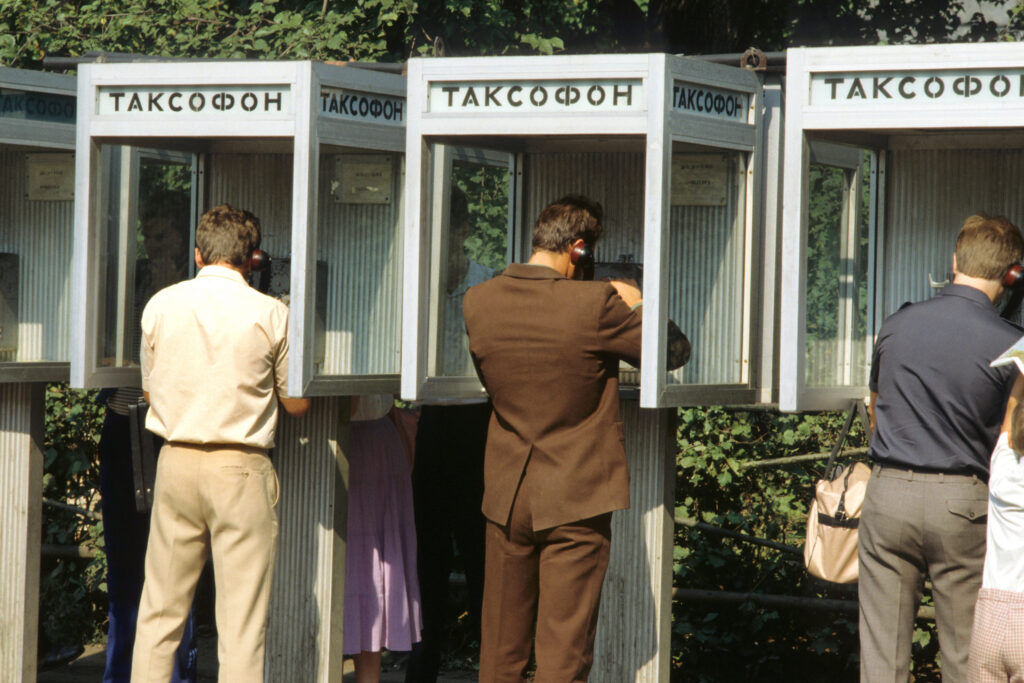
In October 2019, when public-opinion polling in Russia was still a meaningful exercise, the Pew Research Center published a curious study in which six out of ten Russians surveyed considered the demise of the USSR a “great misfortune,” an increase of 13 percentage points since 2011. A full half of those aged 18 to 34—that is, people who never directly experienced the Soviet reality—shared this assessment. The phenomenon is not uniquely Russian. From Ostalgie for the GDR in former East Germany to red tourism in China, real or invented memories of a wonderful life under communism maintain a certain grip over parts of the public imagination.
This perception is perhaps in part a consequence of the painful and highly inegalitarian transition to market capitalism, even though it left these countries much better off economically than they had been under stagnant late socialism. But there is unquestionably something else to this, too: a longing for a way of life with its particular set of values and ideals that (in retrospect at least) appear more elevated and meaningful than the day-to-day hustle and bustle of a free society. The Belorussian Nobel Laureate Svetlana Alexievich skillfully captured the sentiment in her book Secondhand Time: The Last of the Soviets, with its post-Soviet interviewee who sighs ruefully: “No one is even trying to explain what country we are living in. What idea do we have, besides salami?”
The loss of an ideational direction was of course most pronounced at the center of the former Soviet empire—in post-Soviet Russia. It did not require deliberate Putinist propaganda to instill nostalgic feelings for a society that was so intimately familiar and yet so irretrievably lost. Remnants of that world—from dilapidated housing and rusting factory chimneys to the many streets and monuments named after Gagarin and Lenin—were still visible there for years after the Soviet Union’s collapse (and in many places, they still are). Soviet culture—from music to inevitable New Year family movies—also lives on.
Already in 1990s Russia, there was a whole cottage industry of post-Soviet excavation, represented most notably perhaps by the inimitable Leonid Parfenov, whose multi-part documentary The Other Day: Our Era, which ran on the then-still-independent NTV, captured the imaginations of nostalgic post-Soviet viewers. Parfenov later published his documentary as a book, to considerable acclaim.
The Cambridge historian Mark Smith’s new book, Exit Stalin: The Soviet Union as a Civilization, 1953–1991,falls within the same broad genre. The book attempts to depict Soviet life—or byt—as it was, not for any nostalgic purpose but simply to help modern-day readers understand what living under communism was like. In this respect, it is an important contribution to the expanding scholarship on the social and cultural history of the USSR, including by authors like Karl Schlögel (The Soviet Century: Archaeology of a Lost World), Sheila Fitzpatrick (Everyday Stalinism: Ordinary Life in Extraordinary Times), and Vladislav Zubok (Zhivago’s Children: The Last Russian Intelligentsia), among many others.
Smith’s core argument is that life in the Soviet Union, at least after Stalin’s death in 1953, acquired a degree of normalcy and legitimacy and that it was, moreover, civilizationally coherent—often not unpleasant and quite sustainable until, rather suddenly, the wind went out of the Soviet sails and things finally fell apart.
The Soviet Union As Civilization
Was the Soviet Union a civilization? Since the subtitle of Smith’s book says so, his answer would evidently be a resounding “yes.” This is an unusual starting point for understanding Soviet reality, though it is also not particularly unique. Smith follows in the footsteps of scholars like Stephen Kotkin who, in his 1995 book Magnetic Mountain, famously described Stalinism as a “civilization.” Kotkin argued that understanding Stalinism required reconciling oneself to the idea that, Stalinist brutalities notwithstanding, the majority of Soviet citizens actually approved of their life and actively participated in “the building of socialism.” Moreover, Bolshevism had embraced “powerful symbols and attitudes, a language and new forms of speech, new ways of thinking in public and private, even new styles of dress,” which was what made the USSR a true civilization.
Smith, too, attempts a definition. “This was a civilization in the sense of a complex, urbanized society,” he argues. He continues: “The Soviet Union had its own distinctive apartment buildings, consumer goods, films, rituals, hobbies, cars, curtains and underground culture. It was its universe of political practices, ‘spiritual’ values and material goods.” The argument is broadly acceptable and yet there are ambiguities in it too. Many of the Soviet practices and methodologies were exported around the world. It is no accident, for example, that Tiananmen Square in Beijing looks like Red Square in Moscow or that Nikolai Ostrovsky’s revolutionary novel How the Steel Was Temperedhas made it onto Xi Jinping’s must-read list. But does this mean that China is a part of the Soviet civilization or that it is a fusion of the Chinese and Soviet civilizations?
And if elements of Soviet “civilization” could be—and were—exported, other elements could be imported: partly from Russia’s own past, including from traditions traceable to as far back as the Mongol conquests, but also from the West. Soviet consumer goods often imitated Western goods (produced under contract or based on stolen technologies). The most quintessentially Soviet car, the omnipresent Zhiguli, was a version of Fiat’s model 124. The Soviet oil and gas sector—increasingly the basis of the Soviet economy from the 1970s—relied on Western technologies, even pipes, to operate. Ultra-quiet propellers for the mighty Soviet submarines were produced using Toshiba milling machines.
This list goes on and it can be extended to hobbies, rituals, and even some political practices. Should it surprise us, for example, that the Soviet Union had hippies, that dissident samizdat literature included texts devoted to the esoteric and the paranormal, or that there was a well-known gay cruising ground around the famous statue of Karl Marx a short walk from the Kremlin? The circumstances may have been distinctly Soviet, but the phenomena would have been familiar to any purveyor of the Western alternative and counterculture scenes in the 1960s and the 1970s.
Drawing the line between Soviet and non-Soviet is thus difficult and, indeed, probably counterproductive—as Smith himself admits when he calls the Soviets “anxious Europeans, full of complexes” and asks, “How separate was their country from the West?” At one point, recognizing perhaps that it is almost impossible to untangle Soviet “civilization” from its Western roots, he describes it—not uncontroversially but once again following Kotkin—as “an extreme variant of Enlightenment progress.”
And so questions remain. Yes, the Soviet Union was a “complex, urbanized society.” But for that matter, so is every other modern society. Each has its own distinctions. Whether these distinctions merit the term “civilization” is an arbitrary judgment. Today, some debate whether Russia, though no longer Soviet, represents a distinct civilization. Those who argue that it does—such as various conservative philosophers like Alexander Dugin—would point to Russia’s distinct values. None of this is new, however: These debates already raged, inconclusively, in the nineteenth century.
The Soviet Union As Empire
A Google Scholar search yields about 2,000 returns for the term “Soviet civilization” but over 87,000 returns for “Soviet empire.” As Smith tries to parse the distinction, he seems ambivalent. “The Soviet Union,” he writes, “was not a typical empire.” He continues: “It was an empire that acted as a multinational socialist metropole, rather than the protector of a nationally Russian core.” His evidence includes the fact that “people from different nationalities were very visible in Moscow in all areas of all-union accomplishment.” “Georgians and other national minorities,” he argues, “were both members of ethnic peripheries and influential elements in the imperial metropole.” And then: “The Soviet empire was run not by a phalanx of Russians in the interests of Russians, but by Russians plus a congeries of diasporas in the interests of the Soviet Union.”
Elsewhere he compares the Soviet empire to the US: “by the 1970s, both countries were anti-empires that looked suspiciously like empires.” At one point Smith even resorts to quotation marks. The Soviet Union was not an empire—but an “empire.”
It is very difficult to draw any definitive conclusions from such a contradictory analysis. Smith never explains what a typical empire looks like. Perhaps he has in mind nineteenth-century European empires. Most of these had already fallen apart by 1953 or were being actively decolonized then. He acknowledges that Russians had a privileged status in the empire/“empire” even though he claims they were “also exploited” by it. But he does not offer a systematic analysis of center-periphery relations. Nor does he even attempt to look at the empire from the point of view of its constituent parts, a point he acknowledges in the afterword, in which he writes: “Exit Stalin aimed to describe an all-union civilization while drawing primarily on years of research and personal connections in Moscow, not the provinces or republics.” No wonder.
One can see the limitations of Smith’s approach from the following example. At one point, he recounts the Russian writer Aleksandr Solzhenitsyn’s views on the relationship between the Soviet Union’s “Slavic core” and the rest of the empire. “Solzhenitsyn did not exoticize Central Asia,” Smith argues. “He just assumed that Russia (and Ukraine) possessed a higher civilization.” Still, according to Smith: “Solzhenitsyn was not an imperialist. He regretted Moscow’s original expansion outside its Slavic core.” Any Ukrainian reading this may be forgiven for being bemused by Solzhenitsyn’s alibi: Why, of course, he was not an imperialist—he probably just genuinely believed in the historical unity of the Russian and Ukrainian peoples.
In addition to positively contrasting the Soviet empire to a more generic, albeit vague, imperial golden standard, Smith raises the USSR above Nazi Germany. The contrast is instructive. The Nazis, he argues, “were not interested in progress”; rather “They looked to the deepest reaches of the past for inspiration, for the confirmation of their ethnic purity.” Regardless of whether this is actually true (after all, Hitler, even—perhaps, particularly—at his most genocidal, was deeply invested in modernity and, indeed, looked to the US and Henry Ford as examples to emulate), the point is clear. The Nazis were reactionary. But the Soviets? The Soviets—including under Stalin—were “progressive.” “Unlike Hitler’s Germany,” Smith posits, “Stalin’s Soviet Union was a landscape of unimaginable newness.” One can readily imagine the landscape: All white as far as the eye can see, fresh like snow. But, wait, what is that black silhouette barely visible through the blizzard? Ah, the watch tower!
And yet Smith does not belong in the same category as the great British intellectuals Sidney and Beatrice Webb, whose famous investigation into Soviet practices—Soviet Communism: A New Civilisation? (first published in 1935 and republished in 1937 without the soul-searching question mark)—was justly criticized as an apology of Stalinism. Smith, by contrast, is fully cognizant of its horrors. He argues that things got better after 1953 (an obvious point), but calls the Soviet Union a “police state” and a dictatorship.
Does it matter in the end whether the Soviet Union was a civilization or an empire? Different terms come with different connotations and different emphases. A “civilization” is a broadly positive concept, something that one would contrast with barbarism, for example. It implies normality and legitimacy rather than coercion and violence. By exploring this particular angle, Smith takes sides in the long-running debate: Was the Soviet system ultimately underpinned by actual or implied repressions and the use of force, or was there a popular buy-in? The unhelpful answer is that it was likely both. But by choosing this particular—civilizational—framing Smith seems to have downplayed the imperial aspects of the Soviet experience, and it’s an experience that probably meant, and continues to mean, more to the victims of the far-flung empire than the Moscow-based scientific and intellectual elites that are the focus of Exit Stalin.
Soviet “Normality”
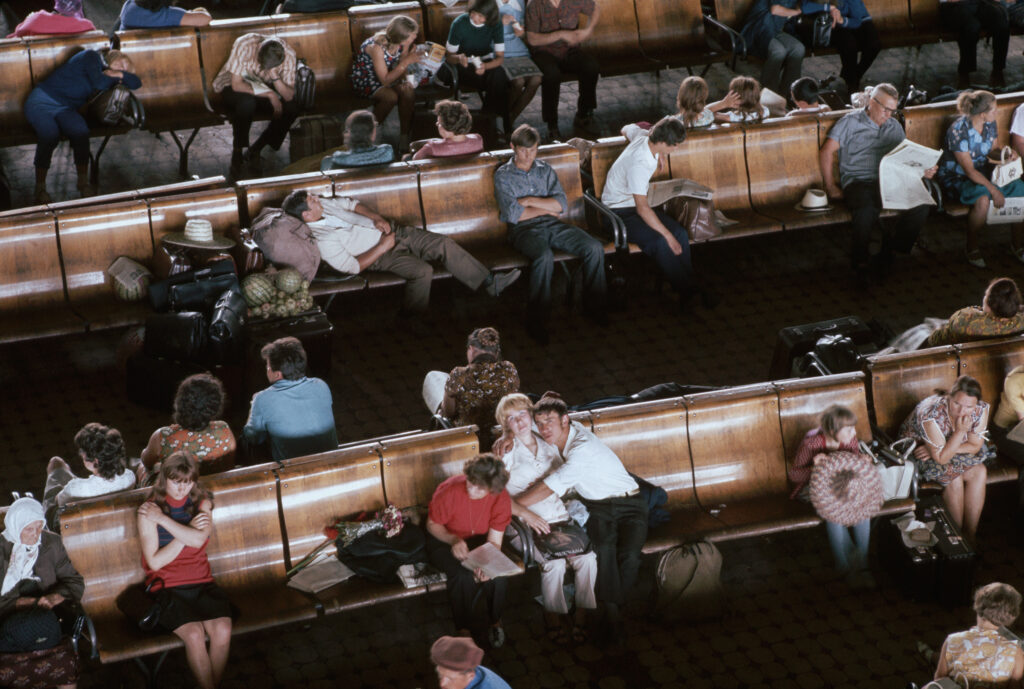
Whether the Soviet Union was a civilization, an empire, or both, Smith argues that it was experienced as a “normal” place. The regime appeared “legitimate” to Soviet citizens because after 1953, Stalinist practices, including arbitrary arrest and executions, seemed like things of the past. The argument can be contested. The fact that a regime no longer sent hundreds of thousands to their deaths for no apparent reason does not automatically make it legitimate. But what Smith probably means here is that most Soviet citizens accepted their reality as it was and tried to live their best lives within state-dictated parameters. If so, he very much follows in the footsteps of the cultural anthropologist Alexei Yurchak, who has argued that the last Soviet generation “actively participated” in the Soviet experiment even while eroding it from within. When it all came crashing down, Yurchak has written, no one was surprised. The title of his 2005 book is Everything Was Forever, Until It Was No More.
The end of Soviet “civilization” preoccupies Smith too. But he finds it difficult to explain what happened. After all, if life was so “normal,” the regime was so “legitimate,” and the dictatorship was so “stable,” then how could it have fallen apart so quickly? The answers generally appear a little muddled and fall far short of more substantial texts like, for instance, Zubok’s 2021 book Collapse: The Fall of the Soviet Union or the Russian economist Yegor Gaidar’s 2007 Collapse of an Empire, which delve into issues deeply unpalatable to the heart of any respectable cultural historian—for example, the ruble overhang or state-budget balance sheets.
Like Zubok, Smith takes an interest in Yuri Andropov, the Soviet general secretary who attempted some reforms in 1982–83 to avert a meltdown. For Smith, Andropov represented the USSR’s “lost Chinese future,” with a focus on “increased discipline, economic decentralization and political uniformity.” Scholars of Deng Xiaoping’s policy of reform and opening will probably squirm at this comparison: There are many good reasons for China’s economic breakthrough that have nothing to do with discipline and uniformity but everything to do with the structure of the workforce. The Chinese experience cannot be meaningfully compared to the USSR case.
The point, however, is that for Smith, Soviet reforms required political liberalization, for such reforms “ran closer to the grain of Soviet consciousness and Russian sensibility because of their deliberate Leninist revivalism and explicitly European approach.” Later in his book, he doubles down on the argument: “Economic reform was impossible without political reform, or at least economic reform required a democratic aim that transcended mere economic growth. Gorbachev’s vision was too self-consciously European, and too focused on rights, for the Chinese model to work in the USSR.” In other words, Soviet “civilization” collapsed not because it was too Soviet but because, perhaps, it was too European.
But the argument falls flat. Things were “stable.” Things were “normal.” Things were “sustainable.” And yet something was amiss. And so Gorbachev launched reforms (but why?) and these were political reforms, since the Soviets were, after all, Europeans and not Chinese. What’s missing here is a deeper understanding of the Soviet economy: It was not normal, nor stable or sustainable. And that was already evident quite early into Smith’s chronology, as early as the 1950s. The book opens with an account of the Novocherkassk tragedy of June 1962, when a rise in the prices of meat and butter triggered public protests that were brutally put down by the Soviet authorities. Something was not working. And that somethingwas the Soviet economic system. This was already evident to Soviet economists then—hence the Kosygin reforms launched in the mid-1960s in a bid to incentivize production, which stalled over internal contradictions and bureaucratic resistance. But oil and gas exports kept the system going until finally it could not go on any longer and the Soviet Union went bankrupt.
In the absence of an economic analysis, Smith confines himself to recounting some of the symptoms of systemic decline. Corruption is mentioned. There is a reference to gangsters and opportunists. Boris Yeltsin— “in early adulthood he already liked vodka very much”—makes an appearance as a spoiler to the noble reform process. And then the elites just threw in the towel: “It was when the people who ran the state gave up and walked away that the USSR no longer had a chance.”
Few will read a sentence like this one and not reflect on contemporary Russia. Vladimir Putin’s Russia—an empire, perhaps even a civilization—may well appear “normal” to those experiencing it on the inside, while people on the outside think it has gone off the deep end. Even as life there grows ever more difficult, the economy stagnates, and the human and material costs of Putin’s war on Ukraine continue to mount, there is no indication yet that the regime has lost its popular legitimacy. After all, if a genuine democracy is not a prerequisite for legitimacy, then one could conclude, following Smith, that even a brutal dictatorship, a police state, or an empire/“empire,” could in fact be legitimate and—as hard as this is to believe—could seem entirely “normal.” And yet it only just takes the people who run the state “to give up and walk away” and the edifice will crumble. Why hasn’t it? Why won’t it?
An Alien Planet
Smith’s book is peppered with references to Soviet culture, in particular movies. But he omits the 1986 dystopian science fiction film Kin-Dza-Dza!, which recounts the story of two Soviet citizens who accidentally find themselves on a faraway planet that is both completely unlike and remarkably similar to the USSR. The planet—at once technologically advanced and incredibly backward—has certain rituals, such as squatting while saying the word “ku” to anyone of superior social status. In the end, the unfortunate space travelers return to Planet Earth and, for a time, forget what happened to them. They do not recognize each other—until the moment when the two of them, walking in the street, suddenly see a tractor with a flashing light. Thinking that they are in the presence of superior aliens, they squat instinctively and say “ku.”
I felt a bit like this reading Smith’s account. Anyone who has experienced the USSR would find his take intimately relatable. The books, the movies, the songs, and the rituals he describes—all add up to a certain cultural code that people who lived there still share, whether or not they think that the collapse of the USSR was indeed “a great misfortune.” And even those of us who have long left the former Soviet Union and have lived in the West for years, decades, still carry elements of that Soviet legacy that will perhaps die away only when its last carriers succumb to old age. Only then will this strange phenomenon—Soviet civilization, if this is what it was—retreat to the realm of true history and exit public consciousness at last, not least in Russia itself, where it still casts a long shadow over present-day politics.
Yet something tells me that continuities may persist even then. Political cultures stick around. Stalin’s exit did not erase Stalinism. Its elements persist even in contemporary Russia, endlessly recycled to serve the needs of the current regime. Smith might object that what’s left of Stalinism today is no longer “progressive.” Like the Nazis, Putin’s Russia arguably “looks to the deepest reaches of the past for inspiration.” And yet it incessantly regurgitates Soviet cultural norms so that even the Russian youngsters who never experienced the USSR seem to have developed a nostalgia for that alien, or perhaps not so alien, planet where people squatted upon greeting one another and said: “ku.”