A Journal’s Journey
From Marcuse to MAGA
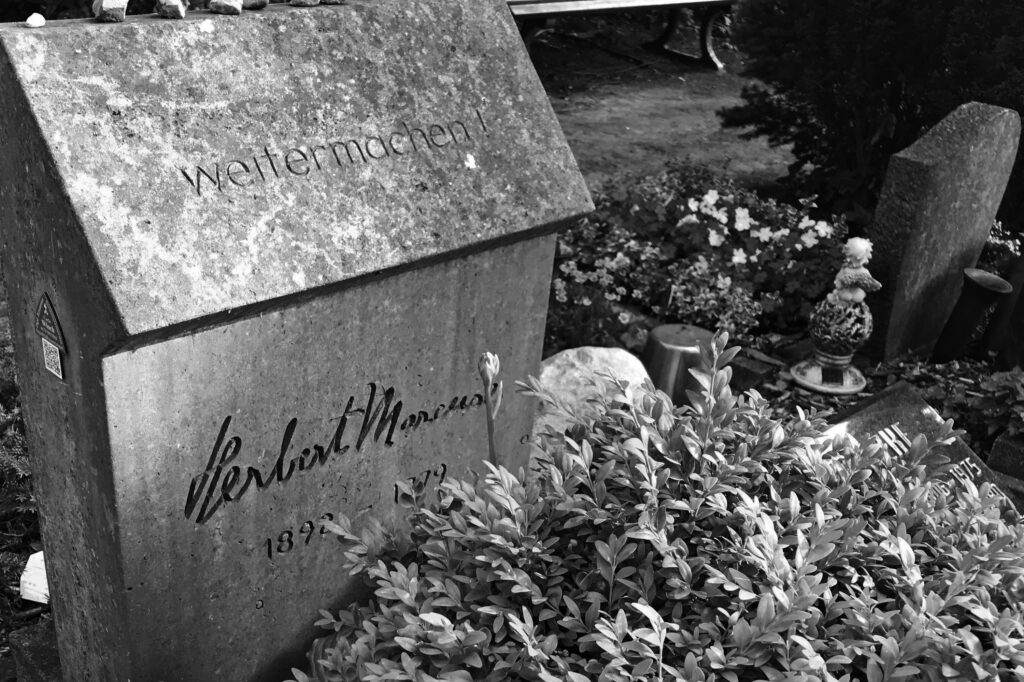
On January 18, 2021, as the first Trump administration entered its last days, the 1776 Commission published its final report. Convened in response to The New York Times’s 1619 Project, the Commission set out to show how America had strayed from “the fundamental truths of human liberty” enunciated in the nation’s founding documents. Like others on the right, the report’s authors laid some of the blame on left-wing intellectuals who had seduced the nation’s leading institutions with the “set of revolutionary ideas called Critical Theory.” They highlighted two European Marxist thinkers in particular: Antonio Gramsci and Herbert Marcuse. The spread of these two men’s ideas, the report alleged, had diluted public faith in core national principles.
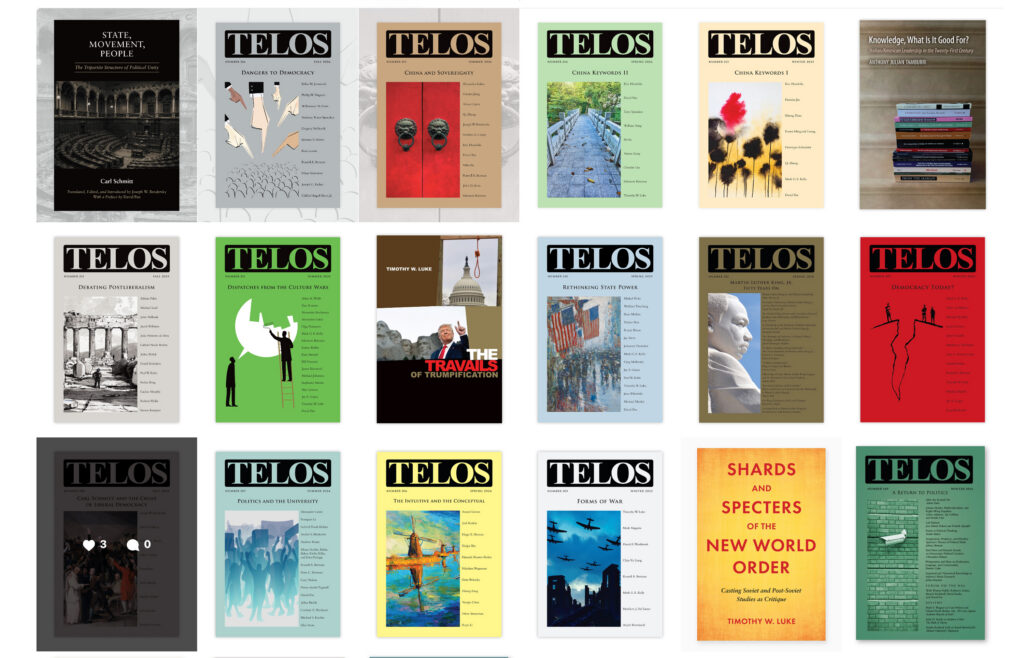
A few months earlier, another report had been issued by a different committee created by the same administration: the Commission on Unalienable Rights, charged with outlining a new approach to human rights. In broad strokes, it resembled the 1776 Commission. As Secretary of State Mike Pompeo explained, it sought to “ground our discussion of human rights in America’s founding principles.” But anyone looking more closely into the backgrounds of its members might have been struck by a peculiar fact. Two of them, Russell Berman and David Tse-Chien Pan, are respectively editor emeritus and editor of the journal Telos, whose tagline is “Critical Theory of the Contemporary.” Founded in the New Left watershed year of 1968, this publication and its associated book imprint arguably did more than any other institution to disseminate the ideas of figures like Marcuse and Gramsci to English-language readers. If there was a conspiracy to spread Critical Theory in America, as conservatives have often claimed, Telos was surely at its center. Yet two long-time members of its editorial board were serving in an administration that was elsewhere denouncing Critical Theory as a malign influence.
Berman and Pan were not token leftists brought in to balance out the commission’s partisan leanings. In addition to holding an endowed chair at Stanford, Berman is a senior fellow at the conservative Hoover Institution. Pan, a professor at UC Irvine, has run for Congress twice as a Republican. Although its editors and authors are politically eclectic, Telos has been widely perceived as right-leaning since the 1980s. Berman, when I spoke to him recently, embraced this characterization, calling it “the journal of the deplorables—and proud of it.” Yet Telos has never ceased to define itself as a journal of Critical Theory—a term that most of the right treats as synonymous with “cultural Marxism,” or more recently, “race communism.” In the pages of Telos, it would seem, we find an otherwise unthinkable Hegelian synthesis of Marcuse and MAGA.
The strategic right-wing embrace of left-wing Continental thought is not a new phenomenon. In the 1970s, a faction of the French right led by Alain de Benoist began to articulate what they called a “gramscisme de droite,” adopting from Gramsci the notion that a revolutionary insurgency against the liberal status quo must seek not just political power but cultural hegemony. Decades later, in a less highbrow register, Andrew Breitbart dedicated his eponymous publication to a comparable mission, under the slogan “politics is downstream from culture.” More recently, many ideological entrepreneurs on the radical right have adopted ludic postmodern tactics, appropriating the countercultural left’s style of transgressive provocation. As the white nationalist thought leader Richard Spencer once put it: “The alt-right is the new left.”
Telos’s editors, however, didn’t begin as right-wing strategists looking for new ways to fight a Gramscian “war of position.” As founder and longtime editor Paul Piccone explained in 1999, the journal “was meant to provide the New Left, at the time embroiled in internal discussions about its ideological identity, with a rigorous theoretical perspective and a clear sense of direction.” Its animating mission at the outset was to “de-provincialize a student culture cretinized by three decades of the intellectual Cold War.” To this end, the journal and its associated publishing house undertook an ambitious project of translation and commentary. The enterprise was a resounding success. As the sociologist Robert J. Antonio later recalled, “From the late 1960s to the mid-1980s, Telos brought the Frankfurt School, Western Marxism, and other critical Continental thought to North America and the English-speaking world; it was the critical theory organ of that era.”
Antonio’s chronology echoes the widely held sense that the journal’s orientation eventually shifted away from its founding project. There is no question that in the 1980s, Piccone and several of his colleagues jettisoned Marxism for an eclectic brand of populism. Nonetheless, they never relinquished their commitment to some version of the Western Marxist conception of Critical Theory. When I asked Berman, the editor emeritus and former Trump State Department appointee, how Telos understands Critical Theory today, he pointed me to Max Horkheimer’s 1937 essay “Traditional and Critical Theory,” a foundational text of the Frankfurt School.
It is impossible to separate the distinctive path taken by Telos from the personal and intellectual development of Piccone, who died in 2004. In a reminiscence written after his death, Berman recalled that his friend and colleague, whom he first met at Washington University in St. Louis in the mid-1970s, had “defined the journal and its evolving project.” Piccone’s forceful personality, boundless energy, and impatience with conventional thinking propelled Telos forward in the search for ideas that might offer an exit from the intellectual cul-de-sacs of the late twentieth century. All the while, he insisted on the need to ground ideas in the concrete reality of everyday life. As if to underline the point, he not only led the editorial department, but physically built the office in New York City out of which Telos was published for decades. As another friend, Russell Jacoby, recalled, Piccone “could set tile and pour concrete with the best of them.”
At the center of the early Telos canon was Edmund Husserl’s Crisis of the European Sciences and Transcendental Phenomenology, from which the journal took its name. The “crisis” of Husserl’s title was the modern world’s descent into nihilism and anomie, which he traced to the massive expansion of science and technology. The result of this process was a society oriented by abstract systems that operated at a remove from what Husserl called the Lebenswelt (“lifeworld”): the pre-theoretical, immediate, experiential realm of human life. In the resulting crisis of meaning, the forward march of progress was unmoored from any discernible human purpose, or “telos.” Husserl’s analysis, as Piccone and his colleagues saw, had anticipated the animating concerns of the New Left—think of Mario Savio railing against “the machine” at Sproul Hall, “the Combine” in Ken Kesey’s One Flew Over the Cuckoo’s Nest, and many similar images of a hostile, inhuman machinery that proliferated in the counterculture.
Such preoccupations, as Telos’s early issues revealed, had been salient in the interwar period in Europe. Husserl didn’t formulate them in Marxian terms, nor did his most famous student, Martin Heidegger. However, for Telos’s founders, Husserl’s diagnosis resonated with the critique of “reification” articulated by the Hungarian founder of Western Marxism, Georg Lukács, and with the young Marx’s account of alienation, which had been rediscovered after the belated publication of the 1844 Manuscripts in 1932. But the long pedigree of these preoccupations also raised a problem. The thinkers who had identified the crisis before the New Left had failed to chart a path beyond it. In some cases, like the Frankfurt School’s Theodor Adorno and Max Horkheimer, they had retreated into political quietism; in others, they had embraced totalitarianism of the right, as with Heidegger’s Nazism, or the left, as with Lukács’s accommodation to Stalinism, capitulating to an even more oppressive machinery of domination.
The New Left’s impasses, already evident in 1968, suggested this history might repeat itself. The early Telos was concerned above all to counteract the recrudescence of Marxist-Leninist orthodoxy among the radicals of the era. “When Marxist ideology in the 1920s became the official ideology of the Soviet Union,” Piccone wrote in 1970, “Marxism ceased to be a critical theory of reality and degenerated to the set of irrelevant slogans that we have inherited as the only ‘Marxism’ in our generation.” He and his colleagues trawled the philosophical archives for viable alternatives. One was the Italian Marxism of figures including Gramsci, Antonio Labriola, and Enzo Paci, which, as Piccone argued in his book on the subject, “provides an ethical and subjectivistic dimension superior to the discredited materialism of ‘really existing socialism.’” Another was the thought of dissident leftists in Eastern Europe. A name that frequently appeared in early Telos issues was Karel Kosík, a leading figure in the 1968 Prague Spring who, like the Italian thinkers, sought to rejuvenate Marxism through a focus on concrete everyday life, and “praxis.” Early Telos also translated what would become known as French Theory, whose major thinkers were making their own ruptures with Marxist orthodoxy. Michel Foucault and Gilles Deleuze appeared in early issues, and Jean Baudrillard’s first two books in English translation appeared in Telos’s imprint.
Telos’s prodigious contribution to the intellectual life of the era was all the more impressive given its meager resources. Those involved early on were unpaid graduate students “dragooned” by Piccone, as Jacoby recalls, into “hauling copies of each issue in a rented van from the printing press, sometimes hundreds of miles away, to the post-office loading dock.” What conditions had created a demand for European critical theorists’ intellectual wares, sufficient for a shoestring publication run out of Buffalo, St. Louis, and other far-flung locations to become the leading theoretical organ of the day? The answer is that young people coming to political consciousness in the late 1960s and early 1970s were trying to make sense of novel and bewildering conditions. The postwar “technostructure,” in John Kenneth Galbraith’s terms, had built an “affluent society,” raising standards of living to unheard-of levels. Yet even as it was filling homes with technological marvels and sending men to the moon, the American power structure was caught in a cycle of self-destructive violence and collapse, in evidence everywhere from the rice fields of Vietnam to the streets of Watts, Detroit, and Newark.
Marcuse, whose critique of the “comfortable, smooth, reasonable, democratic unfreedom” of the West captivated the New Left, could only get one so far—or so Telos’s founders concluded. In One-Dimensional Man, Marcuse diagnosed what seemed to him in 1964 to be the adamantine character of advanced capitalist society: its capacity to absorb and preempt all opposition. Under these conditions, “freedom and fulfillment … obtain meaning only in the context of propaganda, business, discipline, and relaxation.” And “free choice among a wide variety of goods and services,” said Marcuse, “does not signify freedom if these goods and services … sustain alienation.” What this situation demanded, he declared, was a “Great Refusal,” a “protest against that which is.” This call reverberated across the revolts of the 1960s. But, Telos asked, had the disruptions that unfolded after the publication of One-Dimensional Man invalidated Marcuse’s analysis, showing that the system hadn’t, in fact, forestalled all opposition?
Piccone eventually revised Marcuse’s account of “one-dimensionality” with a thesis he called “artificial negativity.” In a 1978 essay setting out this concept, he argued that the advanced industrial society of the postwar era had fallen victim not to any oppositional forces, but to its own crushing success. “The full triumph of one-dimensionality,” he wrote, “corresponded to the exhaustion of the model that had generated it.” The reason was that “bureaucratization becomes counterproductive precisely when it successfully penetrates that which it seeks to rationalize.” In updating Marcuse, Piccone was also echoing Adorno and Horkheimer’s narrative of the “self-destruction of Enlightenment,” according to which the overwhelming success of the rationalizing drive toward “total integration” led to the catastrophes of the twentieth century.
The objective function of the New Left, by Piccone’s account, was not to overthrow the ruling order but to introduce friction that would enable a course correction. He regarded the Vietnam War as the supreme expression of the system’s irrational, self-destructive tendencies, and the antiwar movement as a vector by which these excesses were ultimately curbed—not by ending US imperialism, but by ushering in a new phase of it based less on military-industrial might and more on the globalization of consumer society.
Meanwhile, Piccone added, the New Left’s other causes had been diverted into what he called “counter-bureaucratic bureaucracies,” chief among them the civil rights apparatus that emerged out of the 1960s as a central instrument of progressive policymaking. In this way, the left “became part and parcel of that administrative apparatus that it otherwise pretended to challenge.” The problem with this mode of “artificial negativity,” Piccone concluded, is that it merely “extends the bureaucratic logic it was meant to challenge.” By the 1970s, the left had thus been reduced to “the social conscience of the welfare state,” while “sliding into the conformist logic of different modes of capitalist rationalization.”
It was around this time that Telos took up the notion of the New Class: the professional experts who make up a new middle stratum in advanced industrial societies. Originally articulated by the Yugoslav dissident Milovan Djilas, this concept was later expanded upon by Alvin Gouldner, Piccone’s friend and colleague at Washington University in the 1970s. For Gouldner, the New Class was an ambivalent formation which held both emancipatory and regressive potential (not unlike the “Professional-Managerial Class” as it was formulated by John and Barbara Ehrenreich around the same time). But in the pages of Telos, it became a target of harsh criticism, coterminous with the conformist left-wing mainstream.As Antonio remarks, Piccone “used the term politically … to mark boundaries between friends and enemies.”
For some time, Piccone’s prescriptions remained continuous with those of the original project. In his 1980 essay “Why Did the Left Collapse?” he reasserted the need to recover the work of thinkers like Lukács and Gramsci, whose “critique of the Enlightenment and of bourgeois civilization … translates into a vindication of the subjectivist quasi-religious precategorical dimension which has not yet and can never fully capitulate to the logic of the institution.” He wrote these lines shortly after he was denied tenure at Washington University—a consequence, as he and his allies saw it, of his own refusal to “capitulate to the logic of the institution” and behave as a docile New Class functionary. “Paul’s habitus was not congruent with established academia,” Berman told me. In 1982, Piccone appeared alongside Jacoby in a New York Times feature on “gypsy scholars” unable to find permanent posts. Eventually, he gave up on finding a university position, and published Telos from his home in Manhattan’s East Village.
By most accounts, the denial of tenure marked a turning point in Piccone’s and Telos’s intellectual trajectory—illustrating, perhaps, the Husserlian idea that the conditions of the “lifeworld” can never be viewed separately from the realm of theory. It deepened Telos’s already harsh attacks on the New Class, viewed as “the collective agent of artificial negativity.” As Berman remarked to me: “The academy feeds on outsider thinkers and ends up somehow digesting them and turning them into pretty conventional left-liberals.” In contrast, Telos remained at the margins, even as Critical Theory was becoming institutionalized.
In the 1980s, searching for an “organic negativity” that might be less easily co-opted by the agendas of New Class pseudo-radicals, Telos devoted considerable attention to the dissident thinkers and movements of the Soviet Bloc, a topic of interest since the Prague Spring. For a time, the Eastern European movements seemed like an authentic successor of the New Left, representing a “civic turn toward democracy that’s not connected to the market or the state,” as former Telos editor David Ost told me. Yet as the dissidents failed to develop a viable alternative to both state socialism and integration into the global market, Telos came to view their project as a dead end.
In the Spring 1987 issue, Telos made what remains its most controversial move: pioneering the rediscovery of the work of Carl Schmitt, the jurist and political philosopher whose thought had long since fallen into disrepute due to his deep ties with the Nazi regime. The lead essay, by the political scientist Ellen Kennedy, explored the connections between Schmitt and the Frankfurt School. It was followed by three lengthy critical responses, evidently an attempt to get ahead of likely controversy. Kennedy began by pointing to “the often perplexing similarity of ideological positions on the left and the right.” Her thesis was that several key thinkers of the Frankfurt School converged with and adopted Schmitt’s criticisms of liberal parliamentarianism both during and after the Weimar era. Schmitt’s lesson for the left was that “liberal neutralization and formal democracy did not eliminate political conflict but ultimately intensified it.”
In other words, liberalism sought, through proceduralism and institutional neutrality, to circumvent conflict over values. For Schmitt, this maneuver concealed the value-laden foundation of the state, which was always defined by a substantive political “decision” in favor of one set of values and against others. This argument would inform Telos’s increasingly hostile stance toward the liberal-democratic consensus that prevailed across the West at the end of the Cold War. Two years after the journal’s rediscovery of Schmitt, the “End of History” paradigm emerged, according to which all fundamental political disputes had been resolved, and all that remained was the functioning of the market and the technocratic management of society. As longtime Telos editor Timothy Luke later put it, Schmitt’s value for the journal lay in his “critique of the aimless drift of fully commercialized market societies” then coming into view. For Telos, Schmitt’s case for the inescapability of political antagonism amounted to a new “Great Refusal” of the status quo.
The Kennedy essay provoked considerable pushback in Telos’s pages and beyond. Richard Wolin, an eminent intellectual historian who had been involved with the journal since the 1970s, told me it was a “fork in the road” at which he and several others resigned from the masthead. In the first full issue Telos devoted to Schmitt, Piccone and his co-author Gary Ulmen attempted to present their interest as consistent with the journal’s historic left-wing orientation. But critics like Wolin, who viewed the embrace of Schmitt as a clear sign of a rightward lurch, found some vindication in the years that followed, as Telos articulated a new political outlook Piccone called “federal populism”: essentially, advocacy of a decentralized political order made up of small-scale “organic communities.” Again drawing from Schmitt, they argued that only at a localized scale could a democratic political order constitute itself without succumbing to bureaucratic alienation.
Its Schmittian inspiration aside, such thinking wasn’t entirely unfamiliar in more mainstream post-New Left intellectual circles; indeed, it resonated with the left-wing communitarian thought that figures like Michael Sandel were developing around the same time. However, Telos was also taking an interest in further taboo strains of right-wing thought. The leading light of the French Nouvelle Droite, Alain de Benoist, became a Telos contributor in the early 1990s. The American paleoconservative Paul Gottfried—who, as it happens, had studied with Marcuse—also joined the masthead. Samuel Francis, a far-right writer often cited as a key precursor of MAGA populism, never contributed to the journal but participated in two Telos conferences on populism hosted by Gottfried at Elizabethtown College.
Piccone nonetheless insisted that the journal’s continuities were as significant as its shifts. “The essence of the original Frankfurt School critique,” he wrote in a 1994 essay on the Nouvelle Droite, “has become part and parcel of the French New Right ideology.” The latter’s “rejection of abstract universalism” and defense of cultural particularity, he explained, was a continuation of Adorno and Horkheimer’s critique of “universal homogenization.” Elsewhere, he asserted that the “populist turn does not constitute a break with the past.” Telos, he said, still sought to “reunite that subjective moment vindicated by phenomenological Marxism with its otherness presently aligned in Washington and other administrative centers of bureaucratic domination.”
Scandalous as Telos’s embrace of Schmitt, its break with Marxism, and its turn toward populism were, similar developments were underway in more respectable precincts of left-wing political theory around the same time. In 1985, the Belgian political theorist Chantal Mouffe and her Argentine colleague and husband Ernesto Laclau published what would become the most influential book of left-wing political theory in decades, Hegemony and Socialist Strategy. Like Piccone and Telos, they repudiated Marxist-Leninist orthodoxy, excavated the ideas of Gramsci, and centered terms like “community” and “democracy” while relinquishing older notions of the proletariat and class struggle. Although Mouffe and Laclau did not cite Schmitt, their argument echoed the same core thesis that animated Telos’s interest in him: that political antagonism was inescapable, and could not be circumvented through neutral proceduralism. In subsequent years, Mouffe made her debt to Schmitt explicit: Her next book, The Return of the Political (1993), recuperated his critique of liberalism for the left, and in The Challenge of Carl Schmitt (1999), she brought together an array of left-wing luminaries to assert his continued relevance. Laclau’s later work on populism also drew on Schmitt’s antagonistic view of politics.
Like others in this period, Mouffe and Laclau were attempting to chart an alternative to class politics, which was widely seen as moribund amid the rise of Thatcher and Reagan and the decline of really existing socialism, the labor movement, and mass parties. To a large extent, they were successful in defining a new task for the left. No longer would the aim be to mobilize a universal class to seize control of the means of production. Instead, in Mouffe and Laclau’s terms, it would be to string together a “chain of equivalences” between diverse political “signifiers”—in effect, the new coalitional politics of convergent social movements, which sought to unite racial minorities, feminists, greens, and other social movements. Mouffe and Laclau, to be sure, didn’t invent multiculturalism, intersectionality, or related projects, but their work furnished a durable and actionable framework that continues to be cited in support of such approaches.
This project, now often derided by the populist right as “cultural Marxism,” bears a striking resemblance to the one set out by Piccone and his colleagues, who were also seeking new revolutionary subjects and finding them not in any universal class but in a vindication of particularity, pluralism, and difference. In his 1995 essay, “Postmodern Populism,” Piccone traced the rebirth of populism hailed in the journal’s pages to the postmodern collapse of modernity’s legitimizing metanarratives, which he said had “undermined all unilinear theories of history and dethroned modernity as the ultimate achievement of civilization.” Here, that perennial bugbear of the right, postmodern cultural relativism, was enlisted in overt support of traditionalist, nationalist, and localist politics. For Telos, these were embodied in early right-wing populist formations in Europe like Italy’s Lega Nord and in the journal’s new paleoconservative fellow travelers like Gottfried and Francis. Likewise, Piccone’s French interlocutor Alain de Benoist, a self-described Gramscian, cribbed themes and phrases from post-structuralist theory, proclaiming a “droit à la différence,” while borrowing the slogans of anti-colonial movements in opposition to the dilution of French culture by mass immigration and American cultural imperialism.
Piccone acknowledged these parallels. At several points, he referred to left-wing multiculturalism as “bureaucratic populism,” while describing Benoist and other European ethnonationalists as advocates of a “right-wing multiculturalism.” “American multiculturalism,” he wrote in 1993, comes “close to accepting the French New Right’s ‘right to difference’.” However, he added, the first formation “operates entirely within the context of the postmodern liberal state, thus generating a series of unsurmountable contradictions.” This was an update of his artificial negativity thesis, according to which the homogenizing, totalizing system tried and failed to correct its self-generated ailments by producing a countervailing particularity. What recommended the new right-wing populism to him, it seems, was its sheer marginality and ill repute, which might equip it to provide a more bracing corrective to the system’s drift. Like Marcuse before him, Piccone saw the greatest potential in the groups he viewed as “the substratum of the outcasts and outsiders”—put differently, the deplorables.
In a 1994 critique of Telos’s direction published in its own pages, David Ost asked: “Has Telos gone mainstream?” As he noted, the Republican Party under Newt Gingrich, poised to take control of Congress, was sounding many of the same notes as the journal, calling for “federalism, community, [and] states’ rights.” This convergence with mainstream political tendencies, he worried, risked dulling the journal’s critical edge. At that point, Ost could hardly have conceived of two senior Telos editors serving under Donald Trump and Mike Pompeo in the State Department, or one of them running for Congress as a Republican.
Unlike Wolin and other dissenters from the journal’s post-’87 Schmittian, “federal populist” orientation, Ost remained on the masthead for a time; even after departing, he contributed articles to the journal and attended Telos conferences. When we spoke, he praised Piccone for “always … allowing and facilitating the debate and criticism that made the journal such an exciting project.” Since Piccone’s death, Berman and Pan have maintained Telos’s Schmittian populist alignment, even as it has continued to host widely varied perspectives and lively contestation. Berman’s “journal of the deplorables” description should be taken less as a statement of partisan affiliation than as an indication of the broader orientation that drew some around Telos into the MAGA orbit. But not all: Berman’s longtime fellow editor Tim Luke published a 2021 book highly critical of the Trump phenomenon under the journal’s imprint. And Telos’s most recent special issues, focused on China, are as ideologically adventurous and nondoctrinaire as any of its early output.
The new right-wing populism, whose origins Telos heralded in the 1980s and 1990s, isn’t going away. Even if Trumpism is waning, the animal spirits it unleashed are unlikely to be dispelled anytime soon, and Marine Le Pen’s Rassemblement National, the Alternative für Deutschland, and Reform UK all have some chance of joining Giorgia Meloni in the halls of power. But if Telos-style populism has “gone mainstream,” as Ost put it, this proximity to power will raise questions about what it means to stay true to the vocation of Critical Theory.
“Radical thought,” remarked Piccone in 1988, is “inherently unstable.” When it “succeed[s] in vindicating its claims,” it becomes “conservative in defense of the new state of affairs it helped bring about.” Perhaps that is one way to describe what happened to Telos on the way from Marcuse to MAGA. But the ascendancy of populism also returns us to a problem explored in the journal’s pages decades ago: What happens to oppositional forces when they are integrated into the dominant system? It is increasingly plausible to regard the Trump-aligned New Right, like the New Left before it, as an instance of artificial negativity, insufficiently separate from the power structure it claims to challenge to do anything of the sort. Especially given its imbrication with the privatized bureaucracy of Silicon Valley, the Trump administration is ever harder to see as a band of outsiders, much as it may still style itself this way. And as with the New Left before it, its disruptions seem to be exacerbating many of the pathologies it promised to cure.
Meanwhile, a new, amorphous populist revolt—against data centers and the tech industry’s vision of the future—is brewing across the nation. As Christopher Lasch’s 1991 book The True and Only Heaven shows, uprisings against the top-down imposition of the machinery of progress are a periodic occurrence in American history. In the years before his death in 1994, Lasch was a Telos contributor, a participant in the gatherings organized by Gottfried in Elizabethtown, and an influence on the journal’s populist turn. But he cautioned against any forthright endorsement of populist movements or prescriptions. Populism “asks the right questions,” he wrote, “but it does not provide a ready-made set of answers.” Those questions are worth posing anew.