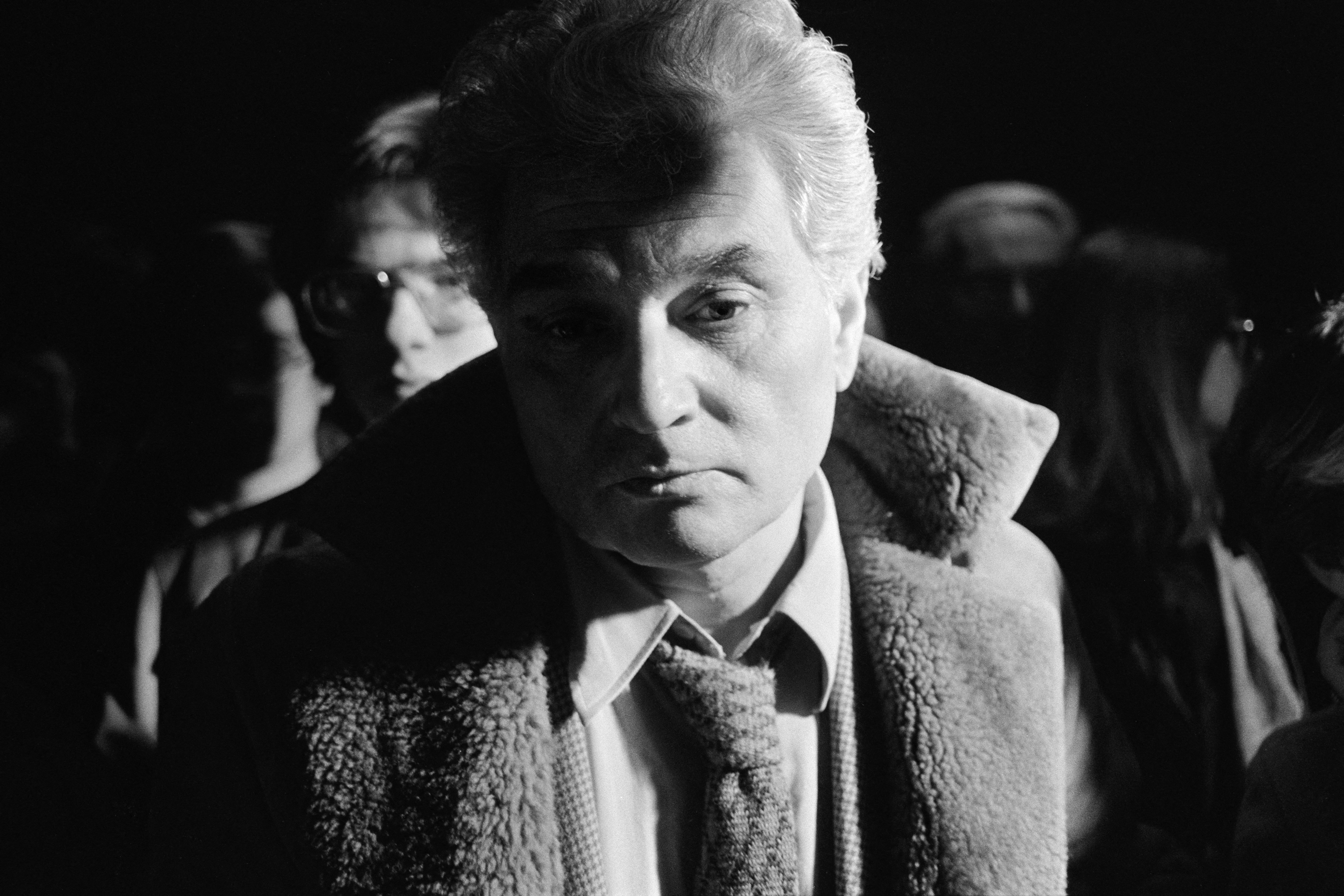
It’s impossible to overstate how intense the rage once was for and against “Theory” in literature departments during the last quarter of the twentieth century. A friend of mine, a PhD student in the comp lit faculty at Columbia University in the 1990s, recently remarked that the department almost went into receivership, battered and bruised by the ferocious schism between the Theory heads and those who preferred to teach literature. Since so much of this business was made in France in the 1960s, we asked the critic and editor Lola Seaton to examine two new books—sorry, “texts”!—that personalize as well as historicize that French-fried moment. Were the anxious years when Theory held court worth all the trouble?
On the subject of theory, not many people under the age of 50 will remember the intellectual firepower of the journal Telos. Founded in that heady year of 1968 as a journal of critical theory and culture in the leftist outpost of SUNY Buffalo (a history of radical academia in Buffalo awaits its scribe), the publication first endeavored to give the New Left a more proper philosophical foundation. Then came its long march toward the political right, culminating in the journal’s quixotic positions of recent years. Geoff Shullenberger, a lapidary writer with the forthcoming book Strange New Thoughts: The Origins and Rise of the Tech Right, looks at the longue durée of Telos and its ideological flips and turns through the present day. These appear to be the publication’s actual telos.
Anna Greenspan and Laura Tripaldi are based in what some might say is Buffalo’s obverse: Shanghai. NYU-Shanghai to be precise. For The Ideas Letter, the scholars challenge the shopworn story that progress is defined by making machines more effective at doing human work. That story describes an important part of technology’s history but not its whole nature. Machines have also played myriad other roles: as toys, theatrical spectacles, religious marvels, and experiments in artificial life. Caveat lector: This essay is not a polemic against useful machines; it is an argument against treating usefulness as the only legitimate reason for machines to exist.
Finally, we have a deeply personal story from the Argentine journalist Tali Goldman about the gap between the search for historical justice (Argentine style) and the experience of one individual that effort was supposed to benefit. Under the junta, hundreds of children, many born in clandestine torture centers, were stolen from the victims of the dictatorship. Goldman’s narrative illustrates how attempts to repair past harms profoundly disrupted the life of one man—kidnapped as an infant from his disappeared parents—upending his identity and relationships he had built over a lifetime. Restitution, she suggests, is rarely an uncomplicated matter.
Our curated section for Ideas Letter 75 leads with the acclaimed cultural critic Leo Robson’s recent essay on Ralph Ellison in the LRB. Robson explains how an anti-dogmatic position can over time slide into dogmatism, and how the worldview that once helped produce Invisible Man then became, in Ellison’s essays and public life, a limitation on his understanding of history and other writers. Ellison’s legacy may be liberating, but not on the terms he had customarily prescribed.
We follow with a lovely n+1 profile of the nonpareil historian Carlo Ginzburg (who died last June) from Amelia Soth, and her case for his central insight: History advances when we discern past evidence that challenges our expectations, rather than when we find what we had set out to prove.
The magical (and unexpected) electoral victory by the president of Brazil inspires our musical selection. It’s not samba, bossa nova, or any nostalgic element of Tropicalia. It’s an old chestnut made famous by Fats Waller, played by Thelonious Monk—and entitled “Lulu’s Back in Town.”
—Leonard Benardo, vice president at the Open Society Foundations
The Poison and the Cure
The Life and Afterlife of French Theory
Lola Seaton
The Ideas Letter
Essay
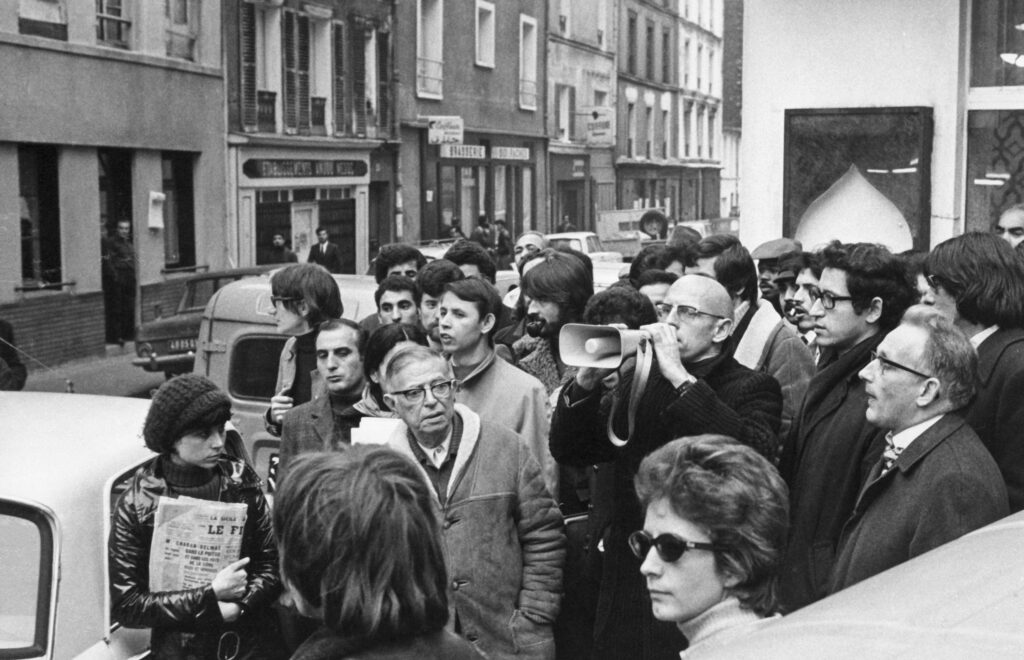
In a review of two new books by Emily Eakin and Onur Erdur, Seaton revisits how French Theory transformed the humanities and captivated generations of scholars, particularly at universities in the US. She explores how thinkers such as Foucault, Derrida, and Barthes challenged established assumptions about language, knowledge, and power, and how their seductive but often impenetrable prose provoked both devotion and hostility. Although the authority of French Theory has waned, its influence remains pervasive. Seaton argues that its legacy is best approached with critical distance, by separating its enduring insights from its intellectual excesses and resisting the temptation to either embrace or dismiss it wholesale.
“The contagion of style has not secured theory’s long-term legacy, but the ebbing of its authority and the charged atmosphere surrounding it ought to make room for a more level-headed, realistic, discriminating approach. We no longer have to pick a side, and so can acknowledge that enthusiasm and aversion are not mutually exclusive reactions but may be warring impulses, and can explore the middle ground between dismissal and wholesale acceptance. As with artistic avant-gardes, theoretical traditions are inherited in part by being outgrown: selectively adopted, repurposed and rejected—all of which requires a degree of distance. Indeed, the practice of thinking outside an author’s terms and finding one’s own is necessary not only to criticize their work but to appreciate it.”
A Journal’s Journey
From Marcuse to MAGA
Geoff Shullenberger
The Ideas Letter
Essay
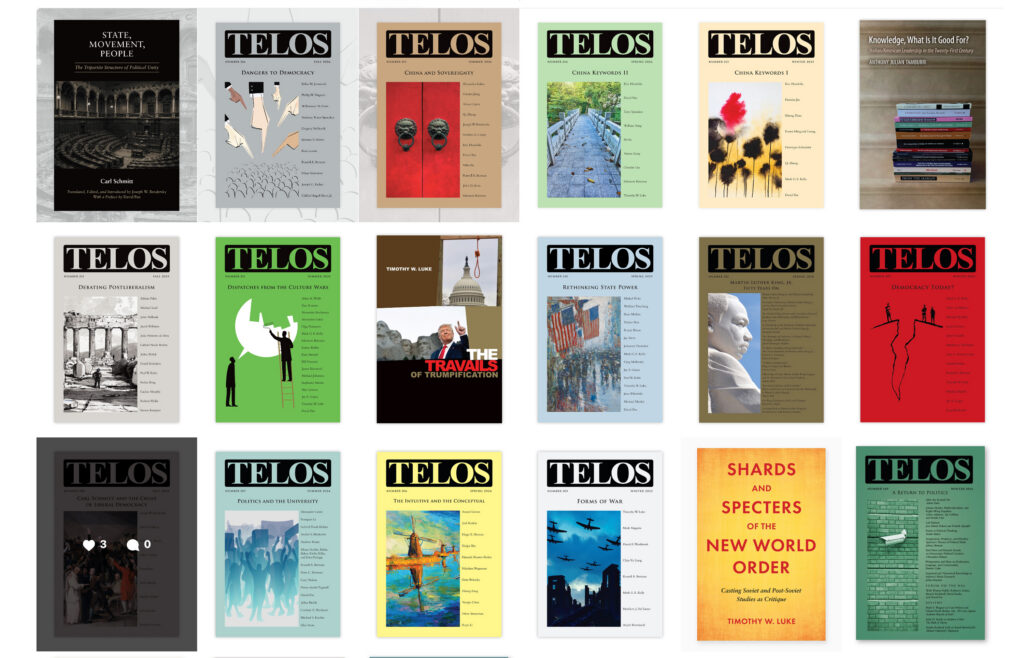
How did Telos, a journal founded in 1968 to introduce European Marxist thought and Critical Theory to US readers, come to embrace the right-wing populism associated with Donald Trump? Shullenberger traces the journal’s intellectual evolution, from its early engagement with the Frankfurt School and the New Left to its rejection of Marxism and growing interest in Carl Schmitt and the French New Right. He argues that despite its political transformation, Telos retained a central concern of Critical Theory: how systems of power neutralize oppositional movements by absorbing them into the very structures they seek to challenge.
“‘Radical thought,’ remarked [founder and longtime Telos editor Paul] Piccone in 1988, is ‘inherently unstable.’ When it ‘succeed[s] in vindicating its claims,’ it becomes ‘conservative in defense of the new state of affairs it helped bring about.’ Perhaps that is one way to describe what happened to Telos on the way from Marcuse to MAGA. But the ascendancy of populism also returns us to a problem explored in the journal’s pages decades ago: What happens to oppositional forces when they are integrated into the dominant system? It is increasingly plausible to regard the Trump-aligned New Right, like the New Left before it, as an instance of artificial negativity, insufficiently separate from the power structure it claims to challenge to do anything of the sort. Especially given its imbrication with the privatized bureaucracy of Silicon Valley, the Trump administration is ever harder to see as a band of outsiders, much as it may still style itself this way. And as with the New Left before it, its disruptions seem to be exacerbating many of the pathologies it promised to cure.”
The Aesthetic Radiance of Wondrous Machines
Anna Greenspan and Laura Tripaldi
The Ideas Letter
Essay
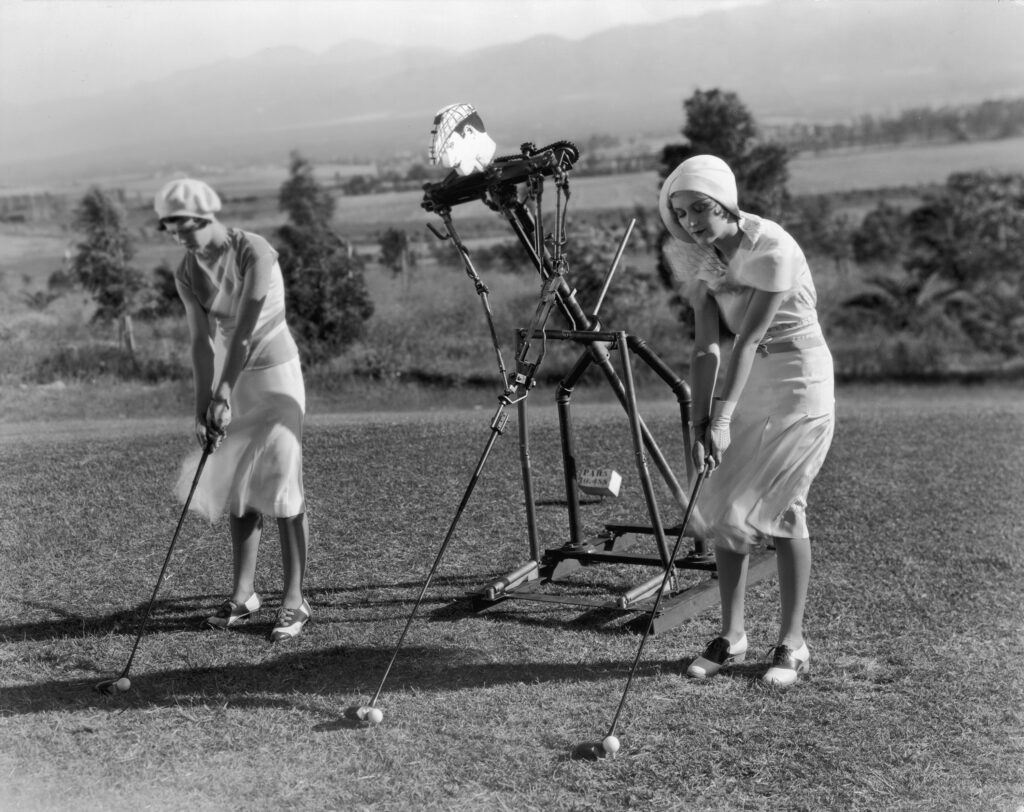
Technological progress is typically measured according to increases in efficiency and whether machines perform tasks faster, better, and with less human labor. Greenspan and Tripaldi argue that this understanding overlooks another powerful force in the evolution of technology: the pursuit of beauty, wonder, and play. They chart an alternative history of machines, from the elaborate automata of antiquity to eccentric robots today, showing how invention has long been driven by curiosity and aesthetic experimentation rather than practical utility alone. Drawing on philosophy and evolutionary biology, they call for a more expansive view of technology—for embracing the strange, the unpredictable, and even the seemingly useless.
“Since the Industrial Revolution, there has been a tendency to tie technological evolution to labor, efficiency, and purpose, an emphasis that has become especially pronounced in today’s discourse on AI and robotics. Yet beauty has never ceased to be a crucial driving force behind humanity’s relationship with the artificial. Throughout centuries and across cultures, machines served not merely as instruments of labor but as playful companions, instruments of wonder, and mirrors for contemplating the richness of the natural world. We argue that reducing the evolution of machines to a deterministic progression toward greater purposefulness and perfection obscures their aesthetic and cultural complexity, ultimately restricting their diversity as well as our own technological imagination.”
Beyond Lost and Found

Tali Goldman
The Ideas Letter
Essay
In 2014, the discovery of Estela de Carlotto’s grandson, born in captivity during Argentina’s military dictatorship, was celebrated as a triumph of the country’s decades-long movement for “Memory, Truth, and Justice.” But in conversations with Goldman, he describes a more complicated experience: the sudden upheaval of an identity he had lived with for thirty-six years, the pressure to embrace a public role he didn’t choose, and difficult relations with both his newfound biological grandmother and the parents who raised him. As Javier Milei’s government challenges Argentina’s established narrative of the dictatorship, Goldman asks whether acknowledging contradictions within the struggle for historical memory might ultimately strengthen its defense against revisionism.
“The story Argentina was telling about the dictatorship was almost always being told from the perspective of people who searched for the missing or from the perspective of those who, upon learning the truth about their origins, found a new sense of belonging. … What if, though, the story began not with a grandmother searching for her grandson but with a thirty-six-year-old man who is told one morning that the people who raised him are not his biological parents and that the real ones were tortured and forcibly disappeared? A man who, shocked at hearing that he might have been adopted, decides to take a DNA test and discovers—all within the span of weeks—that he is the biological grandson of one of the most famous and beloved people in the country. A man whose story, without his knowledge, has been a national symbol since 1983. Restitution is supposed to return a stolen identity. Yet to the person on the receiving end, it can also feel like the destruction of an identity that had seemed settled.”
Sick of the Subject
Leo Robson
The London Review of Books
Essay
Reviewing two new collections of Ralph Ellison’s essays and letters, Robson examines the intellectual evolution of the author of Invisible Man, from his early Marxism to his embrace of individual freedom, artistic autonomy, and an affirmative vision of American identity. He explores how Ellison’s rejection of political and racial categories, central to his literary achievement, hardened into a worldview that increasingly minimized the historical injustices he had once confronted. Exploring Ellison’s disputes with fellow writers and critics, Robson unpacks the tensions between artistic independence and political responsibility, and considers how changing intellectual climates have shaped and reshaped Ellison’s reputation over time.
“The narrator of Ellison’s novel is uncertain whether ‘accepting the lesson’ of his invisibility ‘placed me in the rear or in the avant-garde’. Then, somewhat predictably, he disregards the question as a matter of ‘history’. His proper area of study is ‘my own life’. For the writer, though, there can be no question of separating solitary endeavour from the shared priorities of a given moment. Today the career of [James] Baldwin in his later iterations—political, emotive, dandyish, fluently creative—commands an infinitely greater mystique than Ellison’s does. Yet if Ellison seems not only an idiosyncratic figure but a slightly desolate one, his reputation will surely undergo further transformations. As he wrote in 1982, expressing a notion he cherished but sometimes found it convenient to repress, ‘change is ever with us and will continue after we’re gone.’”
Playing Roulette in the Archives
On Carlo Ginzburg (1939–2026)
Amelia Soth
n+1
Essay
In this tribute to the historian Carlo Ginzburg, who died earlier this year, Soth traces the personal and intellectual origins of microhistory, a method that seeks to illuminate broader historical forces through the close study of seemingly marginal lives and events. Drawing on Ginzburg’s childhood under fascism in Italy and his pioneering research into witch trials and peasant beliefs, Soth explores how his willingness to follow unexpected clues challenged conventional approaches to historical evidence. She argues that his work offers an enduring lesson about the importance of happenstance, curiosity, and surprises in reconstructing a past of which only pieces survive.
“Microhistory has been wrongly characterized as exclusively concerned with the small and the strange. In fact, the method is about dialogue—between the noise and the signal, the anomaly and the rule, between the incidental and the world-historical. History is, by necessity, a collage built out of fragments. Building that narrative is more of a game of chance that many historians would like to admit. Almost everything is lost; we make do with what remains.”