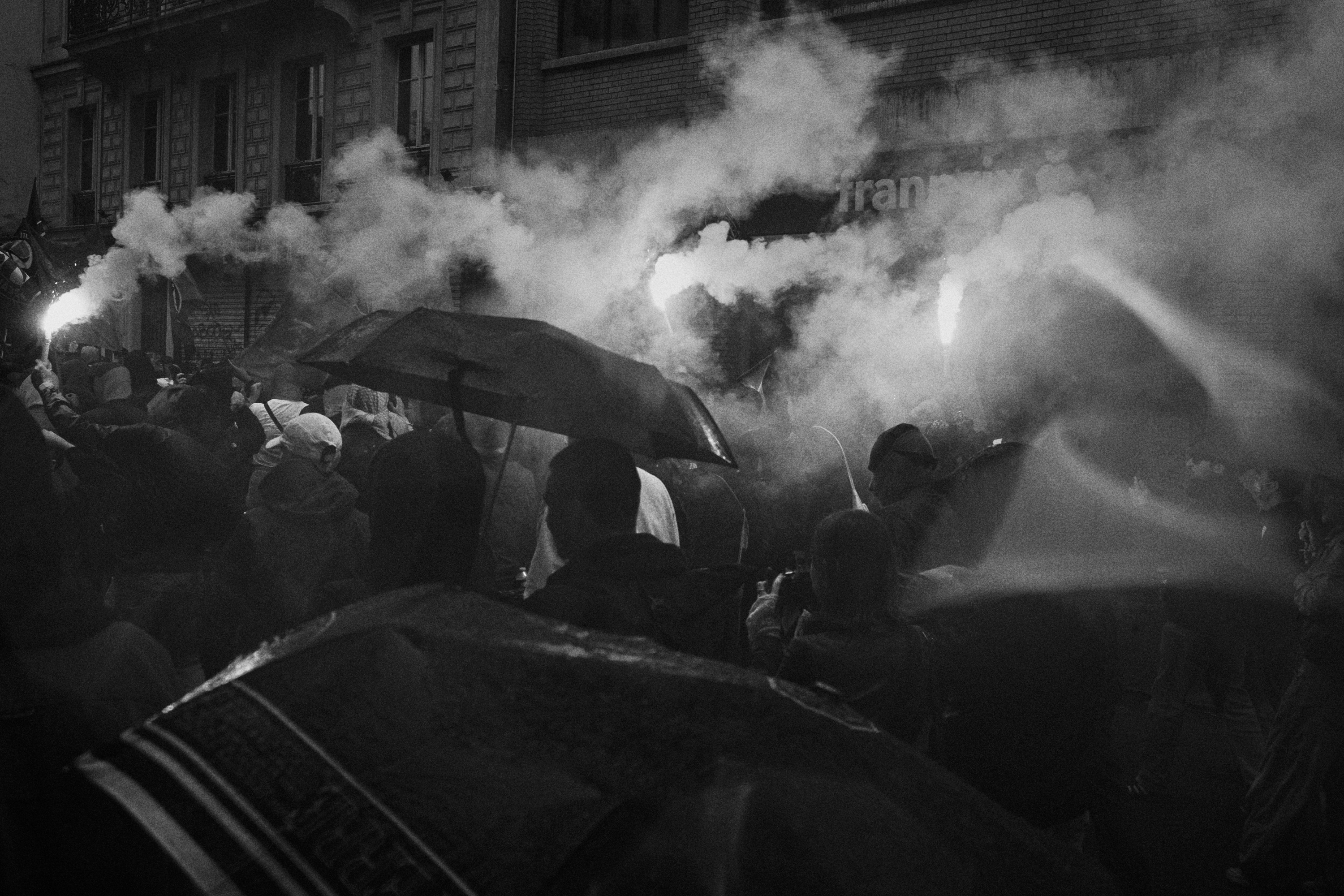
These past weeks there’s been no shortage of exhaling following a string of successes for challengers in Brazil, Serbia, and the US. You can almost see an Economist leader proclaiming: Democracy is Back! Certainly a degree of optimism is warranted after these long, cold, lonely winters. But a closer look at France’s presidential election next spring may dispirit the optimists. David Broder (no relation, for you old-timers) is a historian of French and Italian communism. In this issue of The Ideas Letter, he examines every side of the partisan politics riving the country. You won’t find a better analytical guide.
In Issue 59, Daniele Belleri wrote a bravura essay on Finnish design as a political instrument. Now he’s returned with a continent-wide meditation on the environmental concept of circularity, in which changes in the built environment—reuse above all—affect climate conditions. “Repair the present,” Belleri insists, and forget about restoring the past.
David Graeber, who passed away in 2020 at just 59, has long been hailed as an archetypal activist-anthropologist. He helped coin “We are the 99%” and played a key intellectual role behind Occupy Wall Street, as well as penning a number of bestselling and field-shaping books. Luke Kemp, the author of Goliath’s Curse: The History and Future of Societal Collapse, wades deep into Graeber’s work as scholar and activist—and finds it wanting. Graeber, he argues, ignored and distorted far more than most have heretofore recognized.
Ross Barkan’s writing spans far and wide, covering both fiction and nonfiction. His essay here, about UFOs, tells a larger story about how traditional cultural institutions are being displaced by the outré worlds of mysticism and the occult. Belief in aliens, he suggests, is filling a spiritual gap—and, something exceedingly rare in America, crossing partisan lines.
Our curated section leads off with a discovery. The Wesleyan historian Daniel Steinmetz-Jenkins recently found a transcript of Judith Shklar and Charles Taylor clashing in 1976 over how to theorize justice. You won’t be disappointed—at one point, exasperated by Taylor, Shklar rejoins: “That’s not an answer, Chuck.”
We follow with a podcast on nineteenth-century Brazilian intellectual history, focusing on Francisco de Sales Torres Homem, who took a long and winding road from revolutionary critic to trusted advisor of the aristocracy.
Our musical selection is from Bryan Ferry, the lead singer of Roxy Music. With Roxy on hiatus in the mid-70s, Ferry released his own records. In Your Mind is the best of the bunch, containing the stellar composition “Love Me Madly Again”: And by the way, Ferry fans, something to look forward to. Out next May is Greil Marcus’s book: The Stylist: Listening to Bryan Ferry.
—Leonard Benardo, vice president at the Open Society Foundations
Le Pen Le Pire
David Broder
The Ideas Letter
Essay
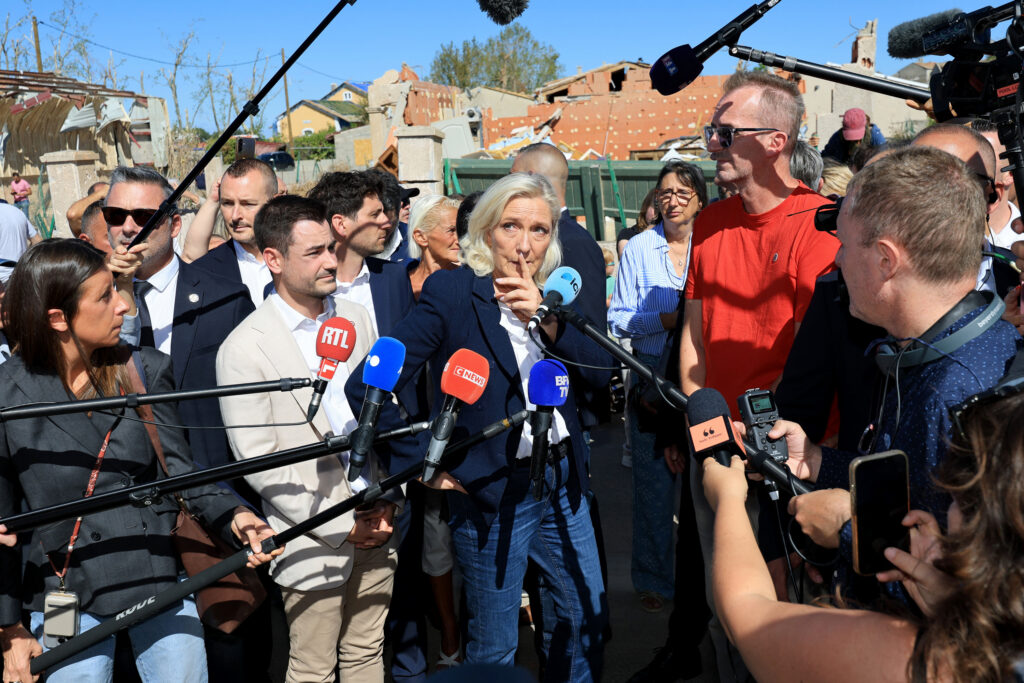
What would a Marine Le Pen presidency mean for France? With the 2027 election approaching, the prospect of her victory is often portrayed as a democratic catastrophe. Yet Broder argues that such warnings obscure how Le Pen could consolidate power by building on political trends that have already transformed France. As the traditional parties have weakened, her National Rally has moved closer to the political establishment, combining an authoritarian promise of protection with an increasingly pro-market economic agenda. He suggests that the conflicts a Le Pen government would provoke could become a means of strengthening her alliances and reshaping the French state.
“A Le Pen government’s success will depend on its ability to entrench such battlelines. In this regard, the resistance put up by the radical Left and trade unions may not only threaten a Le Pen government but also provide the ground on which she can cohere support among establishment allies and habitual right-wing voters who lend her their ballot in the 2027 runoff. We can foresee a Le Pen government picking fights with what it calls the ‘Islamo-leftist’ La France Insoumise, cast as alien to the respectable, national working class.”
Materials Conditions

Daniele Belleri
The Ideas Letter
Essay
Belleri explores the rise of circularity in architecture—the movement to reuse, repair, and transform existing buildings rather than build new ones—and its growing political significance. Examining the history of architectural reuse from wartime scarcity to today’s climate politics, he traces how circularity is being reshaped as ecological concerns are increasingly entangled with geopolitical competition and the pursuit of strategic autonomy. And he also considers how the movement’s principles might serve competing visions, from progressive environmentalism to the far right’s nostalgia for an idealized past.
“Opposing new construction does not necessarily encourage reconstruction. The case for architectural reuse is a case about repairing the present, not defending or restoring the past. Practicing circularity starts with accepting that it hinges on a double paradox: dismantling the old architectural order without demolishing it, and building a new one without building too much.”
Dark Imagination

Luke Kemp
The Ideas Letter
Essay
In a critical reassessment of David Graeber’s intellectual legacy, Kemp challenges the anthropologist’s central conviction that human societies are shaped primarily by collective imagination and can therefore be transformed by changing how we think and act. Drawing on archaeological and anthropological evidence, he argues that Graeber underestimated the role of material conditions, technology, and coercion in shaping political institutions, and traces the consequences of this worldview to Occupy Wall Street, where Graeber’s commitment to leaderless organization and consensus decision-making, he contends, limited the movement’s political impact.
“Graeber’s ultimate, hidden truth of the world is a half-truth. We can remake the world, but it won’t happen easily just by imagining something better and everyone spontaneously adopting it. Shifting the world will not only require new visions of society, but also a tactical acknowledgment of power and technology. The more uncomfortable ultimate truth of the world is that guns and money matter more than Graeber, and many of us, wished.”
Unifying Flying Objects

Ross Barkan
The Ideas Letter
Essay
According to Barkan, belief in UFOs is one of the few things that unites Americans across partisan divides. From the Roswell incident to recent congressional hearings on unidentified anomalous phenomena, he explores the country’s enduring fascination with extraterrestrial visitors and the cover-ups supposedly surrounding them. He argues that the appeal of UFOs extends beyond distrust of government secrecy, reflecting a broader turn toward mysticism and spiritual belief in an increasingly secular society. The prospect of alien visitation promises revelation, even salvation, in a world beset by political conflict and existential uncertainty.
“Aliens, for the hopeful and the despairing alike, serve as a deus ex machina. Any creature with the power to cross the universe is something close to a god. This god could deliver us into a new golden age or eradicate us entirely. Either way, an end point is promised, the cessation of a certain world order and the dawn of another. This concept, for some, is enchanting.”
“That’s Not an Answer, Chuck”
Judith Shklar’s 1976 Debate with Charles Taylor
Daniel Steinmetz-Jenkins
The History of Now
Blog
Steinmetz-Jenkins delves into a largely unexplored archive of debates hosted by the International Association for Cultural Freedom, the successor to the Cold War-era Congress for Cultural Freedom. Among the transcripts, he discovers a spirited 1976 exchange between the philosophers Charles Taylor and Judith Shklar over the foundations of distributive justice. Taylor argued that questions about the distribution of wealth and resources rested on deeper assumptions about human nature and our obligations to society. Shklar challenged his approach, insisting that justice also involved rights, rules, and the ability to make claims under them. Their disagreement extended to Taylor’s interpretations of Aristotle and Locke, culminating in a particularly sharp exchange over his suggestion that Uruguay’s descent into dictatorship might foreshadow developments elsewhere.
“Shklar’s response interests me, in part, because her work is experiencing a revival. But even more importantly, the intervention that she made foreshadows her later thought. This was also true of Taylor. A decade later, Taylor’s reworked essay, “The Nature and Scope of Distributive Justice,” appeared alongside Shklar’s introduction in Justice and Equality Here and Now (1986). Her concern with injustice would come to full expression in The Faces of Injustice (1990). Of course, a looming figure behind their exchange in 1976 was John Rawls, whose A Theory of Justice had appeared five years earlier.”
Nineteenth-Century Afro-Brazilian Atlantic Intellectuals
An Interview with Maria Eduarda Abreu Cavalcante
Tianna Mobley
Untold Histories of the Atlantic World
Podcast
The historian Maria Eduarda Abreu Cavalcante, in conversation with Tianna Mobley, explores the role of Black intellectuals in nineteenth-century Brazil’s struggle against slavery. Focusing on Francisco de Sales Torres Homem, a free man of color who rose from journalism to the highest ranks of Brazilian politics, she examines how Black thinkers drew on ideas circulating across the Atlantic to challenge slavery and expose the contradictions between liberal ideals of universal citizenship and the realities of racial discrimination. Torres Homem’s shifting political allegiances and reluctance to identify publicly as Black, she argues, reveal the compromises involved in navigating a deeply hierarchical slaveholding society, complicating conventional understandings of abolitionism and Black political agency.
“I think something that should be more explored is their own contradictions. Something that nowadays we would call contradictions, but in the past, maybe they were just Black men trying to survive in this country. […] Most of these men, for example, they didn’t claim to be abolitionists or even Black. Torres Homem never declared himself as a Black man, and he used makeup and wigs to hide his Black traits. So today, we would read this as a contradiction. But thinking about the past, thinking about a Black man living in a racist society that would see him based on his color, that would judge him based on his color, based on his traits, you can understand why he uses wigs, why he uses makeup, why he wouldn’t declare himself as a Black man or an abolitionist.”