Closer to Rude than Snide
An Interview with Leo Robson
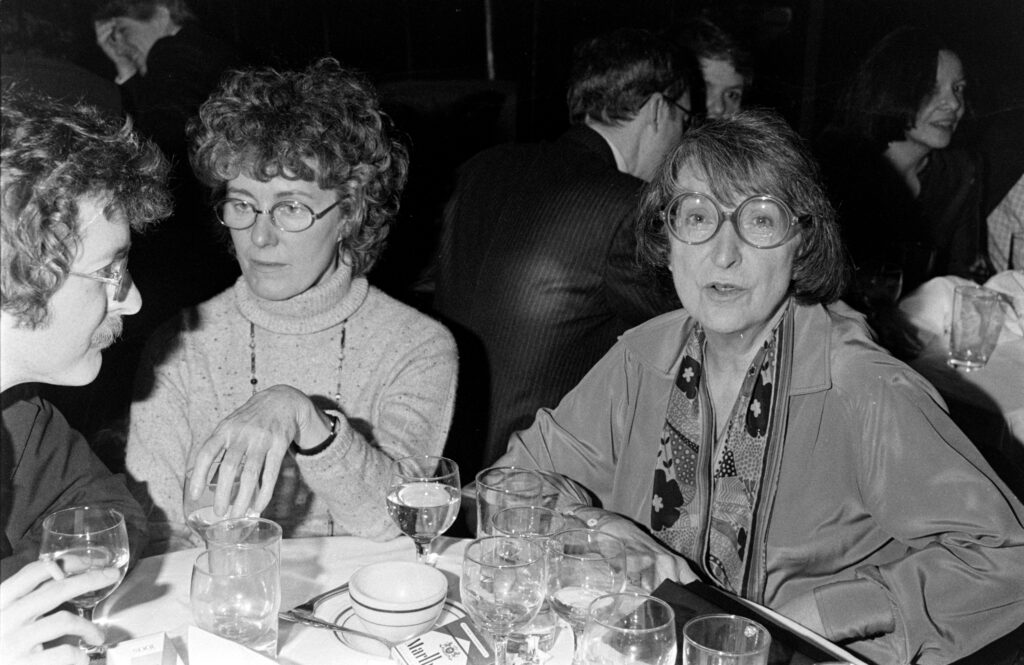
Criticism is not a secondary form of creation but a distinct craft, Leo Robson argues in this conversation with Leonard Benardo. Tracing its flourishing after World War II through a generation of charismatic public intellectuals who made criticism both glamorous and culturally consequential, Robson rejects nostalgia for a lost age of critical authority. One of Britain’s most distinctive literary critics, Robson is assistant editor at Literary Review and writes regularly for the New York Times, New Left Review, The New Statesman, and other publications. He is also the author of the novel The Boys (2025).
Leonard Benardo: Does anyone grow up fantasizing about being a critic?
Leo Robson: Your question alludes to the idea that criticism is not enticing, or that critics have often failed at something else, or would have done if they had tried. The film critic Pauline Kael countered that when she asked listeners to a radio broadcast: “if you think it so easy to be a critic, so difficult to be a poet or a painter or film experimenter, may I suggest you try both? You may discover why there are so few critics, so many poets.” I think it’s an interesting point. In reality, all these things are difficult in different ways and to different degrees for the people who try them. They can be done both well and badly. There’s certainly a phenomenon of the novelist as failed critic. Just open a newspaper.
But I wouldn’t go as far as Kael. With reviewing, there is less sense of uncertainty, less risk. John Updike, who wrote fiction, poetry, a play, and hundreds of reviews, said that writing criticism was to creative efforts as “hugging the shore” is to sailing in the open sea. Using similar language, Kenneth Tynan, a critic who was also involved in a lot of theatrical productions, said that when he was the literary manager of the National Theatre, under the direction of Laurence Olivier, he played the role of “tugboat nudging an ocean greyhound into harbour”—Olivier being the greyhound.
But to return to the question—whatever the limitations of criticism or the critical personality, I do think people fantasize about being critics, nowadays at least. François Truffaut, who started as a movie reviewer, once said that no child dreams of becoming a movie reviewer. I don’t know where he said it—it’s the epigraph to a book by the Cuban writer G. Cabrera Infante, who was celebrated as a film critic and novelist. But this would have been after Truffaut became a director, in 1959. So while the sentiment may have been true for him as a kid, I don’t think it was true by the time he was talking. . . I’ll try to explain why.
There is this idea that the high point of criticism, in English at least, roughly traces the career of T. S. Eliot. It started just after the First World War, and it ended—but also sort of peaked—in the late 1940s, when many of Eliot’s admirers brought out their best-known books. This was the period in which academic literary studies developed, very much under Eliot’s influence, based around techniques of “close reading” of poems and, to some degree, novels, and around a certain kind of literary history. The key centers included Cambridge, England, and Kenyon College, Louisiana State, Columbia, Vanderbilt, Chicago, Harvard, Yale. The concepts that originated in that time include Eliot’s “dissociation of sensibility” and “objective correlative,” Wimsatt and Beardsley’s “intentional fallacy,” Brooks’s “well-wrought urn,” Leavis’s “great tradition” in the English novel, and Empson’s seven types of ambiguity. It was also when Edmund Wilson was writing the essays for American magazines that he collected in books such as Axel’s Castle, The Triple Thinkers, and The Wound and the Bow, and in Britain, when Orwell was writing. He died in 1949, in fact.
An extraordinary time, but an even greater explosion came after that, some of it reacting against what came before. There was the storied work of French and Belgian theorists, some of whom, such as Roland Barthes, wrote criticism, and of certain Marxists new and rediscovered. North American academia produced incomparable figures like Leo Bersani and Elaine Showalter and Edward Said and Linda Nochlin and Gilbert and Gubar. And there was the resurgent interest displayed by, among others, Northrop Frye and Harold Bloom in Romanticism—which Eliot and his followers hadn’t much cared for.
Above all, there was writing in magazines, of the mass-market and “little” kinds. To some degree this critical journalism was responding to extraordinary work in the arts, a sort of domestication or popularization of avant-garde and high-modernist techniques with heroic figures like Godard, Warhol, Beckett, Miles Davis, John Cage. This criticism had little to do with academia, though its practitioners had usually gone to university. It was closer to a pre-academic tradition of belles lettres and the “occasional” essay associated with periodicals based in London and Edinburgh starting in the eighteenth century.
So from the early 1950s there was a new tone or attitude, bullish and iconoclastic, honest, idiosyncratic in expression. That was when Cahiers du Cinéma was formed, where Truffaut and his friends wrote, and when the twenty-three-year-old Kenneth Tynan—a figure who was to exert a tremendous impact on both specialized and general audiences—published He That Plays the King. It’s a book written, as he later put it, in an “ornate” style, and it had an introduction he forced out of Orson Welles, who was then a stranger to him. Though the subject of the book is heroic acting, it actually begins with a chapter on the state of dramatic criticism—a sort of manifesto. He talks about the necessity of “communicating excitement or scorn,” and calls for “flexibility of reaction” and “great flair and cocksureness.”
The 1950s was when many of these figures emerged, either belatedly, like Pauline Kael, or precociously, in the case of the Australian art critic Robert Hughes, who recalled in his memoir Things I Didn’t Know that he read Tynan “incessantly.” Another person unavoidable to mention, Susan Sontag, began writing in the Columbia Daily Spectator in 1960, and within barely five years, had written the much-discussed essays on movies, Happenings, criticism, and“camp” she put together in Against Interpretation. The work produced by all of these people for magazines ranging from Time to Partisan Review was collected in books, many of them still in print. And they were admired by artists and writers, sometimes for their informed judgment but also just as fellow talented people. You would need to have a rather narrow vision not to consider Tynan a great writer. The things he wrote about—theatre, entertainers, jazz, cinema, the relationship between politics and culture, sexual freedom—were not exactly negligible, especially when you consider that most novels are just about ordinary people getting on each other’s nerves.
If people do dream of becoming critics, and have done for some time, it was because of these sorts of figures. There was another element: glamor. If you look at these people—literally look at photos or watch footage—you discover that they were either beautiful or charismatic, or both. They all appeared on television. Among fiction writers of that time, maybe Philip Roth had some of that swagger, quick wit, amused air, though he also had a professorial, sweater-wearing side. There were others—James Baldwin, Muriel Spark, Norman Mailer in a more strenuous way. Not many. Paradoxically, novelists often seem more bookish or sedentary. There’s a moment in Geoff Dyer’s book Out of Sheer Rage, which is sort of a novel about criticism, where he is walking down a fancy road in North London and finds that he is appalled at the idea that in one of those large houses Julian Barnes would be working at his desk. Dyer considers this an “intolerable waste of a life, of a writer’s life especially” and “a betrayal of the idea of the writer.” Tynan may not have been a river pirate, but he led an active, adventurous life. Both of his wives wrote books about him. He certainly wasn’t chained to a desk.
All the people I have mentioned wrote about the arts. No book reviewer had quite the same glow. They were often moonlighting academics—Trilling, Kermode, Steiner—and slightly stiffer. There were practitioner-critics of phenomenal distinction like Updike and V. S. Pritchett, but neither captured the imagination the way that Sontag did. I do think this started to change about twenty-five years ago, in part due to a trio of English writers associated with the US: Martin Amis (after his collection The War Against Cliché appeared), Christopher Hitchens, and James Wood. The side career of Zadie Smith and the posthumous vogue for Elizabeth Hardwick have also played a role. Nowadays wanting to be a book reviewer is like wanting to be an astronaut or a fireman in the old days.
LB: How do you understand a critic’s job?
LR: One can overcomplicate what the job involves. It’s to adjudicate in the process of explaining, or the other way around. You might be intuitive and passionate or rational and reflective, but that’s the baseline. And there are a lot of useful critics who do only that.
Of course, critics might also express ideas about the direction of an art form, what’s missing, what’s gone stale, how it relates to the other arts or to wider reality. But this is a bonus. The same with being a delightful or entertaining writer. It’s too rare to qualify as an intrinsic part of the job.
But of course, it’s what we want, as readers. And while we know that novels and poems are more important than critical forms, there is nevertheless something exciting about the kind of thought and perception you can encounter in a piece of argumentative prose. Wilfrid Sheed, in his introduction to Essays in Disguise, argued that the essay has brought out the best in English prose because the novel has “too many other fish to fry.” It’s not true—the writing in even the greatest reviews is not in the same stratosphere as Absalom, Absalom!, Beloved, Moby-Dick, Tender is the Night, To the Lighthouse… But you get the principle.
LB: Has the perception of the critic’s job changed over your lifetime?
LR: Robert Hughes, in his unfinished second memoir, questions the idea that people used to care a lot about the “authority” or cultural weight of the critic, as arbiter or guide. I don’t know how true it ever was. The influence of a critic is reflected in their public—in some cases a general audience, in others a more captive one—reading and re-reading them, discussing them, thinking about them. Edmund Wilson was a dominant figure. Everyone says so. But I don’t think he straddled the culture, or that the average person cared more about him than they do Richard Brody’s writing about film for The New Yorker in these degraded, illiterate times.
That stuff about the authority of critics is often the product of hindsight. It’s rarely said at the time and so I think we should be circumspect when drawing comparisons. During the Second World War, did subscribers to The New Yorker realize how good they had it reading Wilson on Gogol and Finnegans Wake and Glenway Wescott? More people subscribe to that magazine now than they did in its supposed mid-century heyday.
Or in the 1980s––did the American intelligentsia recognize that it was enjoying a boom time? Take, at random, New York publications in the fall of 1986. In terms of serious critical journalism, you could read Frank Rich in The New York Times on the Royal Shakespeare Company’s legendary Nicholas Nickleby; Hughes on Sargent in Time; Kael on Blue Velvet in The New Yorker; Updike on Tolstoy’s Diaries in the same magazine; James Wolcott on Barbara Pym and David Byrne (separately) in Vanity Fair; Gore Vidal on Henry James in The New York Review of Books. No doubt John Leonard published something dazzling somewhere—Wilfrid Sheed, too, perhaps. Meanwhile, Robert Silvers, the NYRB’s co-editor, had just alighted on a brilliant architecture and design critic, Martin Filler, who still writes regularly. But the intelligentsia would have been far more aware of the encroaching vulgarity—Reagan, Trump, Michael Milken, Dallas, MTV. Jane Fonda, who had worked with Godard on a film about striking workers, was making exercise videos.
LB: What does society lose when fewer critics roam the earth?
LR: Well, in my view, there would be less instruction and pleasure, less invitation to think about our relationship to art or what works of culture are about, whether they work or don’t, and why. Such a situation would be deleterious to the status of art and thought, and this would in turn be exacerbated by the scarcity of critical discourse. But I am not convinced there are fewer critics, overall.
LB: Do most critics have second jobs (Christoper Lasch, historian and social critic) or is being a critic a full-time job?
LR: It depends on who they are, where they are, what they write about. A lot of regular film reviewers wouldn’t be able to have another job. But I don’t think it matters that much or needs to matter, as long as you’re checking in with what you write about and with your writing skills.
Sometimes it is full-time but temporary. When Roger Ebert was asked to be the reviewer for the Chicago Sun-Times in March 1967, he said to himself, “how long could you be a movie critic, anyway?” In his case, almost half-a-century. Others have been more successful at being a movie critic for a short while. Renata Adler did it for one year (at The New York Times), Graham Greene for roughly five.
It might be part-time but long-term. Stuart Klawans was the film critic for The Nation from 1988 until 2020, always stylish and thoughtful, and he had a job in arts PR. Some second jobs will feed in—being a teacher, for instance, or in the case of Geoffrey O’Brien, for a long time the de facto film critic of the NYRB, a poet and publisher. Many of the best critics—Woolf and Johnson and Shaw and Henry James and Coleridge—spent more time writing other things. That provides a model for people who have to write criticism in bursts. Though perhaps it’s not that useful in that they were all extraordinary geniuses.
As with virtually anything, the greater the immersion, the more confident your touch. I once wrote to a leading figure in the field of expert performance, the psychologist Anders Ericsson, who is credited with coming up with the ten-thousand-hour rule. He told me there hadn’t been much published on the subject of writing. It’s a harder activity to study than throwing a three-pointer or practicing a concerto or playing the Sicilian Defense. So the only dependable method is to try extremely hard. People talk about the importance of taking the occasional break, or learning other skills. Maybe that’s right, but the main ingredient has to be a great hunger for the things you write about, and for writing about them, however grisly that experience can be.
LB: It seems to me that there are very few who are equally successful at both criticism and creative work. Sontag, for instance, was a critic who was also an occasional novelist, while, say, Updike or Henry James were novelists who were also critics. This leads me to wonder about the different—perhaps even warring—impulses to produce these two forms, and how they manage to coexist within the same creator. Does a powerful critical impulse tend to lead to arid creative work, and vice versa? Can they be mutually reinforcing in a productive sense?
LR: There are extremely few people who are successful at writing either fiction or criticism at a high level. The chances of them having the talent or the time to do both well are close to non-existent. Henry James is in that category. You would have to put Updike a little lower—though miles above almost anyone else. I would add Joyce Carol Oates.
The trick is to adapt your central strength or attribute to the demands of the different tasks. Alternatively, you might talk about activating different parts of yourself. The former seems more common, and achievable.
I don’t believe that due to some internal mechanism someone who writes good criticism is doomed to write bad fiction, any more than the other way around. Many critics have acquitted themselves as fiction writers at the level of, say, a competent suburban dentist, and of course, many disastrous novels have been written by full-time novelists. The basic distinction is a little blurry. Adam Mars-Jones, probably my favorite practitioner-critic working nowadays, has published more words of criticism than of fiction—and has been better-known for doing that—but he published stories before he was ever commissioned to write a review. Muriel Spark was a biographer and a critic before she wrote her first short story in her thirties, though it’s true that she had been a poet since childhood. I’m not sure what that makes her.
I see this stuff in pretty contingent terms. Some people would have written good novels if they had worked harder or received better advice. As my friend Whit Stillman, who wrote book reviews before he wrote screenplays or novels, once put it, “until something is working, it’s not working.”
With novel-writing, I would be wary of talking about “warring impulses” just because it’s such an elastic form. You can be cerebral and write great fiction. Many of the big writers in English were formidable students and scholars: Coetzee, DeWitt, Pynchon, Zadie Smith, Joshua Cohen. I don’t think anyone knows exactly what T. S. Eliot meant when he said that Henry James had a mind so fine that no idea could violate it, but I would call James an intellectual. It obviously helps to be able to stand apart from ideas. Lots of novelists, including James, write about the danger of nursing preconceptions about experience. Coetzee and Pynchon both write about the pitfalls of rationality and the ways it has been used to justify rapacity and violence. Don DeLillo is theoretically inclined and also very funny about theorizing.
It’s true, as Michael Gorra put it, that no young writer picked up Sontag’s early novel Death Kit and said, “That’s the kind of thing I want to do,” the way they did with some of her essays. But I don’t think that Sontag wrote bad fiction because she was a good critic. I would say that her criticism, though it has greater strengths, is affected by the same problems as her novels.
A problem for the critic who writes fiction is just not doing it enough. Edmund Wilson, Cyril Connolly, and Lionel Trilling all published novels that people have read with pleasure. Allen Tate’s The Fathers—though he was a poet, not only a critic—was hailed as a masterpiece. But you need to do it a lot to get better, or to increase your chances of encountering those elements of serendipity that a really good book requires. Not many people write a good enough first book to publish nothing else and be remembered for it. If Henry James had stopped publishing fiction after Watch and Ward, he would be remembered differently—probably as a critic who couldn’t really write fiction.
Nowadays readers are accustomed to fiction that has things in common with non-fiction forms. A list of writers who people have gotten very excited about would include practitioners of “autofiction” and the essayistic novel, but also novelists who wrote other things readers care about: Woolf, Milan Kundera, James Baldwin, Truman Capote, David Foster Wallace, Norman Mailer, Zadie Smith, John Berger, Chris Kraus, Camus. I’m not saying people don’t prize novels, but not many of the people you’d see on a t-shirt or a tote bag were purely novelists. I don’t think being purely a novelist is very appealing, and many novelists who could get away with doing nothing else appear to agree with that. Being just a reviewer is also crap, of course. You have to work in different forms. Someone I love is John Jeremiah Sullivan, who is a fiction writer, reporter, personal essayist, critical essayist, a kind of ad hoc historian. No part of me wishes he’d specialized in any of those things.
To be clear, I do realize that to Ian McEwan the idea that a magpie career involving a lot of journalism is as worthwhile as devoting patient solitary labor to writing twenty novels about psychology, history, science, and morality would sound utterly mad.
LB: What about the effect of the academy on literary criticism, starting in the 1970s and certainly the 1980s?
LR: Well, there was an awful lot going on, but it’s fair to say that the real action was in France. It was different from Anglo-American criticism, though it did specialize in the same two, rather contradictory things—a kind of close reading that hinged on how language works, almost as a closed system, and a historical or, as they would say, “diachronic” engagement with literary and philosophical traditions. It’s clear where the ultimate priority was. Paul de Man confessed that his book Allegories of Reading started out as a historical study but ended up as a theoretical work.
François Cusset told this story in his book French Theory. That’s the original title in French, to reflect that it was an American story. The US is where that work was, to use a relevant term, “mythologized.” Jacques Derrida became the presiding force over the “Yale School” of deconstruction, which included de Man, a Belgian but long resident on the East Coast and writing mainly in English. Deconstruction was not useful to criticism outside the academy—unless you count the many essays and reviews written about it. But this was less true of Lévi-Strauss, Lacan, and Foucault, whose ideas transformed anthropology, psychoanalytic theory, and social and political history. But I think realistically the only figure who had a palpable effect on everyday criticism was Roland Barthes.
This would be in the period you name. Some of Barthes’s writing on the novelist Alain Robbe-Grillet appeared in the Evergreen Review in 1958, but his wider dissemination in English didn’t begin until the late 1960s. He took part in the star-studded conference in 1966 at Johns Hopkins where Derrida, reportedly a last-minute replacement for someone, burst onto the scene. The Winter 1967 issue of Partisan Review, with the roundtable on “What’s Happening in America,” with contributions by Tom Hayden, Sontag, and others, also contained translations of “The Structuralist Activity” and “The Diseases of Costume,” and the same year, there were translations in the UK of Elements of Semiology and Writing Degree Zero, which no longer represented what he was about but certainly got a lot of attention.
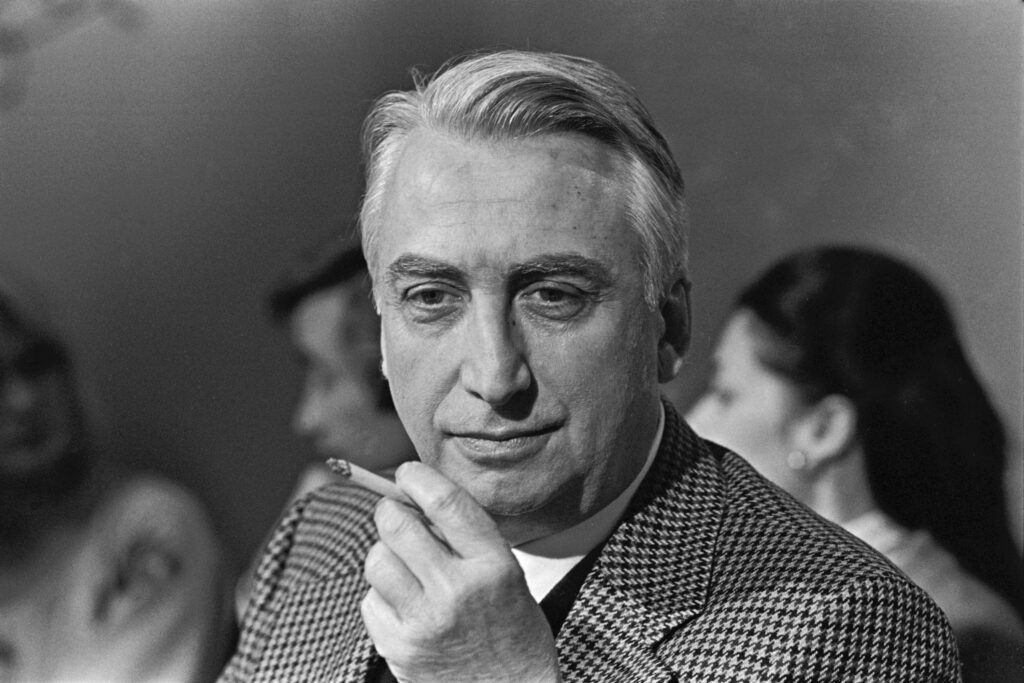
Sontag had chosen Barthes’s study of Racine as a book of the year in 1964, and his name also appears a few times in Against Interpretation. When the translation of Writing Degree Zero appeared in the US in 1968, it was the occasion for her first preface or introduction—championing an unfamiliar foreign-language writer in that form became a big part of what she’s known for. She called him “the most consistently intelligent, important and useful critic to have emerged anywhere in the last 15 years.” That word “useful” is key. “The Death of the Author,” perhaps Barthes’s best-known idea, probably isn’t useful if you’re writing criticism. But a lot of his work appeared in English, including his laborious account of a Balzac story, S/Z, and a partial translation of his columns on contemporary phenomena and detritus, Mythologies, and he was written about a lot, including by Edward Said and John Updike (twice actually). I won’t attempt to paraphrase his positions or reprise his career, but he was interested in questions about meaning, value, style, ideology, the details of cultural objects. And his tone, a kind delighted but skeptical fascination, was something critics could emulate or learn from. He could also be very informal and impressionistic. “Leaving the Movie Theater” is included in Phillip Lopate’s anthology The Art of the Personal Essay.
Paul de Man was certainly a critic and he wrote a fair bit for the NYRB in the 1960s. They actually rejected his essay on Barthes’s Critical Essays in 1972 and he never wrote for them after that. The draft was later published and collected and it’s fantastic. The first piece they did run on Barthes, by Michael Wood, was hardly more straightforward. But I think maybe because de Man wrote in English, and for a non-specialist audience, he was held to a different standard of penetrability than Barthes. And he didn’t possess anything like Barthes’s range.
For the purposes of this discussion, I am emphasizing the degree to which Barthes was a critic, someone who wrote about novelists and playwrights and Cy Twombly and Eisenstein and Tacitus. But at the time, the emphasis was actually on the ways he wasn’t just a critic. Sontag acknowledges that she was “stretching that term”—she wrote that describing him as a literary critic “does him an obvious injustice.” Frank Kermode was happy that “a writer of some genius should apply himself to criticism.” Of course, critics are quite invested in claims of this kind.
Sometimes the idea of someone can be inspiring, and just knowing about Barthes’s range of interests, the fact he wrote books about fashion and photography, Japan and Racine and mourning, love and readerly pleasure and his own life, can enlarge your sense of what is possible. Geoff Dyer routinely cites Barthes, along with John Berger and others, as someone who showed you could be a writer without setting up as a straight novelist—though you might want to publish some fiction—or a regular critic, though you would almost certainly be writing things that would classify as criticism.
LB: I am wondering if you can say a few words about the art of the takedown. Some lament it as a lost art; others suggest that our age of the safe space militates against the practice; still others point to the corporatization of criticism, which I suppose has always been the case (two thumbs up and all that). Can you give us your sense of things, and also share your favorite takedowns (present company included)?
LR: There was a period when people were pronouncing the takedown over, in the moratorium sense—treating it not as an art that had been lost but a practice that ought to be retired. In the early-to-mid-2000s, the British-Hungarian novelist Tibor Fischer went very hard on Martin Amis’s Yellow Dog in The Telegraph, and at a rather higher level, John Banville did the same to McEwan’s Saturday in the NYRB. Dale Peck, a prominent critic for The New Republic, put his reviews together under the title Hatchet Jobs. Meanwhile a new magazine, The Believer, said they weren’t going to run negative coverage and had a webpage devoted to “Snarkwatch.”
This was a long time before safe spaces. I suppose the underlying idea of saying “no more takedowns” is that writing books is hard, and people who care about literature should stick together. On the other hand, standards need to be maintained, taste educated. And you have to think about the reader. That’s who the review is for, the prospective consumer of a book. Plus takedowns are very entertaining. The role played by schadenfreude will vary. I don’t think inflicting pain or being mean is the point. But perhaps that’s too rationalist, or rosy, a viewpoint.
Even though praise is hard and risks blandness, it’s worth stressing that the best-known criticism takes the form of appreciation or advocacy. Samuel Johnson’s preface to Shakespeare is not a takedown. Nor is Aristotle on Attic tragedy. Sontag didn’t write hatchet jobs. Tynan, though he didn’t pull punches, is remembered for what he had to say about Brecht, his profile of Stoppard, and for writing that he could not love anyone who did not wish to see John Osborne’s Look Back in Anger. Kael rhapsodizing on Bonnie and Clyde, Last Tango in Paris, and Nashville—those are the famous pieces. The demolition job with which she is most commonly associated is probably the one done on her by her New Yorker colleague Renata Adler, in the summer of 1980.
I don’t think the drift of the culture affects things too much. Maybe there are fewer takedowns overall, but general statistics don’t matter. How would we know? Even at a time when takedowns provoke distaste, certain people will always go hard on things they find objectionable or consider inept. One thing that may matter more is the state of the art form—when cinema or the American novel seems under threat, and something comes along that might be seen as symptomatic of rot or decay. Hughes thought the art of the 1980s was vulgar, and so he wrote and spoke harshly about Schnabel, Basquiat, Koons. Obviously those artists had fervent supporters, but for Hughes they represented certain impulses that he considered both dominant and dangerous. A critic writing in what they consider a golden age is less likely to produce a takedown, even if something terrible comes along, because the stakes don’t seem as high.
So yes, local context matters. When I started writing reviews of novels, there were a number of relics from the postwar decades who were no longer writing their best stuff. So I have written harshly about books by Kundera, Mario Vargas Llosa, McEwan, others. I was runner-up for the no-longer-existent Hatchet Job of the Year prize for a review of a biography of Martin Amis. But I wasn’t trying to be a young gunslinger—I wasn’t especially young when I wrote some of the pieces, and would say the same thing now. I don’t think anyone could claim I was slating masterpieces. I find it silly when people say “I wouldn’t write that now.” It’s often untrue. Martin Amis regretted some of his antics from the early ’70s, when he went for Angus Wilson and Ballard and Philip Roth, but he was harsher on Michael Crichton and Thomas Harris two decades later. Finding a book or film or play or exhibition deficient and saying so when you are being paid for your opinion should not be dismissed as a young person’s game.
I think ridicule is OK, and maybe inevitable. I wrote a takedown of a history of the novel by the poet and publisher Michael Schmidt and he wrote me to say he should probably be jumping out of the window but was too busy laughing. You need to be direct. John Lanchester made this interesting point about what he called John Updike’s “very powerful negative review” of a Kingsley Amis novel, Jake’s Thing. He said it was “much less patronising, and more overtly hostile” than was usual for Updike. Actually that review isn’t negative, but I find that a useful distinction. You want to be actively aggressive, not passively so, closer to rude than snide.
A lot of takedowns are prized more for harshness than deadliness. We remember one-liners like Michael Hofmann comparing Stefan Zweig to Pepsi. Well, if you admire Zweig, that’s not going to land. A takedown that’s any good will be hard to quibble with too much because it will ground judgment in argument, and give too powerful sense of the inadequacies of method, technique, and worldview. You shouldn’t be giving the reader the opportunity to say, “I just don’t agree.” Many of the examples in English in recent decades have appeared in the LRB, The Village Voice, Harper’s, such as Gary Indiana on Blake Gopnik’s Warhol biography, or the NYRB, like Tim Parks exposing the shortcomings of “the Rushdie aesthetic,” or that Adler one on Kael. With a reputation or body of work of any size, you need space.
Among my favorites by those I have mentioned, Hughes on Schnabel’s memoir would be up there. Kael was good on films she didn’t admire from directors she did, such as Antonioni, Godard, Altman, Spielberg. Barthes’s Criticism and Truth is a takedown of an attempted takedown on him by Raymond Picard. Martin Filler’s first piece on Philip Johnson. I love James Wood writing about an academic’s history of post-war British literature, in 2004—when “snark” was under siege. It’s devastating and funny, all the while making points about how to discuss novels and poems. James Wolcott is often very funny and has sent up a lot of people—he sees straight through pomposity—but I think his style works even better when he’s enthusiastic. The same with Adam Mars-Jones. He has done lots of good ones but he’s by no means simply a “takedown artist.” Of my own, I guess I would have to name the piece I published in The Ideas Letter on the film critic A.S. Hamrah, because it’s the most recent and because I think I provided a useful service by pointing out habits, some of them very bad in my view, that hadn’t been previously recognized.