Mamdani’s Blank Slate
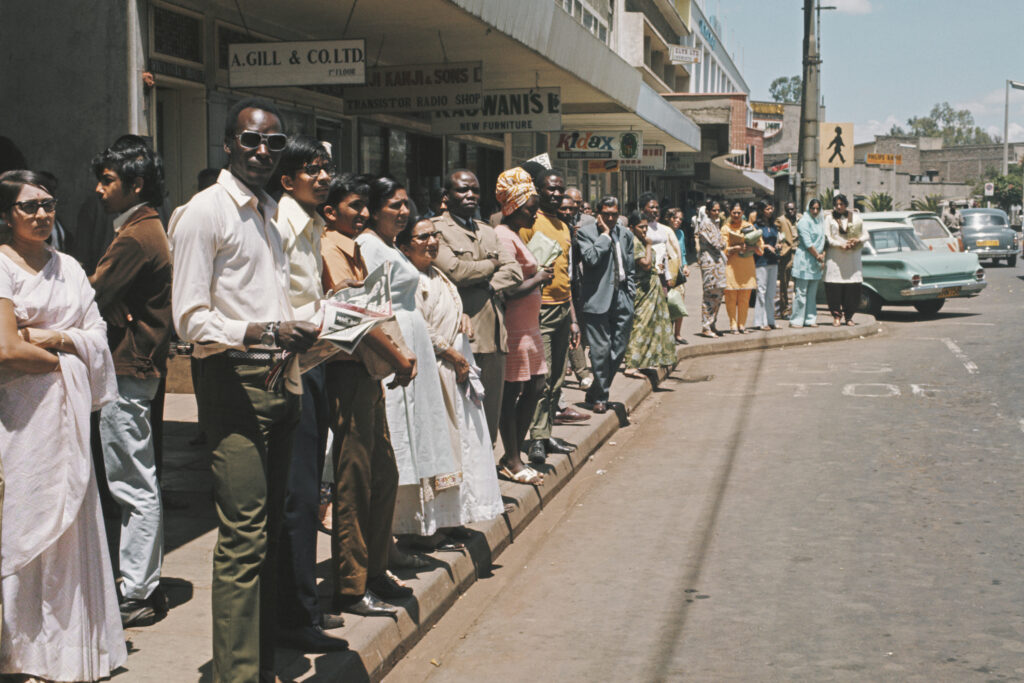
If ever there was an individual who embodied the racial, academic, and political history of postcolonial Uganda, it is Professor Mahmood Mamdani. He stands astride two important epochs in the recent history of Uganda. Mamdani opposed the rise of General Idi Amin in the early 1970s. Then, in the 1980s, General Yoweri Museveni, of whom Mamdani was an early supporter, rose to power. Hence the irony of his latest book Slow Poison: Idi Amin, Yoweri Museveni, and the making of the Ugandan State in which he reverses the positions of a lifetime, offering a much more sympathetic analysis of Amin, while levying heavy criticism at Museveni, whom Mamdani now speaks of as a former comrade. And this is all the more unexpected since Mamdani is a Ugandan Asian who was himself victim of that most notorious of Amin-era events: the 1972 mass expulsion of the entire Ugandan Asian community. This reversal of his views is a development many may find startling, and perhaps for that reason, the book makes for very interesting reading.
Mamdani addresses this head-on in his introduction:
“I ask the reader to shed certain media-driven preconceptions before reading this book. The first of these is that Amin was Hitlerite presence in Africa… The Asian expulsion is said to have been a Hitlerite act. Yet, as we shall see, even as Amin ethnically cleansed Uganda of Asians and expropriated them, he did everything in his power to spare Asian lives. The second media-driven preconception is that Museveni has been an effective antidote to Amin, promising a return to a rule of law, and a guarantee of a return of Asians, previously exiled, and of international capital, allowing the way for an era of prosperity.”
His life story is a remarkable tale of trying to retain normality amid endless turmoil. Though his parents had migrated to Tanzania in the mid-1940s, Mamdani himself was born in Mumbai, just before India’s independence, while his mother was on a visit there. This means he is theoretically a citizen of Tanzania, Uganda, India, Britain, and, if he had sought it, the United States. This melds perfectly with his principal intellectual concerns about citizenship, belonging, migration, and identity, all of which frame the book’s narrative.
As a child, his family moved him to relatives in Uganda, where they later joined him. He grew up first in quasi-rural Masaka, then later in Kampala. The family eventually migrated from the poorer, mixed sections of the capital city to a better-off, exclusively Asian one. When Uganda achieved independence from the British Empire in 1962, Mamdani was a young man. He soon became part of the cohort of 1960s Ugandan youth that were offered opportunities to study abroad by wealthier countries. In the mid-1960s, he obtained a scholarship to study in the United States, which marked the beginning of his career in academia. While in the US, he also began his journey towards “radicalization” by taking an active interest in the Civil Rights struggle of Black Americans.
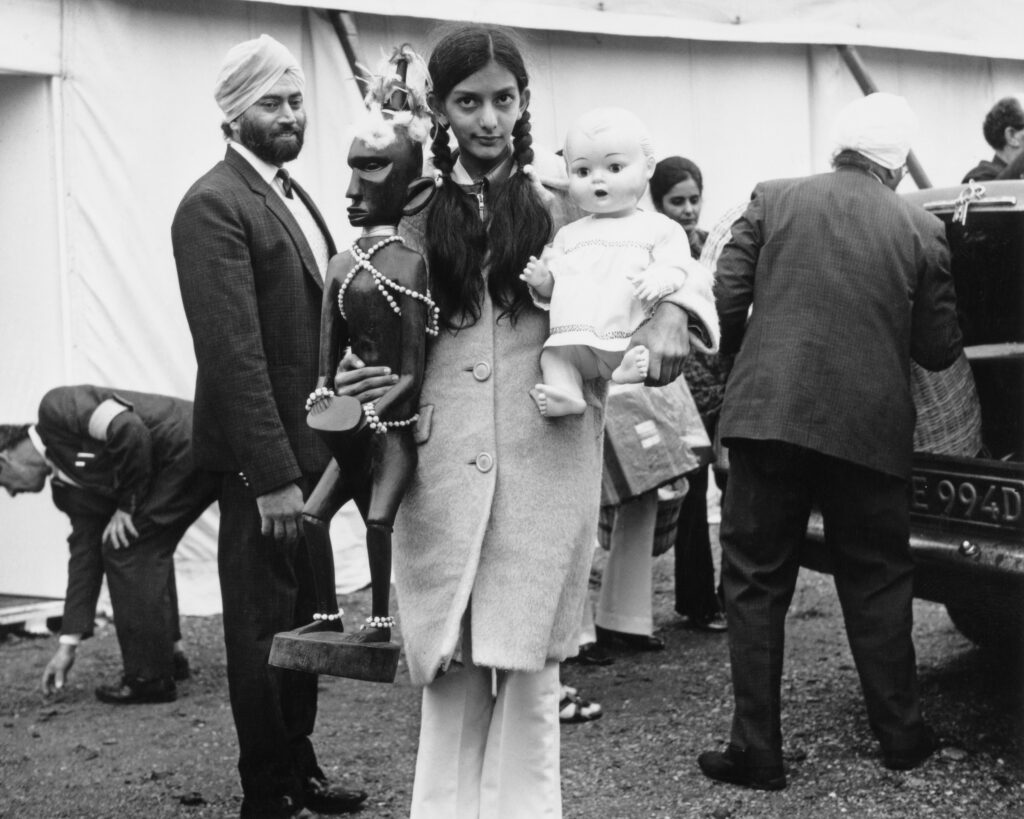
After a long period of changing courses, he finally settled on the social sciences. He then returned to Uganda just in time for Amin’s seizure of power. Since the colonial era, there had been deep ethnic tensions between the “Bayindi” —Indian immigrants living and working in Uganda, often in relatively prosperous positions—and Black Ugandans. In 1972, Amin expelled 80,000 or so Bayindi. Mamdani’s family were among the victims, suffering dislocation and trauma. The event had a profound and lasting effect on him; four of the fifteen chapters of the book deal with this topic in one way or another.
The reality is that the large Asian presence was a concern for African communities all over British East Africa.1 They had been brought in to effectively serve as human software to set up and run the extractive colonial economy.2 This arrangement inevitably put them at odds with those that the economy was intended to exploit, having conquered them and dispossessed them of their land.3 The British colonial authorities were not concerned with the resulting racial tension, so when independence came the matter was inherited unresolved by the new governments. Amin’s solution was expulsion.
After leaving Uganda, Mamdani moved first to Britain with his parents, then alone to Tanzania, where he became involved with the exile community dedicated to removing the Amin regime— and among his comrades was a former intelligence officer from the Milton Obote regime that Amin had ousted called Yoweri Museveni. Mamdani’s activism here brings us to the book itself. It is a long work, replete with colorful characters and memorable anecdotes that reveal a wry and mischievous sense of humor. Through these, he weaves together the personal, political, and racial elements of his journey, and the lessons he has drawn from it.
His major contention is that both Amin and Museveni together embody the state of Uganda as it stands today. Both have tried in different—if not opposing—ways to create a modern African state. Both failed. In the attempting, though, each brought immense upheaval to Ugandan society. The difference between them, Mamdani concludes, is that Amin’s motives were genuine, whereas Museveni effectively turned out to be a charlatan:
“This is … a story of leaders who realised precisely at their moment of triumph that they lacked the resources to turn their vision into reality… Faced with a choice between continuing the struggle or abandoning their vision, Amin and Museveni made opposing choices—Amin fighting to the finish and Museveni yielding, first accommodating and then capitulating to circumstances… Both Amin and Museveni promised decolonization. Whereas Amin failed in his endeavour, he could not be accused of failing to try. Museveni dropped the project as a romantic dream of a youth long spent.”
These are the main concerns in the book, with the question of race at the heart of the discussion. Mamdani seeks to embed this within the question of ethnicity in Africa generally, and how it has historically been managed in relation to communities of South Asian ancestry. Over the course of the book, he foregrounds “indigeneity” as being the single greatest obstacle to the building of a truly modern and viable citizenship compact.
As he contrasts two approaches, he sees Amin as seeking to bind Black Africans together into a new sense of nationhood by expelling the Ugandan Asians, who were dismissed as non-citizens carried over from colonialism, and accused of reluctance in becoming part of the new nation. Meanwhile, in the other approach, he sees Museveni as having encouraged Ugandans to orient themselves first to their various indigenous ethnicities, and not to the nation as a whole. For Mamdani, Amin tried to forge a nation through expulsion; Museveni fractured it through indigeneity.
Over the course of this analysis, Mamdani dismantles a few long-standing myths about President Museveni and his rise to power. The myth of steady military progress by Museveni is one of his early targets: He correctly describes the initial attempts to invade Uganda from Tanzania and overthrow Amin—led by the ousted Milton Obote and Museveni—as the debacles that they were. This is important, because the current Ugandan regime spent at least its first two decades dining out on these early failures, selling them as foundational myths of military prowess.
This book is not an academic tome. It is written in a lucid and accessible style. As such, it should not be scoured forensically in search of deficits against some grand theory. This is a man thinking about the momentous things he has seen and times he has lived through. It also makes a welcome change from the usual lurid and mawkish literature the world has become accustomed to on the subject of Amin’s presidency, treating Amin instead as the political reality he was: a product of Ugandan society and its political crises.
The viability of Mamdani’s thesis—that indigeneity is both an obstacle to coherent nationhood, and a potential weapon for a dictator wishing to sow division—depends heavily on its central premise: that to the extent that these African ethnicities exist, it was really the Europeans who gave them to us. He sets this out right from the onset of the book:
“In the African countries, the politicisation of culture took place over the colonial period. Modern colonialism created the tribes of Africa. It is colonial power that translated linguistic boundaries into political ones, and language groups into ‘nations’, claiming that those were really a carryover of premodern units.”
Mamdani refers to the notion of native African homelands as “fiction.” He also speaks of “the African University” when in fact, he actually is talking about the universities in Africa. Not the same thing. For the African University, the challenge is the discovery, recovery, and development of African knowledge systems that were marginalized and nearly erased by the colonial project. Universities in Africa, by contrast, are the sites for the importation and domestication of foreign knowledge, developing local knowledge only insofar as it conforms to that framework. The former is an institution with a distinctly African intellectual identity and tradition; the latter is a European institution that happens to be geographically located on the continent. This distinction matters because Mamdani’s perspective is entirely premised on a “blank slate” mentality to Africa’s history, politics, knowledge, and philosophy—as if coherent indigenous political thought did not exist prior to colonialism. This has been a major impediment to more effective African political organizing since every activist tradition needs a starting point, and without acknowledging what already existed, there is no agreement on where that starting point is.
It is hard to classify what is going on here. Why does Mamdani take the “blank slate” approach? It cannot be due to lack of information or to an inability to gather the necessary sources. Mamdani is, after all, a leading social science researcher. His position is instead an uncomfortable echo of Hugh Trevor-Roper’s infamous statement that “Perhaps in the future there will be some African history to teach. But at present, there is none; only the history of Europeans in Africa: the rest is darkness.”
This raises a deeper question. Mamdani’s core contention is that the ethnic identities in Africa are simply inventions by the colonial powers so as to make it easier to govern their colonies. These ethnicities, so the argument goes, therefore become impediments to nation-building in Africa. But why doesn’t this argument apply to the states currently in existence in Africa, since they were also created by European colonists. Why is one (alleged) European imposition on Africa bad and the other good? Mamdani doesn’t say.
This contradiction challenges the central premise of the book. Suppose that the attempts by Amin and Museveni to build a modern and viable African state were never attainable to begin with? Mamdani does not countenance this possibility. His thinking seems to be that since Uganda exists, then not only must it continue to exist, but also that its “success” must be assumed to be a real possibility, should the right method of attaining it be found. But that might not be the case. Such an argument would simply circle us back to the original question. As Edward Muteesa, the King of Buganda—which was violently subsumed into the modern Ugandan state in 1966—once put it: “I have never been able to pin down precisely the difference between a tribe and a nation, and see why one is thought to be so despicable and the other so admired.”4
Mamdani also seems unable or unwilling to discuss economics as an activity that shapes political life. Like many Ugandan “progressives” (to borrow a phrase he uses in the book) he remains weak on economic analysis. The story of the construction of the colonial economy in Uganda is also the story of how anti-African racism was instrumentalized within the Asian community in order to run that economy. Mamdani appears to see this story as a blanket attack on Asians. He struggles to see beyond that. I suspect that if Mamdani was able to shed the essential denial he holds about this reality, it would perhaps have enabled him to analyze Ugandan economics a bit more clearly.5
A proper focus on economics would have enabled Mamdani to reckon with the situation of the Asian community within the colonial structure. Dismantling the colonial economy meant also dismantling its racial foundations. Instead, he subtly suggests a (false) equivalence between Asian complicity with the anti-African colonial economy and African animosities toward the Asian community. Yet his ideology is constantly betrayed by his own evidence. In passing, he notes that at various points, the mayor of the capital city, the Speaker of the national parliament, and the head of the Criminal Investigation Department were Bayindi. For a community that comprised less than 2% of the population, this was very impressive minority representation. The Asian community wasn’t simply caught between colonizer and colonized.
Mamdani’s ability to fully grasp the nature of exploitation is therefore compromised. It is this very exploitation that creates the need for a dictatorship to politically maintain it—and that, according to his own account, is the role his erstwhile comrade Museveni now plays.
As a result of this blind spot, we instead get a long and meticulously detailed breakdown of all the major corruption scandals that followed the dismantling of Uganda’s post-independence institutions that underpinned the country’s attempt at social democracy.6 But Mamdani cannot account for this demolition job—Uganda’s great era of “privatization”—as what it really was: imperialism’s final triumph over the last vestiges of the economic progress of the anti-colonial movement, reaching back to the 1940s. At this point, his analysis gives way to a moral lamentation about how the social and moral fabric of the society has been ruined (as indeed it has been) by the ravages of neoliberalism.
Some deeper reflection on the parallels between the economic apartheid in Uganda favoring Asians and the Jim Crow apartheid inflicted upon Black Americans, which he campaigned against as a young student in America, would have made for a thoroughly illuminating discussion. It would have also been welcome if he told us more about the fate of the grassroots organizing work that he and comrades launched during the dangerous days of the second Obote government (when he faced the double threat of arrest for subversion and the cancellation of his citizenship). Since he was on good terms with the Museveni government that eventually succeeded Obote, what became of that activism? And what general lessons could be drawn from the creatively disguised semi-underground work of a movement operating in a time of civil war?
This is ultimately a failure of Mamdani to understand the origins of corruption, which began with a corruption of thought. Mamdani and colleagues such as Karim Hirji, Issa Shivji, and others, were exposed, in what became known as the “Dar Debate”—which occurred at the University of Dar es Salaam in the late 1970s—for promoting a body of ideas that purported to be Marxist analysis but was shown to be fundamentally flawed and that they never corrected. The ideological alliance between Museveni and Mamdani can also be understood as the political expression of those unresolved fallacies. That Mamdani now claims to be surprised and dismayed about how the Museveni regime turned out suggests that he never learned the lessons of the Dar Debate.
None of these criticisms are intended to downplay the importance of this book. It is valuable, as much for its revelations as its omissions. Mamdani fully reveals himself to be a legitimate political organizer of some ingenuity and even courage, both physically and intellectually, while also serving as a classic example of the intellectual weaknesses that have plagued much of Uganda’s “progressive” community, allowing them to be led astray, as has happened with Museveni.
Nevertheless, Mamdani must be credited with two things: a readiness to think afresh about matters long cast in stone in the global understanding of Amin, and a willingness to finally put his own name to things long known about the dark underbelly of the Museveni regime and its tiresome myths of revolution, even though others had been saying them from the start.
Kalundi Serumaga is a long-time public intellectual and activist. He worked as a writer, producer, editor and director for film, television, print and radio, until he was charged with sedition and banned from broadcasting by Ugandan authorities in 2009.
- https://observer.ug/viewpoint/amin-is-the-father-of-uganda-s-economy/ ↩︎
- Lwanga-Lunyiigo: Uganda: An Indian Colony 1897-1972; The African Studies Bookstore, 2022 ↩︎
- https://books.google.com/books/about/The_Rise_of_Our_East_African_Empire.html?id=2dkLAAAAYAAJ ↩︎
- https://openlibrary.org/books/OL14904578M/Desecration_of_my_kingdom ↩︎
- Nabudere A CRITIQUE OF PROFESSOR MAMDANI’S ASSESSMENT OF MAKERERE UNIVERSITY: SCHOLARS IN THE MARKET PLACE The Dilemma of Neo-Liberal Reform at Makerere University, 1989-2005; First written: 8th October, 2007, Updated in 15th September 2011 ↩︎
- https://www.monitor.co.ug/uganda/special-reports/deconstructing-the-sale-of-146-obote-amin-parastatals-3420918 ↩︎