Cuba, End of the Peculiar
This essay was translated from Spanish; the original version can be read here.
1.
The profound, sometimes almost incomprehensible, peculiarities of Cuban society present one of the most complicated challenges I face as a writer of fiction in contemporary Cuba who seeks to reflect the conflicts arising within that reality—one that is sometimes difficult to decipher even for those of us who live it day to day. It is known—or should be known—that literature is dedicated to reflecting, not explaining. It marks the gap between denotation and connotation which Ernest Hemingway deployed like no one else, as you can verify if you read his unsettling story “Cat in the Rain.” It is in connotation that the universal value of art is founded, its potential for transcendence beyond a specific place or moment.
And so: my problem as a writer is that when referring to a context as peculiar as that of Cuba in recent decades—my temporal and factual space of life as well as creative interest—I constantly stumble upon processes and phenomena that need explaining to readers who have not directly experienced the historical and everyday reality of a socialist country, with all its multiple social and, of course, existential, individual connotations. These readers lack precise contextual information and may need explanatory denotations that shed light on social conflicts and personal responses to them. This is an aesthetic challenge that involves seeking literary solutions that can make transparent—and, if possible, universally resonant—very intricate aspects of a domestic context that is at times so particular.
Take, for example, the experience of being poor in Cuba. Until a few years ago, poverty in Cuba was distinct from the systemic poverty suffered in many other Latin American societies, in which reality operates with painful arithmetic simplicity: If you have, you can; if you don’t have, you are poor. For years, certain social benefits protected many Cuban citizens from precarity. Those protections, characteristic of socialist political systems, have since deteriorated.
The Cuba specialist Mayra Espina Prieto recently estimated that between 40% and 45% of Cubans were living in income poverty and could not satisfy their basic needs with their wages or pensions. Cuba’s systemic structure has not changed, but today most food and personal hygiene items are no longer obtained through the subsidized ration quota (via the so-called ration book, which itself would require its own explanation); they must be purchased at market prices. While much of the population continues to receive state salaries averaging 7,000 Cuban pesos, a carton of 30 eggs costs 3,000 pesos in the only market that sells them—the private one. Cuba’s social and economic system, which proclaims itself socialist and egalitarian, calls for certain explanations that complicate the writer’s task when he addresses a phenomenon like this one in his work. Weighed down by such difficulties, yet wanting to avoid the facile language of a propaganda pamphlet, I eventually opted for a mystical formulation: “The Cuban miracle is that Cubans live by miracle.”
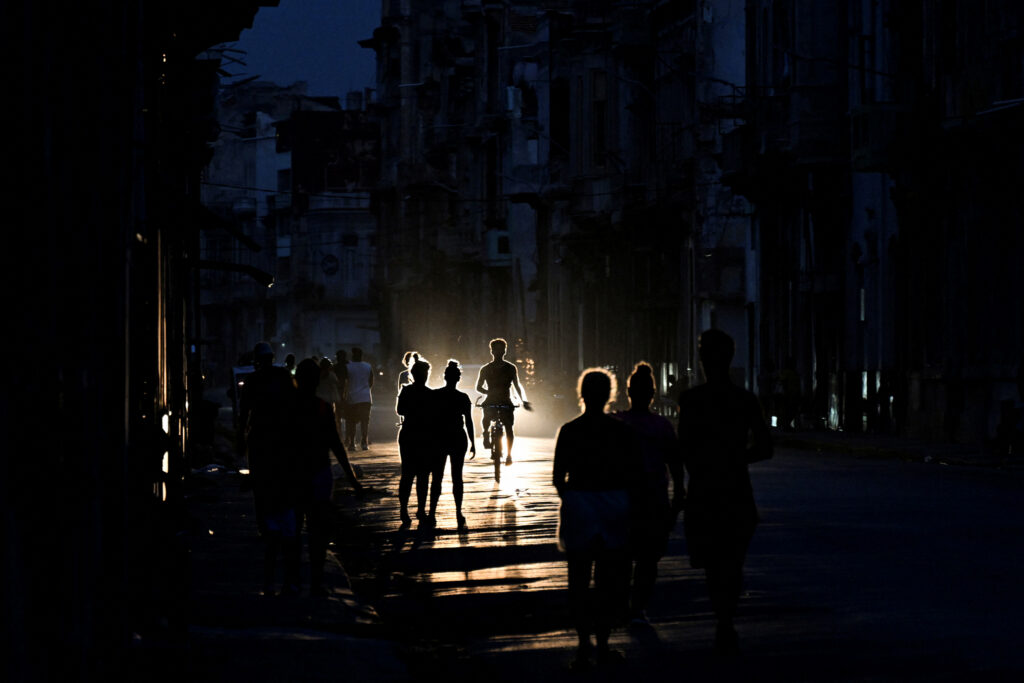
Add to this the Cuban peculiarity that the very condition of living and writing in Cuba entails a challenge in itself, not only because of the need to grapple with many of the country’s peculiarities—which range from the sometimes agonizing ways of obtaining food to the spaces in which we can express ourselves—but also because of the material conditions, such as constant power outages, under which that creative labor is carried out. Of course, writing has never been easy, as Hemingway supposedly said, but writing under exceptional conditions complicates the task further, even in an increasingly globalized world where realities tend to mirror one another. Even in Cuba.
2.
My novel The Man Who Loved Dogs (2009) is perhaps my most widely read work, with many translations and several awards. Through a plot leading to the assassination of Leon Trotsky in Mexico in 1940, I approach a larger and more transcendent process: the perversion of the great egalitarian utopia of the 20th century as manifested in socialist societies. I have said of that book and its conceptual aims that had it been written by a Spanish, Mexican, or Argentine author, it might have possessed greater literary quality but would have been resolutely different, for it would have lacked a basic and unique experience: that of life in a society of real socialism loaded with systemic singularities.
One of these, which directly affects the writer’s work, is the cultural policy specific to countries under socialist regimes. Fidel Castro’s revolution, which had triumphed in 1959, declared Cuba’s socialist character in 1961. That year, during a meeting with Cuban artists, the revolutionary leader delivered his speech “Words to Intellectuals.” It defined the country’s cultural policy with a slogan of the utmost clarity: “Within the Revolution everything, against the Revolution nothing.” These words have shaped the nation’s artistic creation from then until now.
How does one write under the political constraints that permeate the aesthetic realm? What are the limits of what is politically acceptable, and at what point does it cross into the unacceptable and become subject to censorship? Would a publishing house in a country where all publishing houses are state-owned publish a text that criticizes the government’s policies? This particular creative condition, which places certain vague yet concrete limits on the artist’s freedom of expression, is the point from which one may or may not reflect on the peculiar. It is also already in itself a question that is distinctive and tremendously difficult to grasp for people in other social spheres, who do not face it in their creative work. Cuban realities, deeply permeated by politics, could tempt the writer to be more explicit in his messages—to state rather than suggest, to explain rather than dramatize.
It can be difficult for someone who does not live under these creative conditions to grasp the way in which artistic processes in Cuba have developed over the course of six decades. Fear leads to the stifling practice of self-censorship, which is pervasive. For one’s work to be published, disseminated, and recognized socially and artistically, one must operate through cultural institutions and media outlets that belong to the very same single-party state that established that cultural policy and continues to implement it. Is it possible to fully comprehend the depth of the existential and creative conflict inherent in this social, political, economic, and intellectual situation outside of our local context?
3.
To understand how such singularities play out in the country’s dramatic reality today, one must attempt to decode the reasons why Cuban society has come to suffer an economic and social crisis that now reaches a level we might once have deemed insurmountable. A series of local and external factors has been eroding the country’s social and economic landscape year after year. To represent this situation in literary form, I have used the image of a tunnel. When the country entered into crisis three decades ago, it felt as though we were traveling through a tunnel at the end of which there might be a light. But for some years, that light, which sometimes flickered, has gone out, and right now we can’t even see the walls of the tunnel. We are not blind, but we are experiencing the inscrutable darkness of the blind.
Recalling that I am neither an economist nor a sociologist but merely a citizen who lives, observes, and attempts to write about the behaviors around him, I can conclude that two factors, combined, have been the main causes of the current economic precariousness and social despair in Cuba. On the one hand, there is the productive inefficiency of its socialist, centralized economic system; on the other, the US trade and financial embargo—in place for over sixty years, hardened under the Trump administration—has tightened to suffocating levels.
There is little new to say about the embargo or the blockade. Such measures have been in effect since 1962, and their impact—which also intensified during the most critical moments of the 1990s—has been lessened by only occasional relief, such as that provided by the Obama administration. But Trump’s first term nipped that reprieve in the bud and returned US-Cuba relations to levels typical of the Cold War era. From rhetoric to diplomacy, everything entered a state of confrontation. Washington’s decision to place the island on the US list of countries that do not sufficiently combat terrorism proved particularly painful, with severe consequences for the country’s finances. And now, since his return to the White House in 2025, Trump has added fuel to the fire, and his oil embargo has injected further drama into Cuba’s already precarious social and economic situation, pushing the country toward a full-blown humanitarian crisis.
4.
There is much more to be said about the socialist economic model that the Cuban government has chosen to maintain, but it’s worth starting with a fact we have experienced firsthand: its inefficiency and low productivity.
The crisis that began in the 1990s, the so-called “special period in times of peace,” was triggered by the end of Soviet subsidies and then affected every sector of society. Those were years of unspeakable hardship that spread across the board, affecting all (or nearly all) members of society while leaving the homogeneous social fabric characteristic of socialist systems more or less intact—a factor that set the Cuban crisis apart.
At that time, the state adopted certain measures to help alleviate the situation. Among them were its commitment to developing the tourism industry and its decision to allow Cuban citizens to engage in some economic activities privately. But it was not until 2008, when General Raúl Castro took the reins of the country after his brother Fidel’s illness, that a whole series of policies was introduced to “update the Cuban economic model” and restructure the economy by eliminating subsidies and “undue handouts.”
Several of these changes had visible effects on society. Among them, I would underscore the previously forbidden and highly significant possibility for Cuban citizens to obtain a passport and travel wherever they were welcomed, as well as the country’s digital opening up (until the end of the first decade of the century, Cubans could not get a cell phone line). While the world had advanced along the twenty-first century’s technological path, Cubans came to it late and ill-prepared to embrace its practices and benefits; in certain respects, they remained anchored in the previous century.
During that period, a more pragmatic view of how the economy functioned was introduced, but few radical transformations actually took place. A policy advocating change “without haste but without pause” resulted in no haste and long pauses—partly because of the government’s perception that major economic transformations could lead to political upheaval. And yet something significant was taking place: The socialist state was no longer capable of maintaining a framework of equality in its protective functions and began to turn a blind eye to many of its citizens’ needs, a rent in that previously homogeneous social fabric. Cubans now had to fend for themselves just as other peoples do in many parts of the world. Cuba, the peculiar, was becoming a little less so.
It did retain some of its particularities, though. Even as the country’s socioeconomic landscape was shifting, the political one did not. The control mechanisms characteristic of socialist states continued to exert their influence. And they, in turn, continued to influence artistic creation—and in many ways even determine it (do not forget fear).
5.
The so-called “thaw” of the Obama years sparked multiple reactions in Cuban society, most importantly the feeling that things could improve. Cubans were regaining hope. There was light at the end of the tunnel.
What would have happened if that new relationship with the US had lasted a few years longer? Would Cuba have changed and today be just another Latin American country plagued by fairly common problems? We, Cubans, have asked ourselves these and many other questions thousands of times. And our leaders have asked themselves the same questions as well. Considering the possibility of uncontrolled transformation, Fidel himself, after his retirement, expressed outrage at the speech Obama delivered in Havana during his 2016 visit to the island—in which he promised friendship, extolled democratic struggles and said Cubans should be able to speak freely—calling it, more or less, imperialist. His reaction was echoed by various unofficial voices.
Nonetheless, the door was ajar. Trump would take care to close it as soon as he entered the White House.
Perhaps 2017 marks the beginning of the poly-crisis that would soon shake Cuba and that continues to this day, with no end in sight. The measures taken by the Trump administration to tighten the US embargo and strangle the island had a direct effect on people’s incomes and provoked crushing shortages of food and medication. And then, in the midst of that already critical situation, the Covid pandemic struck in early 2020, bringing about predictable economic consequences, including border closures that deprived Cuba of revenues from the tourism industry, its main source of hard currency.
Once the pandemic was overcome and with the arrival of Joe Biden in the White House, it was thought that Cuba’s relations with its northern neighbor might improve, but little really changed. The most notable shift was the relaxation and expansion of mechanisms allowing Cubans to enter US territory. And the result was, in effect, a migration crisis: Over four years, more than 1.2 million Cubans—one-tenth of the population—left the country. The flow has not ceased.
This recent diaspora, which added to a slower, older, ongoing migratory wave, can be interpreted as a country’s response to a critical situation for which there are only individual solutions to a lack of collective prospects. But it comes with an asterisk: Many Cubans who could leave left, one way or another, but not everyone who wanted to leave could, and the difference usually came down to economic reasons. To migrate via the so-called “coyote route” through Central America and Mexico, one had to pay around ten thousand dollars per person. And to qualify for a parole visa program, it was necessary to have a well-established sponsor in the US who would back the application.
But perhaps what most distinguishes this wave of migration (another dose of peculiarity) is the caliber of the migrants. Unlike people who leave countries such as Honduras, Guatemala, and Mexico—who, for the most part, are among the poorest in their respective societies—Cuban travelers tend to have a high level of education, financial or family resources that allow or facilitate their journeys, and a clear purpose: to leave, settle down elsewhere, progress, and never return, since as soon as they leave, they lose their property and civil rights. As I wrote in my novel Como polvo en el viento (2020), these emigrants are notably educated, driven away by economic pressure but with political motivations that will permeate their perspectives and discourse. Their departure, moreover, has depleted Cuba’s professional workforce, and, given their young age overall, it will have a demographic impact on an increasingly aging society.
6.
Things were not improving on the island. On the contrary.
At the start of 2021, the exchange rates and the parallel legal tender currencies in circulation were unified (another headache to understand). This was a financially necessary measure, but given the country’s economic weakness, it caused predictable effects: the devaluation of the national currency, rampant inflation, a dizzying rise in the price of goods and services, and, of course, the impoverishment of large segments of the population, especially those who were earning insufficient state salaries or pensions.
The long power outages—caused by the obsolete state of the thermal power plants and the lack of fuel—the rising cost of living, and the shortage of supplies of all kinds created an overwhelming situation. In July 2021, a social explosion occurred in several cities, a rather unusual reaction in a country with strong mechanisms of surveillance and control. Some citizens took to the streets. And the government’s response was forceful: It issued to the security forces an “order to fight.” Perhaps even more drastic was the judicial response; many protesters, accused of crimes such as sedition, were sentenced to prison terms exceeding ten years. In addition to punishment, the Cuban government was issuing a warning to people in the future (those now in the present) who might wish to express dissent publicly. This helps explain why today, though conditions are even more difficult than those of 2021, there have not been as many street protests as some people on the other side of the Florida Straits might have expected—protests that perhaps could justify a so-called humanitarian intervention by the US. Such is the way things work in Cuba, and this is not easy to understand without knowing the specific context.
With Trump’s return to the White House in 2025 came the maximum-pressure policy on Cuba, which included reinstating the country on the US’s list of state sponsors of terrorism. In late January of this year—less than a month after Nicolás Maduro’s capture—Trump issued a decree imposing an energy blockade on Cuba by threatening tariffs on any country that sold it oil. Trump has repeatedly threatened to escalate to military action. The country has been subjected to levels of suffocation that could foster chaos. Then Trump would perhaps have “the honor of taking Cuba,” as he has put it.
The current situation has prompted the Cuban government to take significant measures, some of which had been delayed for years, such as inviting foreign investment in a wide range of economic sectors, including from Cubans living abroad, even in the US. Amid this extremely complicated landscape, it is said that Washington and Havana have established a dialogue.
But it is difficult for me to imagine any such conversations between two adversaries who start from such diametrically opposed and firmly held positions. The Cuban government agrees to talks that won’t compromise the country’s sovereignty or the nature of its political system; US Secretary of State Marco Rubio—who treats the Cuban issue as a personal and, of course, electoral matter—is demanding radical economic transformations and, naturally, changes to the political system, claiming that Cuba poses “an unusual threat to US national security.” Yet it does seem that something is being discussed. Perhaps they are looking for a figure like Venezuela’s Delcy Rodríguez?
7.
Many of the peculiarities of Cuban life that I have had to grapple with as a writer persist. That is why one of the characters in my most recent novel, Morir en la arena (2025), declares that we are living in a dystopia, where almost everything operates according to disjointed logics. At the same time, some of Cuba’s unique aspects have gradually faded away. The country has begun to transform slowly: Social egalitarianism is dwindling, poverty levels are rising to match those of other countries, people are fleeing precariousness and a lack of prospects, social media has become influential, and citizens live amid growing uncertainty about the future—an uncertainty that is also is global. And yet even amid exogenous pressures that profoundly affect a country in the crosshairs of the world’s most powerful economic and military force, Cuba’s political structure remains unchanged.
What is going to happen in a Cuba so unruly, different, peculiar? A wide range of scenarios are on the table. As I have said on other occasions, they range from changing everything so that nothing changes (the political strategy of The Leopard) to devastating US military action, which could attempt to mimic what happened in Venezuela or wind up resembling what is happening with Iran.
Predicting that future is more than just a complicated exercise, like grappling literarily with Cuba’s old and new peculiarities; it is impossible. But I am convinced that Cuba must change. Not because the country is under pressure from abroad or because we are now on the brink of economic suffocation, but because Cubans need it and deserve it. Cuba must change so that the country does not continue to lose its young people to the rest of the world, so that its elderly do not live in poverty today—in a present that years ago had been held out to them as a better future. And the time will come to write about those possible Cuban realities, perhaps no longer so peculiar… or are they? Tomorrow will tell.
Havana, May 9, 2026