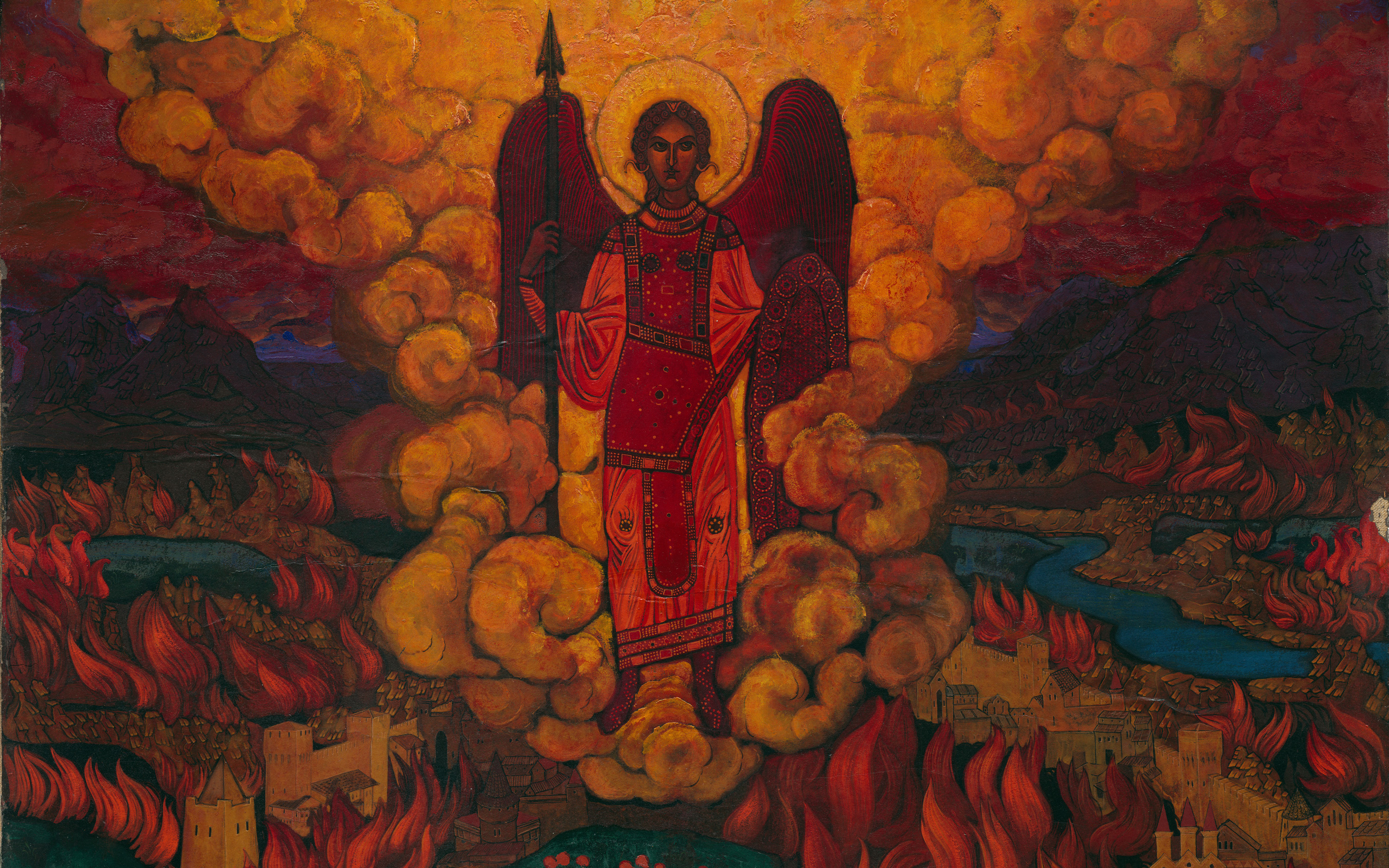
Are there two more wildly different personages than Alexander Dugin and Timothy Snyder? The former is a rightwing obscurantist, profoundly suspicious of modernity; the latter the ultimate darling of embattled Western liberals. But Marlène Laruelle, a gifted comparative political scientist, discovers some surprising continuities between these two. Now based at LUISS in Rome, Laruelle is an important voice in understanding the current Russian condition, the postliberal phenomenon, and much else. She not only pulls off this comparison with cool, analytical logic, but she does so without any normative backsliding.
Next, we welcome an original diagnosis of the US economy’s many post-2008 ailments. Esteemed sociologist Dylan Riley has been meditating on the concept of political capitalism for some time now, and we are pleased to feature his distinctive account of it. Not only does he complicate the mainstream view of capitalism and democracy, he asks for no less than a reimagination of the political economy itself.
Pablo Stefanoni then examines the end of an era in Bolivian politics. Evo Morales’s Movement for Socialism (MAS) has dominated the country for nearly two decades, but after Rodrigo Paz Pereira’s election last autumn, the MAS didn’t just lose power—it collapsed as a political force entirely. Stefanoni takes stock of the last twenty years in Bolivia, a story with multiple meanings and contradictions.
Hans Kundnani’s preferred intellectual position is aslant the conventional wisdom, one of the many reasons he shows up in our pages. For this issue, Kundnani takes his scalpel to the often misconceived concept of populism and discovers that misconceptions about it obscured how the notion helped mainstream the far right in Europe.
We have two curated pieces on offer: first, from the pen of João Caetano Leite, is a celebration of the esteemed former president of Brazil Fernando Henrique Cardoso’s 95 years. Leite attempts to rediscover the brilliant and consequential interventions of Cardoso’s earlier period (between 1962 and ’79) before the “FHC” political brand overshadowed it.
In our other curated essay, Joe Kobuthi argues that Kenya’s colonial state was imbued with its own unique theology, in which the state stood in for God. But the post-election violence in 2007 and 2008 created a theological disruption that shaped a generation of leaders. Today, young Kenyans may be through with old liturgies. Rich and complicated food for thought.
Our musical selection—a nocturne of Chopin—will likely be familiar, but have you heard it performed by Maurizio Pollini? Pollini is no nominalist; he strives for essences and plays with signature intellectual clarity. His nearest analog might be that architect of sublimity, Louis Kahn.
—Leonard Benardo, vice president at the Open Society Foundations
In the Comfort of Apocalypse

Marlène Laruelle
The Ideas Letter
Essay
Laruelle finds an unlikely intellectual symmetry between historian Timothy Snyder and Russian philosopher Alexander Dugin: despite their opposing politics, both rely on totalizing, apocalyptic frameworks that divide the world into moral absolutes and turn Russia into an almost timeless civilizational force. These frameworks, she argues, substitute crises of belief for the harder work of explaining the institutional, economic, and historical forces behind political breakdown. Most consequentially, they allow each side to locate the source of its crisis in an external enemy rather than confront the failures of its own political order.
“But the more uncomfortable point concerns what these binaries allow each side not to see. Liberalism as a political order did not arrive at its current crisis because Putin discovered Ilyin, or because Dugin’s obscure cosmology seeped, however indirectly, into the Kremlin’s foreign policy. It arrived there through decades of its own choices: financialization that hollowed out the wage structures of the societies that liberalism promised to lift; a triumphalism after 1989 so complete that it stopped treating democracy as something that needs permanent care and improvement; a foreign policy record that has made the US the manager of a global order, which many outside the West have seen less as liberal universalism than as coercion and market discipline; a widening gap between what liberal elites say democracy delivers and what a large share of their own populations actually experience, etc.”
The Thesis of Political Capitalism
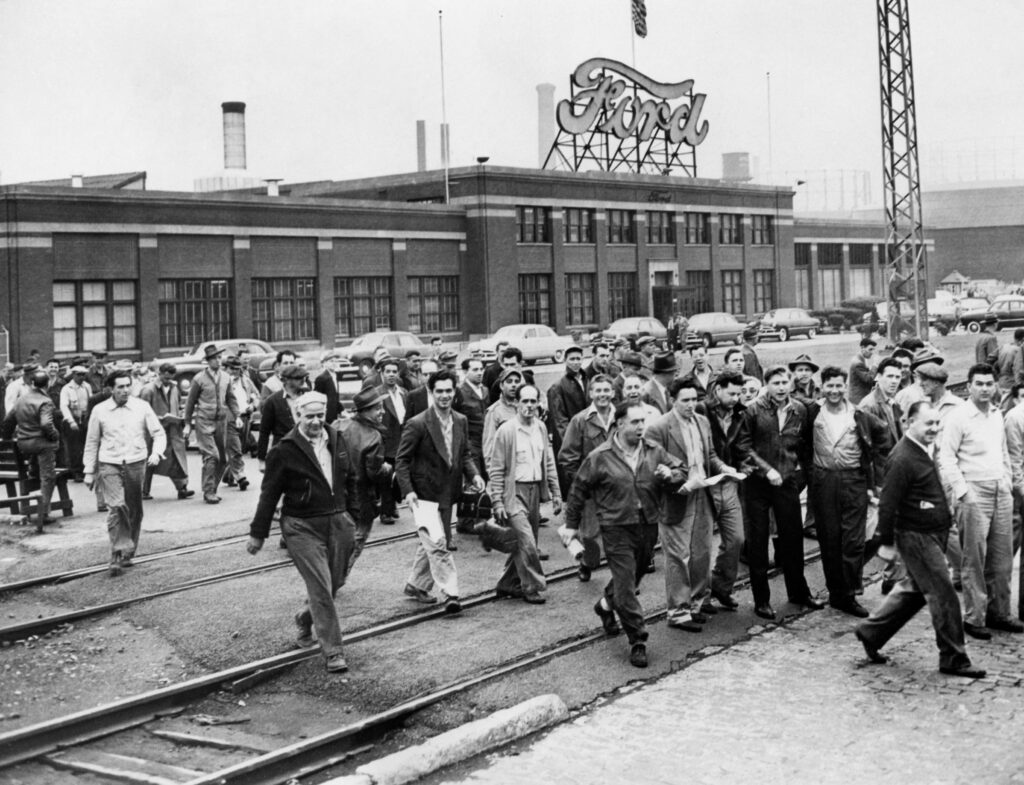
Dylan Riley
The Ideas Letter
Essay
The defining feature of our era is, for Riley, the rise of “political capitalism,” in which profits increasingly depend on political power to inflate asset values rather than on productivity-enhancing investment. Since the 1980s, this shift has produced low growth and extreme inequality while fracturing wage earners between a relatively privileged credentialed class drawn toward the center-left and a non-credentialed working class increasingly attracted to the right. The result is not simply a new pattern of inequality but a political economy that is eroding the material foundations on which capitalism and democracy once coexisted.
“The political upshot of this analysis is grim. Capitalism has been compatible with democracy to the degree that a relative separation emerged between the economy and the state. If the fundamental material interests of capitalists could be guaranteed, they could tolerate a range of political outcomes. Furthermore, to the extent that capitalism was a dynamic growth-oriented system, it created a working class with an interest in expanding rights and a capacity to push for them. This led to a system in which elections had consequences.”
The Irresistible Rise and Fall of Evo Morales

Pablo Stefanoni
The Ideas Letter
Essay
Stefanoni looks back at the extraordinary rise and dramatic collapse of Evo Morales and Bolivia’s Movement for Socialism (MAS), which brought indigenous and popular sectors to the center of political life and reshaped the country after decades of neoliberal rule. Yet the project that once seemed to inaugurate a new political era ultimately failed to consolidate itself, leaving the MAS shattered, Morales isolated, and the right in power. Stefanoni asks how a movement that transformed Bolivian society so profoundly was also unable to represent the society that emerged from that transformation.
“This has happened, in part, because of the difficulty of the “process of change” to adapt to changes of the past two decades, especially social mobility. Today there are more students of indigenous origin at private universities, some coming from the countryside, while grassroots entrepreneurship has blossomed alongside economic growth. But today’s young people are more connected and globalized in their habits of consumption (including the specialty coffee shops that have taken over Bolivian cities) and their ideas (libertarianism is popular among some students). The discourses that mobilized enormous popular energy two decades ago now seem outdated. And Morales has done nothing to catch up.”
Obfuscations of Populism
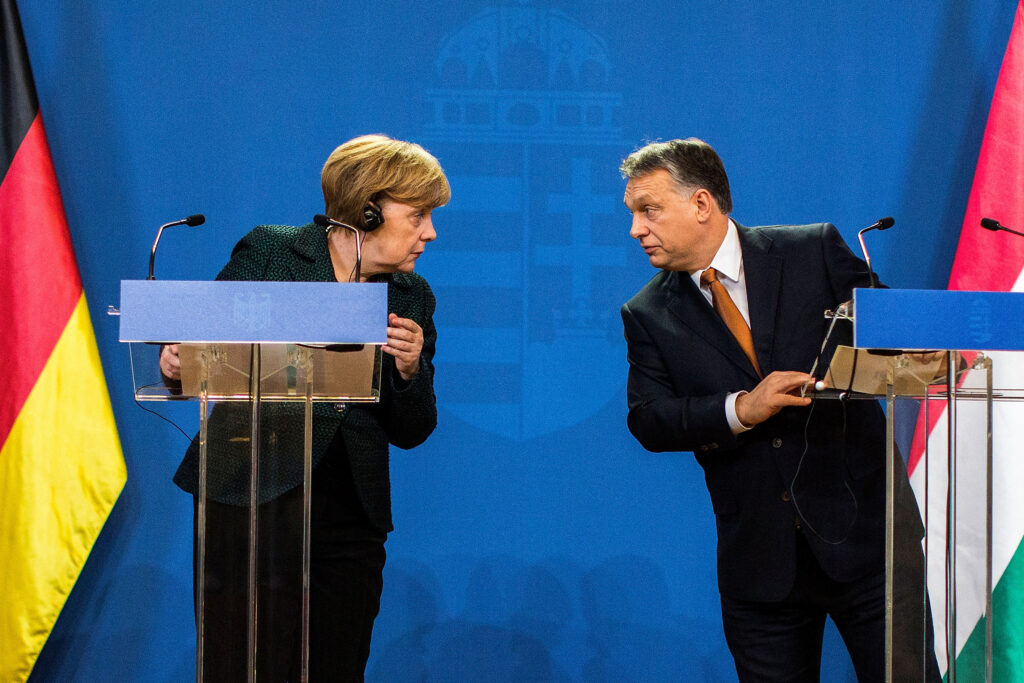
Hans Kundnani
The Ideas Letter
Essay
The language of “populism” has distorted our understanding of Europe’s far right, shifting attention from its substantive politics to its political style and casting the central conflict as one between liberal centrism and illiberal extremism, according to Kundnani. This framing allowed center-right parties to adopt increasingly hard-line positions, particularly on immigration, while continuing to present themselves as fundamentally opposed to the far right—a convergence exemplified by the evolution from Viktor Orbán’s confrontational approach to Giorgia Meloni’s accommodation with the European mainstream. The result is a paradox: as far-right ideas have moved closer to the political center, our vocabulary for identifying them has become narrower.
“… Many people have now come to believe that we can only call parties far right if they are clearly anti-democratic – that is, if they are extreme right. In other words, it is as if the category of the radical right has disappeared altogether – and the only parties that many now seem to think we can call far right are extreme-right parties. Radical-right parties, meanwhile, have been rebranded as “national conservative” – a term of their own choosing which many centrists have now embraced. Thus what began at the start of the populist decade as a strategy by the centre right to borrow from the rhetoric and policies of radical-right parties while differentiating themselves from the parties themselves has now produced a normalization of those parties.”
Fernando Henrique Cardoso, 95.
João Caetano Leite
Lost Letters from the Tropics
Essay
Former Brazilian President Fernando Henrique Cardoso’s political career has largely obscured his intellectual trajectory from a young Marxist who gradually drew Weber into his thinking, developing an account of political domination under dependent capitalism. Leite argues that his concepts of the burguesia de Estado, anéis burocráticos, and the regime burocrático-autoritário anticipated much of what Anglophone political science would later describe as state capture, bureaucratic insulation, and historical institutionalism. The Brazilian Center of Analysis and Planning (CEBRAP), which Cardoso helped found after the dictatorship ousted him from his university post, became the institutional home for much of this work.
A relevant contemporary takeaway “is the methodological move that made the framework possible: the disentangling of state from regime, of accumulation pattern from political form. This is the move that allowed Cardoso to argue against the orthodox Marxists that democracy was possible within dependent capitalism. It is the move that, in the contemporary political science of historical institutionalism, is the conceptual basis for almost every interesting comparative argument about why similar economic structures produce different political outcomes.”
Kenya’s Theological Rupture and the Birth of the New Native
Joe Kobuthi
The Elephant
Essay
Kobuthi argues that Kenya’s colonial state was built on a theological imagination that sanctified hierarchy and state violence, leaving citizens to understand political authority through fear, ethnic identity, and powerful leaders. The state’s failure during the 2007–08 post-election violence shattered that authority, but Kenyan politics remained organized around powerful political archetypes, culminating in William Ruto’s self-presentation as the insurgent “warrior” who would overturn the country’s dynastic order. The youth-led protests against Ruto’s government in 2024, Kobuthi argues, represented a more profound rupture: a “fearless, leaderless, tribeless” generation rejecting the inherited political theology of the colonial state altogether.
“The younger generations’ rejection of these liturgical conditions did not merely end the Nietzschean crisis of value deepened by the 2007–08 post-election violence; it thrust open the very foundations of the colonial state and created a theological possibility. This possibility is perhaps best articulated by Kenya’s towering historian, the late Bethwel Ogot: before the colonial construction called Kenya Colony existed, there were people. We had not been invented; we were. And because we were, we the people shall. A renewed self-respect and self-dependence have emerged, turning Zurara’s logic on its head”