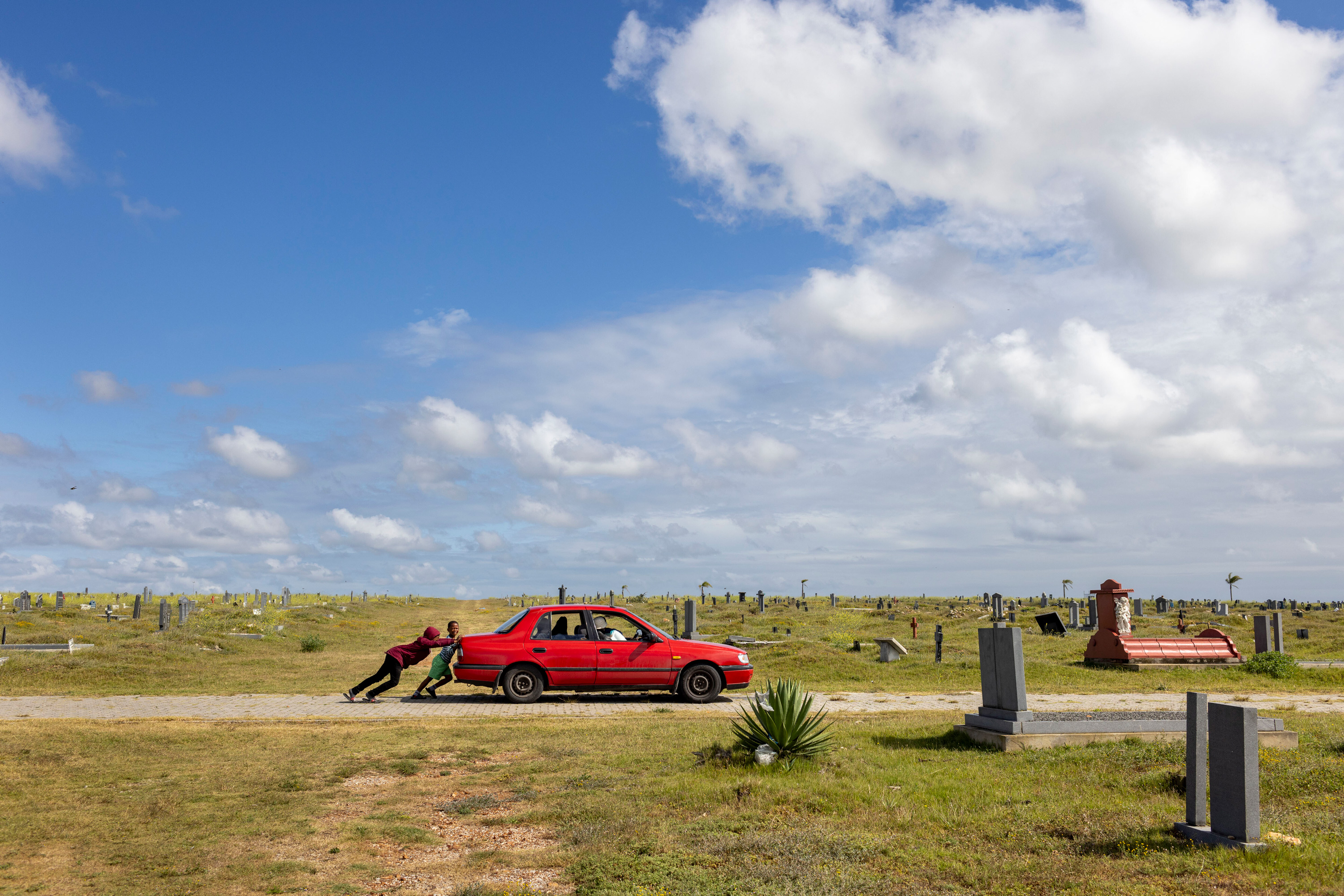
Thirty years ago, South Africa was heralded as a harbinger of a just and non-racial order. After decades of a criminal, repellent regime, Nelson Mandela’s ascension to the presidency and the restorative work of the Truth and Reconciliation Commission, designed to heal the country and provide national unity, gave the country—and the world—abundant hope. Three decades on, that hope has been dashed. A miniscule percentage of the Black majority are landowners or control any of the means of production. Inequality is rampant and accelerating. Nearly half of the working-age population can be considered unemployed. And, as in so many other societies, the central scapegoats are immigrants—in this case, Africans from elsewhere on the continent. What happened? Is this political moment an anomalous outbreak of xenophobia or evidence of a durable new mass politics centered on exclusion and deportation?
I was recently in South Africa and spent time with a few of the writers for this special issue. William Shoki, the editor of Africa Is a Country, one of the wisest magazines focused on the continent, pens our lead essay, a tour de force tour d’horizon about what he calls the “post-post-apartheid” era. For Shoki, South Africa has entered a new political moment in which the Pan-African promises associated with the democratic transition no longer animate popular politics. His conclusion is bleak. Moral condemnation and anti-xenophobia campaigns will hardly alter the material and organizational conditions that produce a politics of exclusion. He’s also skeptical that any existing left-populist vehicle can redirect popular anger toward emancipatory ends.
Brian Kagoro, a colleague at the Open Society Foundations, our managing director for Africa, esteemed for his decades-long struggle for transitional justice and constitutional reform on the continent, leads the responses to Shoki. Kagoro’s central counterargument is that while the ANC’s post-1994 political settlement and liberation narrative may seem exhausted, apartheid’s underlying racial-capitalist structures remain intact. For him, recent anti-immigrant politics are evidence not that apartheid has been superseded but that its underlying logic is now being redirected toward immigrants.
Next, Panashe Chigumadzi, a journalist, novelist, and scholar, takes a broad historical lens and asks that South Africa not be understood as a nation with unique pathologies, where racial violence began with apartheid and ended in 1994. Rather, she presents the country as a limit case of the modern global order, where the forces of racial capitalism, land dispossession, and anti-Blackness that operate globally are unusually visible.
Another response comes from Nic Dawes, a former editor-in-chief of the South African Mail & Guardian. He suggests that today’s anti-immigrant politics are linked to both structural desperation and political conflict—and agrees that the moment is grave. But he argues that it signals less a clean break than a convergence between endemic corruption, flawed institutions, and unresolved social conflicts.
Turning to visual culture, the South African literary scholar Hedley Twidle interviews Sean O’Toole about his recent Photo book! Photo-book! Photobook! (2026), which traces the history of 45 works published in South Africa between 1948 and 2024. O’Toole’s research grew out of his writing a weekly photography column for Sunday Times, when he amassed a vast personal library of photobooks. During COVID, he was in residency at Cape Town’s A4 Arts Foundation, where an exhibition of his would later be installed, before moving on to Kyoto and then morphing into this book.
Our musical selection is being guest-curated by Sean Jacobs, the founder and former editor of Africa Is a Country. Jacobs is also a music maven and recently wrote a crackerjack essay on the South African pianist Abdullah Ibrahim for The New York Review of Books. Many of us are hoping to see Sean turn this essay turn into a full-fledged book on Ibrahim’s life.
Sean writes: The American pocket trumpet player Don Cherry, who recorded two albums with Dollar Brand (before he was known as Abdullah Ibrahim), once said that Ibrahim’s compositions “have a feeling that they’re the same type of songs they built the pyramids with … He can make you really aware of this timelessness.” One tune he especially loved was “Bra Joe from Kilimanjaro,” which he said had profoundly influenced him. He and Ibrahim first played together in Copenhagen in January 1965 and later recorded on The Third World Underground (released in 1974) and then, with a larger ensemble, The Journey (1977). But Cherry remained especially taken with “Bra Joe.” The song captures Ibrahim’s distinctive contribution to jazz: His piano playing, rooted in South African Christian music and the sounds of speakeasies and dances, helped transform and broaden the center of American jazz—which may be why it resonated with Cherry so much.
—Leonard Benardo, vice president at the Open Society Foundations
Post-Post-Apartheid
William Shoki
The Ideas Letter
Essay
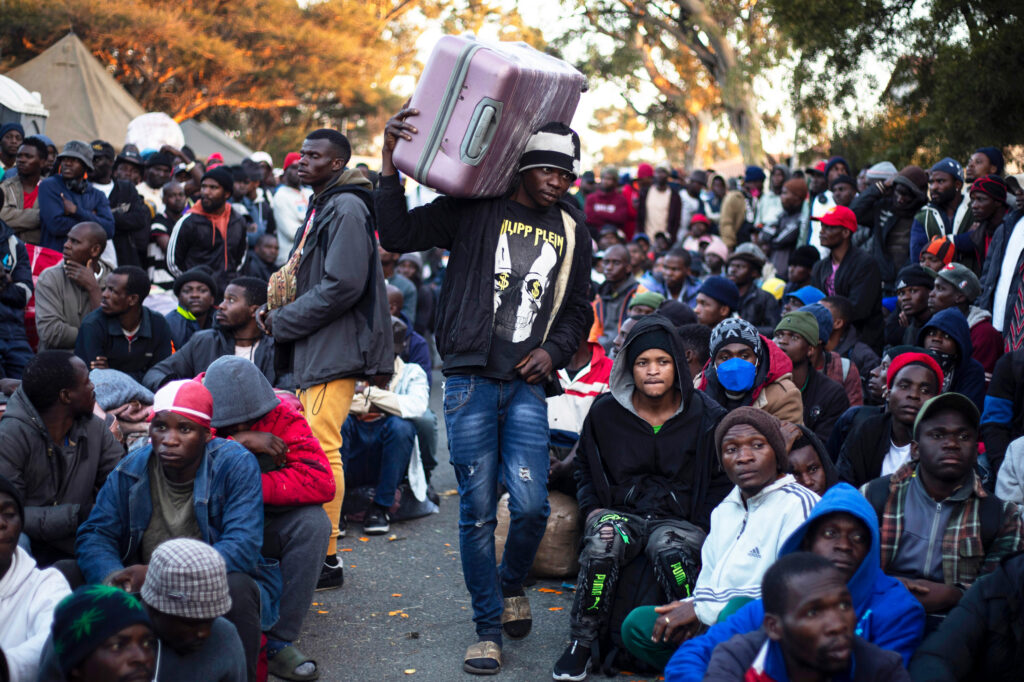
Anti-immigrant politics in South Africa has been dismissed as being manufactured, conspiratorial, or yet another eruption of the xenophobic violence the country has seen before—but, Shoki argues, these are all arguments that treat the issue as an aberration rather than as an expression of South African politics itself. He contends that it must instead be understood as an authentic and ascendant political movement, emerging from a contradiction the post-apartheid settlement never resolved: While the democratic project dismantled apartheid’s political and legal racial order, the economy continued to reproduce its inequalities and social geography. As struggles over scarce jobs and resources increasingly turn on who is entitled to them, he argues, a new racial boundary is emerging between Black South Africans and foreign Black Africans, dividing a population that the liberation struggle had sought to unite politically.
”The obvious objection is that none of this is new, in the sense that the papers, the raids, etc., all have apartheid precedents and that the hostility is older than the democratic state. But if the tools are old, the way they are being wielded is new. Apartheid’s categories were engineered for a labor-hungry capitalism. Today, the citizen/foreigner split is being drawn by a labor-shedding capitalism that is identifying and sorting the (surplus) population the economy cannot employ, so that that side absorbs the deprivation of all. None of this displaces the racial order apartheid left behind. White wealth and apartheid’s social geography continue to organize South African society. The new boundary forms within that inheritance and cuts across its central category, now dividing the population that once unified politically as Black. This is racialization in the strict sense—a different economy tooling a different race. And it has a paradoxical relation to the founding ambitions of the post-apartheid democratic project. Having set out to unmake the races that apartheid’s economy had required, its successor economy has made one, too.”
Against Post-Post-Apartheid
A Response to William Shoki

Brian Tamuka Kagoro
The Ideas Letter
Essay
Kagoro disputes Shoki’s characterization that a “post-post-apartheid” era has dawned in South Africa, challenging the idea that the emergence of a new political language means the country has entered a fundamentally new political order. The ANC’s liberation narrative has exhausted itself, Kagoro argues, precisely because the democratic arrangement of 1994 failed to deliver the material transformation it promised: Apartheid’s racialized economic order remains largely intact, even as the poverty and exclusion it produces have become normalized. Seen this way, the turn against African immigrants reflects not the disappearance of apartheid as a meaningful framework but the redirection toward a new target of wrongs produced by an economic order that the democratic transition never dismantled.
“Apartheid’s legacy remains structurally determinant in South Africa. The racial hierarchy of income, employment, land, and space persists. The legal and administrative instruments of apartheid-era exclusion have been preserved and reconfigured. Afrophobia, at bottom, is apartheid’s racial logic finding a new outlet for a grievance the settlement never actually resolved.”
Hinge of the Modern World
A Response to William Shoki

Panashe Chigumadzi
The Ideas Letter
Essay
Chigumadzi agrees with Shoki that South Africa’s anti-immigrant politics channels material deprivation toward other, foreign, Black Africans, who are blamed for a crisis they did not create, but she argues that the roots of the issue extend beyond the failures of the post-apartheid arrangement. South Africa, she writes, is a particularly visible expression of a global racial-capitalist order built on Black dispossession, in which capital can move freely while Black labor and sovereignty remain constrained. The political settlement of 1994 changed who in South Africa could vote without fundamentally changing how land, property, or economic power were shared. Adopting the wider lens she proposes to examine the problem means thinking differently about what proper reallocation would require: Neither economic growth nor redistribution conceived solely at the national level can undo a structure that is also maintained by the international order itself.
”What South Africa is cannot be separated from who it is for, because the structure was built by making the persons: the white citizen and the Black laborer, the belonger and the prohibited, invented together in a single Act of Union. And this opens not the question of who belongs and who must be expelled, but the question of whether the nation, in its particular, recent, ravenous form, is the only house we were ever going to be permitted to build. This is why South Africa is the miniature and not the exception. The burning at the barricade is not a South African disease; it is global Afrophobia made legible at readable scale, shown here in a single frame because South Africa, alone among modern states, wrote it down.”
Not Yet Tomorrow
A Response to William Shoki
Nic Dawes
The Ideas Letter
Essay
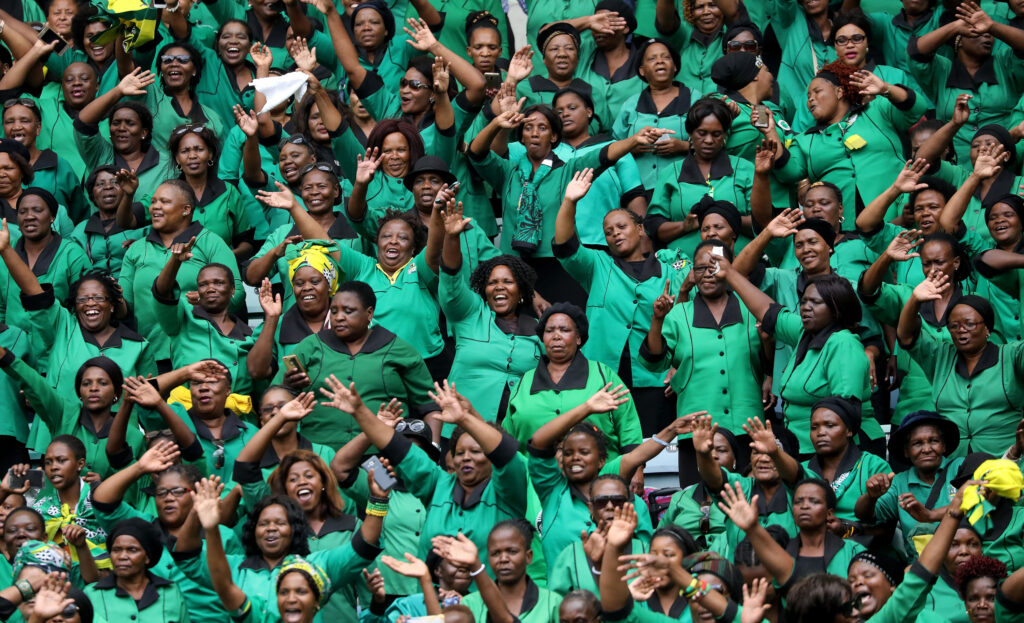
Dawes shares Shoki’s view that economic hardship has created fertile ground for an anti-immigrant politics in South Africa, yet he questions Shoki’s account of how the country got there. Rather than locating its economic deterioration and patronage primarily in the compromises of the post-apartheid settlement, Dawes emphasizes the contingent choices of ANC leaders, tracing how corruption and elite competition undermined economic policy, industrial development, and state institutions. Recovering that history, he argues, is necessary to understanding both the grievances that fuel today’s anti-immigrant politics and the political networks that seek to harness them.
“So primary is the trauma associated with the adoption of macro-economic orthodoxy and the ‘1996 Class Project’ of market-oriented reforms that it functions as a kind of ur-text for the South African left. Nothing has happened since that is not explained by the ANC’s supposed abandonment of its Reconstruction and Development Program and the adoption of an allegedly neoliberal framework in its place. And yet other enormously consequential things were happening that shaped the current conjunction.”
The Medium as a Site of Struggle
An Interview with Sean O’Toole
Hedley Twidle
The Ideas Letter
Essay
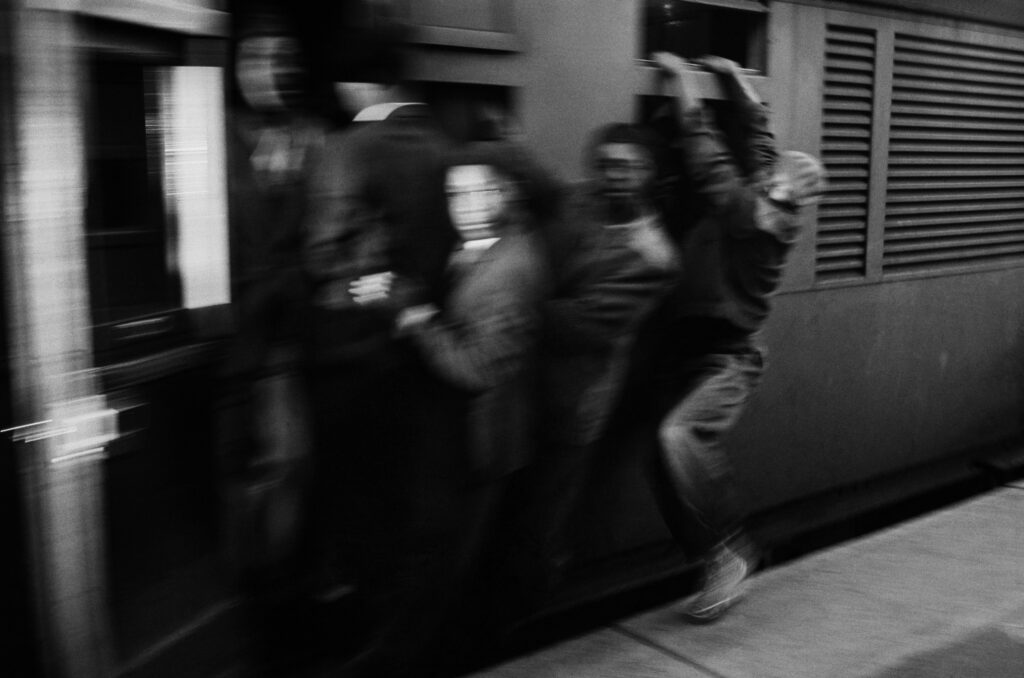
Sean O’Toole’s Photo book! Photo-book! Photobook! traces the history of the South African photobook from apartheid to the present, showing how the form has encompassed everything from politics to more intimate explorations of identity, memory, and everyday life. In conversation with Twidle, O’Toole reflects on how photographers moved beyond the iconic images associated with South Africa’s powerful photojournalistic tradition to produce more complex ways of looking at the country. That shift coincided with a transformation in the institutions that supported photography, as the decline of print journalism pushed documentary photographers toward galleries and the art world.
“My point is that, in that moment, there was a clash of traditions: a very strong journalistic photo-documentary tradition, negotiating the torsions introduced by the increasingly moneyed art world. At the back of all of this was the collapse of print media. Traditionally, a photojournalist like Schadeberg, when he left South Africa in the 1960s, could make his money publishing in the weekend newspaper supplements in London. But by the early 2000s, that system was in decline. The gallery—and to a lesser extent, the academy—became the new patron. It was noticeable how photographers working in the documentary tradition were moving into the art world.”