Of Bolsheviks and Jews
Another History of the Holocaust
Few Western countries have been spared controversy about antisemitism in recent years. Well before October 7, 2023, debates about Israel, Jews, and race had periodically convulsed universities, politics, and entertainment. Recall ABC’s decision to suspend the actor Whoopi Goldberg in February 2022 for remarks about race, antisemitism, and the Holocaust on “The View.” Or, as of 2017, the conflict about whether Zionist women’s groups should be welcomed at progressive feminist events in the US. Such exclusions led the British writer David Baddiel to argue in 2021, in Jews Don’t Count, that leftist circles were marginalizing Jews and ignoring antisemitism. By that time, the Palestinian academic Steven Salaita had lost a tenured position for criticizing Israel’s bombing of Gaza in 2014. Since then, the crackdown on “postcolonialism” has gathered steam in Germany.
At issue then, as now, is whether Zionism is an elemental part of Jewish identity and whether it should be protected by anti-discrimination laws. If so, a state’s coercive apparatus can be wielded against those who defend the Palestinians’ right to self-determination or denounce the Israeli armed forces’ destruction of Gaza. Describing Israel’s campaign against Palestinians as a genocide, some argue, is tantamount to “blood libel” and an implicit call for violence against Jews, like the attack during a Hanukkah gathering on Bondi Beach in Sydney, Australia, in early 2026. Competing definitions of antisemitism—ranging from those proposed in the Jerusalem Declaration of 2021 to the International Holocaust Remembrance Alliance to outright anti-Zionist positions—differ on these points. The debate appears as intractable as it is anguished, since it goes to the heart of collective identity and raises existential questions for both Jews and Palestinians.
Many analysts well understand the outlines of this debate. Fewer have remarked on whether, or rather how, rationality and agency drive violence. What is to blame for attacks on Jews and the ostracization of students with Zionist commitments? Is it their identity or their political choices? I observe many Jewish commentators arguing that Jews are attacked solely for being Jewish—for who they are—and not for anything they have done or for their political convictions. Irrational antisemitism—the “longest hatred,” to quote the historian Robert S. Wistrich—is responsible for hostility toward Jews, the argument goes, and anyone who cannot understand that Zionism is elemental to Jewish identity is hostile to Jews as Jews.
The rival reading is that Zionism is a modern political ideology in which both Jews and non-Jews can believe. Anti-Zionists oppose only this project and are not hostile to Jews qua Jews; therefore, they are not antisemitic. To argue otherwise would lead to the absurd claim that anti-Zionist Jews are antisemitic. If Jews, or others, are asked to defend their support for a state that is committing mass crimes, anti-Zionists also claim, the issue is about seeking political accountability rather than engaging in irrational bigotry. Judging by what I often read in the press and social media, this is not how many Jews experience such questioning.
Underlying these intractable discussions is the collective culture about memory that has taken root in the West, structured around the Holocaust and who counts as a victim. As Holocaust memory has developed, in fits and starts—since the 1960s via literature, film, and museums; in the Stockholm Declaration of 2000—it has posited that Nazi Germany’s crime was the destruction of Jews as Jews rather than for anything they had done. Anne Frank, the Jewish girl from Frankfurt who hid from the Nazis in an Amsterdam attic only to be betrayed and die at the Bergen-Belsen death camp, is what criminologists call an “exemplary victim.”
One logical conclusion of this position is that hate crimes and racism, particularly antisemitism, are the worst of all evils and that genocide is “the crime of crimes.” This view, largely shared by liberals, was once able to recruit leftist anti-racist advocates into a joint project to oppose ethno-nationalism—until the question of Israel and Zionism sundered the progressive coalition. Statements about confronting racism have been dropped in favor of the fight against antisemitism. The International Holocaust Remembrance Alliance’s working definition of antisemitism in effect characterizes pro-Palestinian advocacy itself as a form of antisemitism. And here we are today.
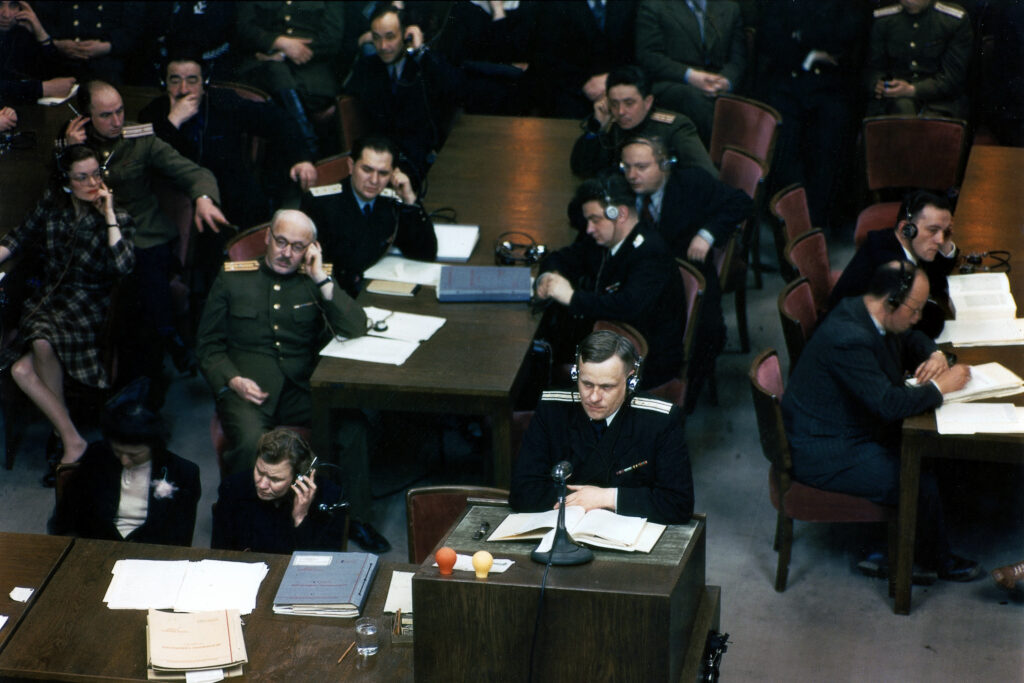
In this fraught context, the historian Jochen Hellbeck’s new book on the Nazi-Soviet war and the Holocaust, World Enemy No. 1: Nazi Germany, Soviet Russia, and the Fate of the Jews, provides a fundamental reconsideration of the culture of memory in the West and the image of the exemplary victim. Hellbeck proposes reconceiving the Holocaust, or the “Judeocide,” as he prefers to call the Nazi genocide of Jews. Instead of the antisemitic-racial hate crime of exterminating a people solely on the basis of its identity—of destroying “a national, ethnical, racial or religious group, as such,” per the definition of genocide in the Genocide Convention—the Nazis’ real evil was, above all, politically motivated. It was the paranoid destruction of a political enemy itself imagined as a genocidal danger. The Nazis’ project was to eliminate, as an act of preventive self-defense, people they perceived as future threats so as to achieve Germany’s “permanent security”—to use a phrase from Otto Ohlendorf, the leader of the death squad Einsatzgruppe D, during his trial at Nuremberg in 1947. Analytically centering antisemitism to understand the Holocaust, Hellbeck argues, “misses the fact that the deadliest forms of Nazi violence targeted a presumed political enemy.” In making this case, Hellbeck is agreeing with some recent scholarship—for example, my own and Alex J. Kay’s Empire of Destruction: A History of Nazi Mass Killing (2021)—which similarly highlights the political logics of the Nazis’ policies of extermination.
Hellbeck’s main argument is that the Nazis did not, at first, persecute, expropriate, exploit, and murder Jews for being Jews but for being Communists, Communists in the making, or potential supporters of Communists. The genocide of European Jews required not only the racialization and minoritization of Jews, but also their securitization. (The political scientist Rhiannon Neilsen calls this fatal process “toxification.”) Presenting them as an existential threat justified destroying them, and urgently. For Hellbeck, Nazi antisemitism was not a non-political eternal hatred but a politically inflected form of anti-Jewish racism. That is why he prefers to refer to the Holocaust as “Judeocide.”
Hellbeck is elaborating on a point that the Israeli historian Saul Friedländer made in his famous 2007 book The Years of Extermination: Nazi Germany and the Jews, 1939–1945: The Nazis regarded Jews “as an active threat, for all of Aryan humanity in the long run, and in the immediate future for a Reich embroiled in a world war. Thus the Jews had to be exterminated before they could harm ‘Fortress Europe’ from within or join forces with the enemy coalition they had themselves set against the Reich.” But Friedländer’s analysis stopped there, whereas Hellbeck insists that the Holocaust cannot be explained as the radicalized persecution of Jews exclusively as “racial aliens.” Rather, it was the “purported Communist ideology” of Soviet Jews that “made them additionally a formidable threat to national security.” Hellbeck argues that the Nazi invasion of the Soviet Union in mid-1941, a.k.a. Operation Barbarossa, marked a qualitative rupture in policy rather than one more stage in the incremental but inevitable unfolding of a stable ideology.
“Judeo-Bolshevism”
For Hellbeck, the “Judeocide” can only be properly understood as an expression of the Nazis’ obsession with the Soviet Union, which they claimed was led by Jews and animated by a dangerous “Judeo-Bolshevik” ideology. This belief constituted the ideological core of National Socialism, he argues, because Communism’s class universalism was inimical to the logic of racial struggle that Hitler and his supporters believed drove world history. The Holocaust, he implies, cannot be understood as analytically distinct from the war. It was made possible by anti-Communism and the Nazis’ crusade against the USSR in the form of their “General Plan for the East” (Generalplan Ost) and their striving for more “living space” (Lebensraum).
For the Nazis, the USSR was the political embodiment of the Jewish spirit; it was that spirit made flesh and force. Hellbeck argues that antisemitism could only become genocidal—or “redemptive,” to use Friedländer’s memorable formulation—after the Nazis had posited that the Soviet Union’s anti-racist internationalism posed an existential threat and had called for its destruction as a mission of world-historical significance. Eliminating the Soviet regime would also eliminate Jewish power, conflated as the two were, and would rescue humanity from the barbarism and anti-nationalist principles of “Judeo-Bolshevism.”
Not only did the Nazis see communism personified in the figure of “the Jew,” they widened that category. Their target was not just national groups of Jewish people, as many accounts of the Holocaust hold, but an amorphous enemy with the threatening attributes ascribed to communism: people the Nazis considered to be politically, sexually, or racially deviant, such as homosexuals, Sinti and Roma, the disabled, and the “work-shy.” The Nazis, then, possessed a racialized understanding of a universalistic threat to their racist regime. “We must regard Russian Bolshevism as Jewry’s attempt to achieve world rule in the twentieth century,” Hitler wrote in Mein Kampf.
To this end, the Nazis engaged in intense cultural propaganda—including the book World Bolshevism in 1936 and the enormously popular Great Anti-Bolshevik Exhibition of 1937—to convince Germans that Bolshevism represented their most dangerous enemy. After coming to power in 1933, the regime flooded Germany with warnings about an existential communist threat. The Soviet Union was murdering millions of its own people; Germans would be next; and Soviet Jews, the USSR’s most loyal demographic base, were a potential source of partisan resistance. Drawing on what historians call “ego-documents”—diaries, letters, interviews—that he had previously discovered and edited in several collections, Hellbeck quotes ordinary Germans who internalized the regime’s message: It was necessary to “save Germany from the bloody terror of unrestrained hordes” and from the “murderous Red plague.”
Hellbeck traces the Nazi imagery of Jews to white anti-Bolshevik propaganda from the Russian Civil War of 1917–22, especially the propaganda about the proto-fascist Freikorps troops who fought the Red Army in the Baltic states. That the Freikorps were an important source of both Nazi ideology and personnel is well known, but Hellbeck teases out new insights from his sources. Not only did the Freikorps regard “Soviet leaders as Jewish mass murderers” from whom Germany had to be protected; they described the Soviets as “Asiatic.” As early as 1919, they had produced posters noting the menacing presence of Chinese and Tartar troops on the other side. Even Social Democrats referred to Bolshevism as Asiatic socialism. In a book published in 1920, the Freikorps’s top general said his mission was to prevent the “downfall of the West” by confronting the “Bolshevik Weltanschauung of Asiatic bondage.” Heinrich Himmler heard him speak a year later and noted in his diary, “We must fight and settle in the East.”
Permanent Insecurity
Hellbeck isn’t the only historian to have highlighted that the Eastern Front was World War II’s most violent space. But his version of the argument takes issue with interpretations about the Nazi-Soviet confrontation that are popular, even hegemonic, in the West. In the book’s 80-plus pages of endnotes, he engages in historiographical sparring, rejecting in particular the framing of Timothy Snyder’s influential 2010 book Bloodlands: Europe Between Hitler and Stalin, whose very subtitle posits an equivalence between the two totalitarian powers. For Snyder, the smaller nations caught between Germany and Russia that were repeatedly occupied by them were World War II’s principal victims—a framework that drives Snyder’s energetic advocacy for Ukraine today.
At the same time, Hellbeck breaks through a taboo in German historiography that balks at drawing any relation between Nazism and Bolshevism. In the mid-1980s the conservative historian Ernst Nolte argued, obtusely, that Nazism possessed a “rational core” and that the Nazis were right to fear a Bolshevik threat. Nolte was suggesting that the Soviet Union was indirectly responsible for the Holocaust because it terrified the German middle class with its revolutionary ambitions and the mass killing of its class enemies. Other historians, such as Norbert Frei, have overcompensated in response, just as obtusely, denying any parallels at all between Nazism and Bolshevism. Drawing on copious evidence, Hellbeck cuts through this stale debate by observing that the Nazis consciously adopted their enemy’s ruthlessness, including its killing techniques, for example by shooting victims in the back of the neck. He also rejects Nolte’s outlandish ascription of military agency to Jews because “world Jewry” promoted the boycott of Nazi Germany.
Nor is Hellbeck the first historian to argue that the Nazis’ commitment to eradicating “Judeo-Bolshevism” and the USSR was the fulcrum of the Holocaust. The conservative German historian Andreas Hillgruber started doing so in the mid-1960s, as did the Marxist historian Arno Mayer, if somewhat differently, some twenty-five years later, in Why Did the Heavens Not Darken? (1988). But again Hellbeck’s analysis goes further.
Hillgruber’s controversial 1986 book Zweierlei Untergang, about the last stages of the war, characterizes the motivations of the Wehrmacht as worthy—wanting to protect German civilians from marauding Soviet soldiers, even at the risk of prolonging the war, which would increase the suffering of Germans. For Hillgruber, these soldiers also feared that Germany’s defeat would bring about the nation’s division, the expulsion of German families—such as Hillgruber’s—from ancestral German lands, and the dead hand of Soviet rule over much of Europe.
By contrast, Hellbeck’s analysis foregrounds Nazi Germany’s victims and opponents: Soviet voices. He draws especially on the copious writings of the Soviet-Jewish war correspondent Ilya Ehrenburg. One effect of that approach is to establish that there was no “gloomy interweaving” (In ihrer düsteren Verflechtung) between the “extermination of the Jews” (Judenvernichtung) and the German “collapse in the east,” as Hillgruber posited in his book. The moral stakes of the war were clear, Hellbeck argues, and they should be recalled. This, too, distinguishes World Enemy No. 1 from previous scholarship. Not only does the book challenge the conventional definition of the ultimate evil and treat the “Judeo-Bolshevik” synthesis as a serious ideological driver for the Nazis. It also presents the Soviet side of the story in all its complexity, from many perspectives, including by quoting multiple Soviet-Jewish figures—and it does so with an analytical prowess, a linguistic deft, and skills of imagination unmatched by most historians.
Now for Mayer. Although some of his analysis lies much closer to Hellbeck’s—the Nazis came for Bolsheviks first and then Jews—their approaches, and the conclusions those yield, differ considerably. Whereas Mayer defended the Soviet regime itself, Hellbeck honors the agency of Soviet people and their heroism. He describes how they identified with universalist communist values and then increasingly with the Soviet state as it mobilized to confront the Nazi invader. And while arguing that the “Judeocide” was in part a vengeful side-effect of the Nazis’ failed assault on the Soviet Union, Hellbeck also contends that the Nazis’ drive to exterminate Soviet Jewry had long been an ideological priority, coterminous with their anti-Bolshevik crusade.
Hellbeck parses the Nazis’ treatment of Soviet versus non-Soviet Jews. The German Jews who were deported to the East generally were not shot immediately; they were to be deported further or put to work. Murdering them would shock world opinion, the Nazis realized, whereas they believed that few outsiders would care about the fate of Soviet Jews. In making this point, Hellbeck simultaneously challenges standard understandings of historical causation and reminds Western readers of the Soviets’ sacrifices. He also dislodges Poland from the epicenter of Holocaust historiography. Neither the Jewish ghettos in Polish cities nor Auschwitz and other death camps in Poland were the sites “where the idea of killing all Jews was first conceived and implemented”; that happened in the killing fields of Soviet Belorussia and Ukraine during the second half of 1941. (Father Patrick Desbois made a similar claim in his 2008 book The Holocaust by Bullets: A Priest’s Journey to Uncover the Truth Behind the Murder of 1.5 Million Jews; so has Snyder.)
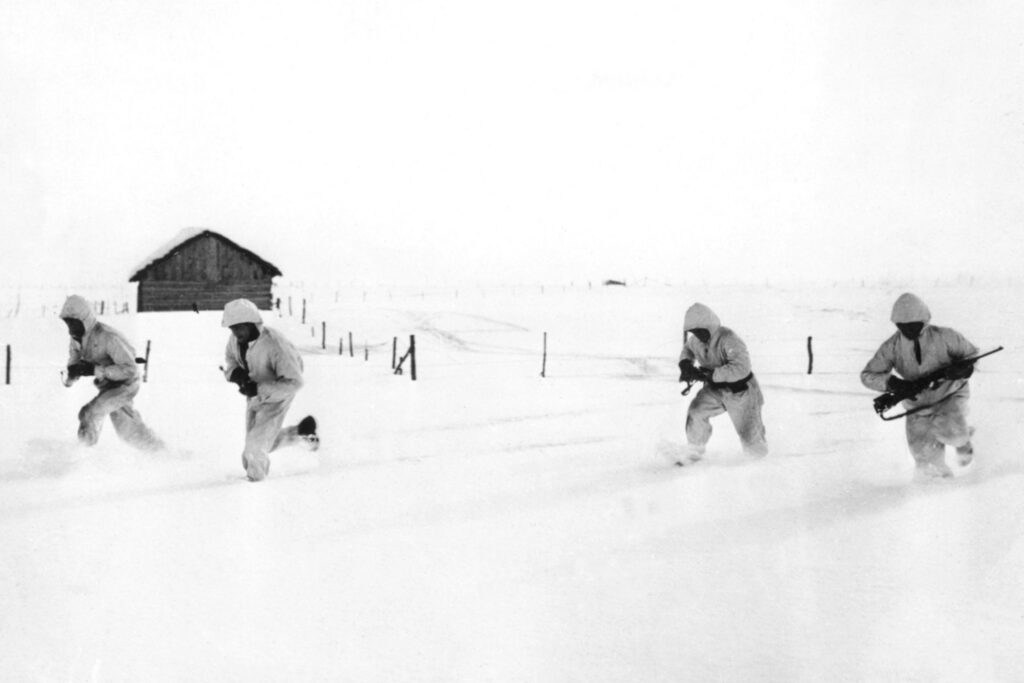
Hellbeck’s point, again, is that the persecution of Jews that had occurred earlier, such as in Poland after the Nazi occupation in 1939, only became genocidal after Operation Barbarossa in June 1941. Nazi planners had disagreed about what to do about Polish Jews in the ghettos, whether to exploit them (as the so-called “productionists” called for) or exterminate them (per the “attritionists”). Hellbeck writes, “German violence against Jews between 1939 and 1941 remained of a lesser scope compared to the mass murder of ethnic Poles.” And one reason for that was that the Nazi occupiers did not regard Polish Jews as possessing “real political force.”
In this vein, Hellbeck also argues that most accounts of the Holocaust that trace how the violence against Jews moved from Germany outward fail “to recognize the new quality of violence that the Germans applied at the Eastern Front starting in June 1941.” The Nazi invasion’s first main victims were Soviet POWs; by early 1942, two million had died in captivity. Their treatment, Hellbeck claims, prefigured the Nazi campaign against Jews via the demonization of the “Jewish commissar,” which loomed large in Nazi propaganda. Operation Barbarossa turned Soviet Jews of all ages into Bolsheviks, and that imaginary boomeranged back to hit all Jews under the Nazi yoke.
The genocidal treatment of Soviet Jews only escalated into a “Judeocide” across the continent with the US’s entry into the war in December 1941. This dramatic event convinced Hitler “that Jews worldwide had taken up arms against Germany.” When a Soviet counteroffensive near Moscow not long after thwarted his plans to deport Jews to the far eastern end of territory under Nazi control, Himmler decided they were “to be exterminated as partisans.” As Hellbeck notes, this rhetoric now extended to all Jews the earlier rationale for killing Soviet Jews. And then the uprisings in the Warsaw Ghetto and at the camps of Treblinka and Sobibor in 1943 only confirmed the Nazis’ worst fears.
In their view, “permanent security”—to quote Ohlendorf again—justified wide recourse to pre-emptive violence against all Jews (including children, seen as future resistance fighters), against Bolsheviks, against the Soviet Union itself. Germany had to strike the USSR before it struck Germany. Some historians, such as Nolte and Viktor Suvorov, have argued that the menace from the Soviet Union was indeed imminent. Hellbeck, instead of crediting the Nazis’ fears as empirically valid, quite correctly treats them as delusions with a reality effect.
From Ukraine and Back
Hellbeck concludes with a discussion of what the prevailing and, he argues, mistaken narratives about the Nazis’ crimes might mean for the war in Ukraine today. The West’s failure to recognize the scale of Soviet sacrifices, he suggests, has allowed Vladimir Putin to turn them into a narrative and a politics of national suffering that justify the invasion and occupation of Ukraine. (The historian Alexander Etkind has called such moves “warped mourning.”) In Hellbeck’s rendering, historians can function as cultural therapists by subjecting their patients, namely all of us, to the bracing reality test of confronting history to memory:
That the Soviet Union figured so centrally in Germany’s deadly designs is an inconvenient truth in today’s world. It runs up against the desire by Western leaders to portray their countries as the leading victors; it challenges tenets of Holocaust history, which is tied to the invocation of liberal democratic values and therefore belittles the central place of communists, alongside Jews, as Nazism’s chief victims; and it appears to play into the hands of Russia’s president, who is invoking the Soviet contribution to victory over Nazism as a justification for his current war against Ukraine. But none of these objections are valid.
Hellbeck does not say how a fuller recognition of Soviet losses during World War II would help move beyond the impasse in Ukraine today. If he is suggesting that a proper understanding of the history of that era could neutralize its current political instrumentalization—because recognizing that the suffering of Russians and Ukrainians back then was intertwined would make it harder to pit the two peoples against each other now—he could usefully have spelled that out in greater detail.
His message also might find more listeners had he devoted more space to Stalinist crimes, their scale and their savagery. Surely by now no one should feel the need to underplay them in the name of fighting fascism. Yes, the Nazi enslaved Slavs (along with many other groups), but the largest system of forced labor anywhere during World War II was the Soviet gulag. Its penal battalions were used as cannon fodder, and as Wilson Bell details in Stalin’s Gulag at War: Forced Labour, Mass Death, and Soviet Victory in the Second World War (2020), the slave-labor economy produced materiel that was important for the Soviets’ victory. In his prize-winning Crucibles of Power: Smolensk under Stalinist and Nazi Rule, published around the same time as World Enemy No. 1, Michael David-Fox unpacks another tale of entangled history—but this one presents ordinary Soviet citizens as essentially the victims of both the Nazi and the Stalinist regimes.
And now, that traumatic Soviet experience is being invoked again in the name of Russia’s own “permanent security” and to justify its need for a cordon sanitaire of client states to protect the motherland against any future aggression from the West. Such claims are often based on historical grievances: Putin is obsessed with Ukraine’s supposedly illegitimate ethnogenesis hundreds of years ago, and he claims that Lenin drew the Soviet Union’s borders to Ukraine’s advantage. Of course, Putin might still instrumentalize Soviet suffering even if it were properly recognized in the West. His issue seems to be that Ukraine exists at all.
And yet, once the aspiration for absolute safety infects politics, the resulting actions can seem rational. At least this is what Hellbeck argued about the Soviet attacks on Ukrainian farmers (“dekulakization”) in his review of David-Fox’s book: “Soviet fears of class enemies were rooted in reality, as many former dekulakized peasants harbored grievances and were readily installed by the Germans as village elders or policemen. The Jewish enemy, by contrast, was a phantom of the Nazi conspiratorial imagination.” Hellbeck claims that David-Fox “underplay[s] the divergent aims of the two regimes and the distinct forms of individual commitment they fostered, despite their shared dictatorial features and extreme violence.” So: The Nazis were paranoid murderers, but the Soviets were rational murderers? As in current debates about Israel, those about the Nazis’ and the Soviets’ crimes turn on disagreements about rationality and, implicitly, legitimacy.
World Enemy No. 1 points to disturbing continuities in the invocations of a “Fortress Europe” besieged by “Asiatic” migrants who allegedly seek the downfall of the West. In the 1930s and ’40s, the Nazis demonized leftist Jews as a genocidal threat to be eliminated. Today we hear apocalyptic warnings about the pernicious influence of “woke” ideology, anti-Zionists, Muslims, and people who hold up universal values against the nationalist and militarist political drumbeat. Hellbeck’s book contains lessons that go beyond the Russia-Ukraine war.